

Best Skip Bin Hire for Renovations and Construction
Brett Taylor best skip bin hire en
For most Australian projects, the fastest and most cost-effective approach is to book through a postcode-matched marketplace like Localskipbinhire, select the right bin size, and declare your waste type upfront. Localskipbinhire has long experience connecting homeowners, tradies, and property managers with local suppliers who offer transparent, GST-inclusive pricing that covers delivery, pickup, and disposal. Council permit rules for street placement vary by area, so confirming your access situation before booking saves real time. Check your postcode availability and get an instant quote now.
Table of Contents
- What skip bin size do you actually need?
- What affects the price of skip bin hire in Australia?
- What can and cannot go in a skip bin?
- How to prepare your site for skip bin delivery
- How to choose a reputable skip bin hire provider
- What to expect after you book
- Practical ways to cut your skip bin costs
- Key Takeaways
- Why a postcode-matched marketplace changes the outcome
- Get a quote through Localskipbinhire today
- Useful sources
What skip bin size do you actually need?
Choosing the wrong size is the single most common mistake. Go too small and you are booking a second bin; go too large and you are paying for capacity you never fill. Here is a quick reference to match your project to the right bin.
| Size | Typical Uses | Delivery Notes |
|---|---|---|
| 2m³ | Small garden tidy, garage clear-out, single-room declutter | Standard truck; fits most driveways |
| 3m³ | Bathroom reno, small kitchen strip-out, shed cleanout | Standard truck; check driveway width |
| 4m³ | Full kitchen or bathroom renovation, medium landscaping | Standard truck; most popular household size |
| 6m³ | Large room renovation, full house cleanout, small build | Larger truck; confirm overhead clearance |
| 8m³ | Major demolition, commercial fitout, large construction | Heavy truck; site access check required |
A 2m³ mini skip bin holds roughly the equivalent of eight standard wheelie bins. Visualizing your waste in 1m x 1m x 1m cubes is the easiest way to estimate volume before you book. For a full breakdown, the skip sizes guide on Localskipbinhire walks through every common job type.
Pro Tip: Walk-in bins with a rear door are worth requesting for heavy or bulky loads like pavers, timber, or soil. You can wheelbarrow material straight in rather than lifting it over the side, which is faster and much easier on your back.
What affects the price of skip bin hire in Australia?
Price is driven by factors such as bin size, waste type, your location relative to the nearest tip, the hire period, and landfill disposal fees. Heavy materials like concrete, soil, and bricks are subject to bin weight limits. Surcharges are commonly calculated per weight unit; always confirm the surcharge mechanism with your supplier before you start loading.
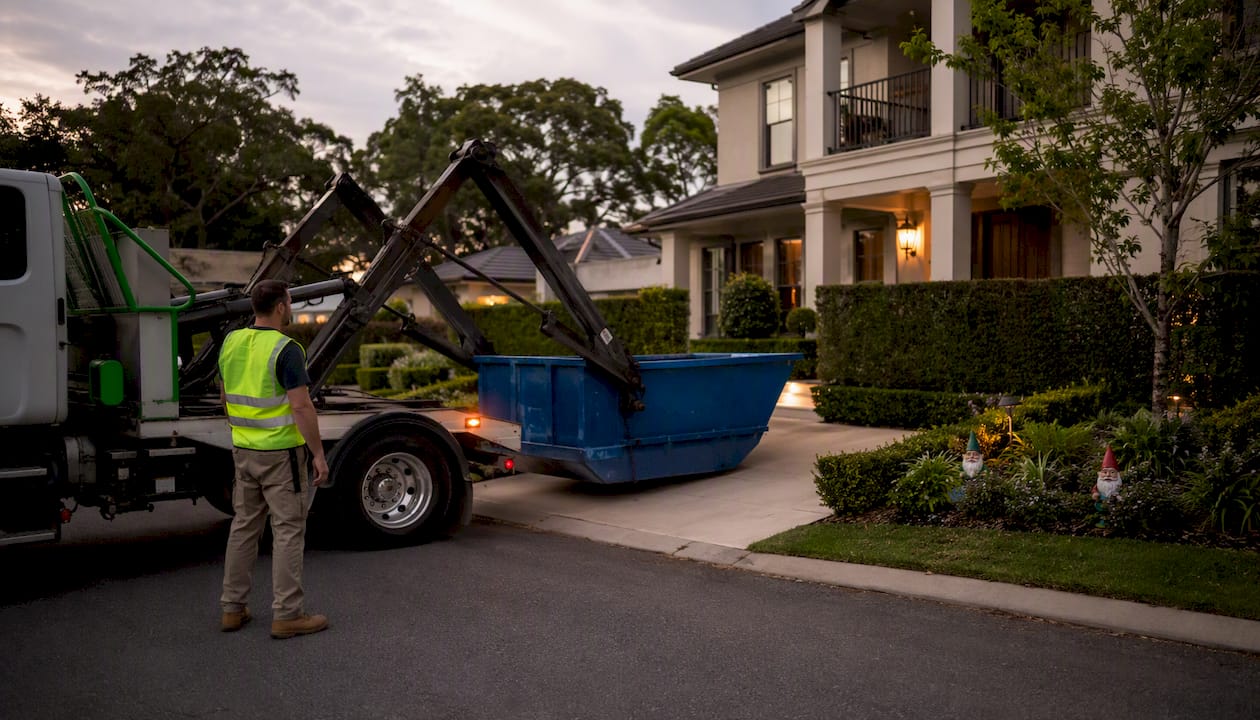
Landfill fees vary significantly by material and jurisdiction across Australia. Declaring your waste type accurately at booking is the single most effective way to get a competitive quote and avoid surprise charges. The pricing page on Localskipbinhire shows GST-inclusive rates that include delivery and pickup, so you know exactly what you are paying before you confirm.
What can and cannot go in a skip bin?
Most general household and construction waste is accepted, but several categories are prohibited or require special handling.
Commonly accepted:
- General household waste (furniture, cardboard, plastics)
- Green waste (grass clippings, branches, garden trimmings)
- Timber, plasterboard, and light construction debris
- Concrete, bricks, and soil (in designated heavy-waste bins)
- Metal and steel
Prohibited or restricted:
- Asbestos (requires licensed hazardous waste removal)
- Tyres (need specialized tyre disposal)
- Batteries, paint, and chemical liquids
- Flammable or toxic materials
- Medical or biological waste
Concrete, soil, and bricks are classified as heavy waste. They often need a dedicated heavy-waste bin because mixing them with general waste pushes the total load weight past the truck’s legal limit, triggering surcharges under National Heavy Vehicle Regulator guidelines.
Pro Tip: If your load is 100% one material type, such as pure green waste or clean concrete, ask about single-material pricing. Suppliers can route these loads to lower-cost processing facilities, and the savings are often passed on.
How to prepare your site for skip bin delivery
A failed delivery attempt costs you time and sometimes a rebooking fee. Checking access before you confirm is straightforward.
Before booking, confirm:
- Driveway width (most standard skip trucks need at least 3m clearance)
- Overhead clearance for power lines, trees, or garage beams
- Gate or entry height for the truck
- Whether the bin will sit on a driveway, yard, or the street
Street placement requires a council permit in most areas, and permit processing can take several days. Factor that into your booking timeline, and note that permit costs are separate from the hire fee.
For tight-access sites such as basement car parks, loading docks, or narrow inner-city streets, standard skip trucks may not fit. City of Perth guidance recommends discussing site access details with your supplier before delivery to avoid failed service attempts.
Pro Tip: If your site has low overhead clearance or restricted entry, ask specifically for a mobile skip bin or trailer-mounted unit. These compact options are built for tight-access jobs and can often be delivered same-day where standard trucks cannot go.
How to choose a reputable skip bin hire provider
Not all providers are equal. A few key checks protect you from hidden fees and poor service.
Checklist before you book:
- GST-inclusive pricing that covers delivery, pickup, and disposal
- Clear waste-type categories with weight limits stated upfront
- Postcode-matched local suppliers (shorter haul = faster delivery and often lower cost)
- Written terms covering hire period length and surcharge rules
- Disposal receipts or weighbridge tickets provided after pickup
Questions to ask when you get a quote:
- What is the weight limit for this bin, and how is the surcharge calculated?
- Does the price include delivery, pickup, and disposal?
- Can you handle a council permit application, or do I arrange that myself?
- What happens if I need to extend the hire period?
- Do you provide a disposal receipt for compliance or accounting?
Red flags to watch for: vague all-in pricing with no weight limit stated, no disposal documentation offered, and unusually fast delivery promises from a provider with no local presence in your area.
Pro Tip: A disposal receipt is a key compliance document for commercial projects and trade customers. Reputable providers supply it automatically after pickup. If a supplier cannot confirm they provide one, that is a signal to look elsewhere.
What to expect after you book
The booking-to-pickup process is straightforward when you know what to expect.
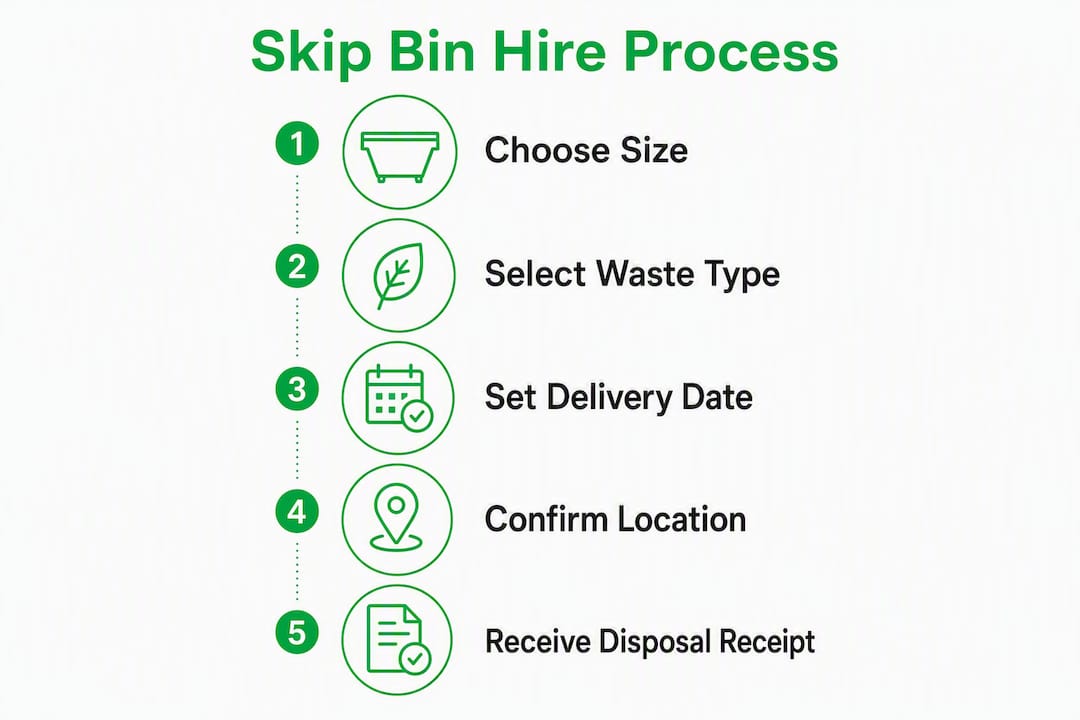
- Confirmation: You receive a booking confirmation with delivery date, time window, and bin placement instructions.
- Delivery: The driver places the bin in your nominated spot. Standard hire periods run 7–14 days; trade customers can often negotiate up to 60 days.
- Loading: Fill the bin during your hire period. Do not overfill above the bin’s rim, as overloaded bins cannot legally be transported.
- Pickup: Contact your supplier when the bin is ready, or it is collected automatically at the end of the hire period.
- Disposal paperwork: A disposal receipt or weighbridge ticket is issued after the load is processed.
For street placement, allow several extra days for council permit processing before your target delivery date.
Practical ways to cut your skip bin costs
A few simple steps can meaningfully reduce what you pay.
- Separate recyclables before loading. Materials like clean cardboard, metal, and green waste often attract lower disposal fees when kept separate.
- Ask about single-material pricing. A bin filled with only green waste or only concrete can often be routed to a lower-cost facility.
- Hire the right size. A 3m³ skip bin costs less than a 6m³, and for a single-room job, it is usually enough.
- Book pickup promptly. Extended hire beyond the standard period can attract daily or weekly extension fees.
- Ask about trade discounts if you hire regularly or need a longer hire period for a construction project.
For smaller jobs, hiring a compact bin and making two loads is sometimes cheaper than hiring one large bin. Run the numbers with your supplier before you commit.
Pro Tip: Before booking, confirm whether discounted rates apply for single-material loads. Not every supplier advertises this, but many offer it when you ask directly.
Key Takeaways
Choosing the right bin size, declaring your waste type, and using a postcode-matched marketplace like Localskipbinhire are the three steps that prevent most booking mistakes and unexpected charges.
| Point | Details |
|---|---|
| Match size to your job | Use the 2m³–8m³ size guide to avoid over- or under-ordering for your project. |
| Declare waste type upfront | Accurate waste declaration leads to competitive quotes and prevents weight-surcharge surprises. |
| Confirm site access early | Check driveway width, overhead clearance, and council permit needs before your delivery date. |
| Understand hire periods | Standard hire runs 7–14 days; trade customers can often negotiate up to 60 days. |
| Use Localskipbinhire | Postcode-matched suppliers, GST-inclusive pricing, and disposal receipts included across Australian metro and regional areas. |
Why a postcode-matched marketplace changes the outcome
The conventional advice is simply to “get three quotes.” That works, but it misses the real variable: whether the supplier is actually local to your site. A supplier based 80km away will price in that haul distance, and their lead times will reflect it too.
Postcode-matching solves this quietly but effectively. When Localskipbinhire presents suppliers matched to your postcode, you are seeing pricing built around the nearest tip and the shortest haul. That is why the GST-inclusive quotes tend to be more accurate and why same-day or next-day delivery is more often available. The platform’s 15+ years of supplier relationships also mean access to mobile skip options for tight sites, something a generic search rarely surfaces until after a failed delivery attempt.
For complex loads, such as asbestos removal or mixed heavy materials, a direct conversation with the supplier is still the right move. No marketplace replaces that call. But for the vast majority of residential and trade jobs, the postcode-matched approach removes the guesswork and gets a bin on site faster.
Get a quote through Localskipbinhire today
Skip bin hire does not need to be complicated. Localskipbinhire connects you with local suppliers matched to your postcode, with transparent GST-inclusive pricing that covers delivery, pickup, and disposal. No hidden fees, no vague quotes.
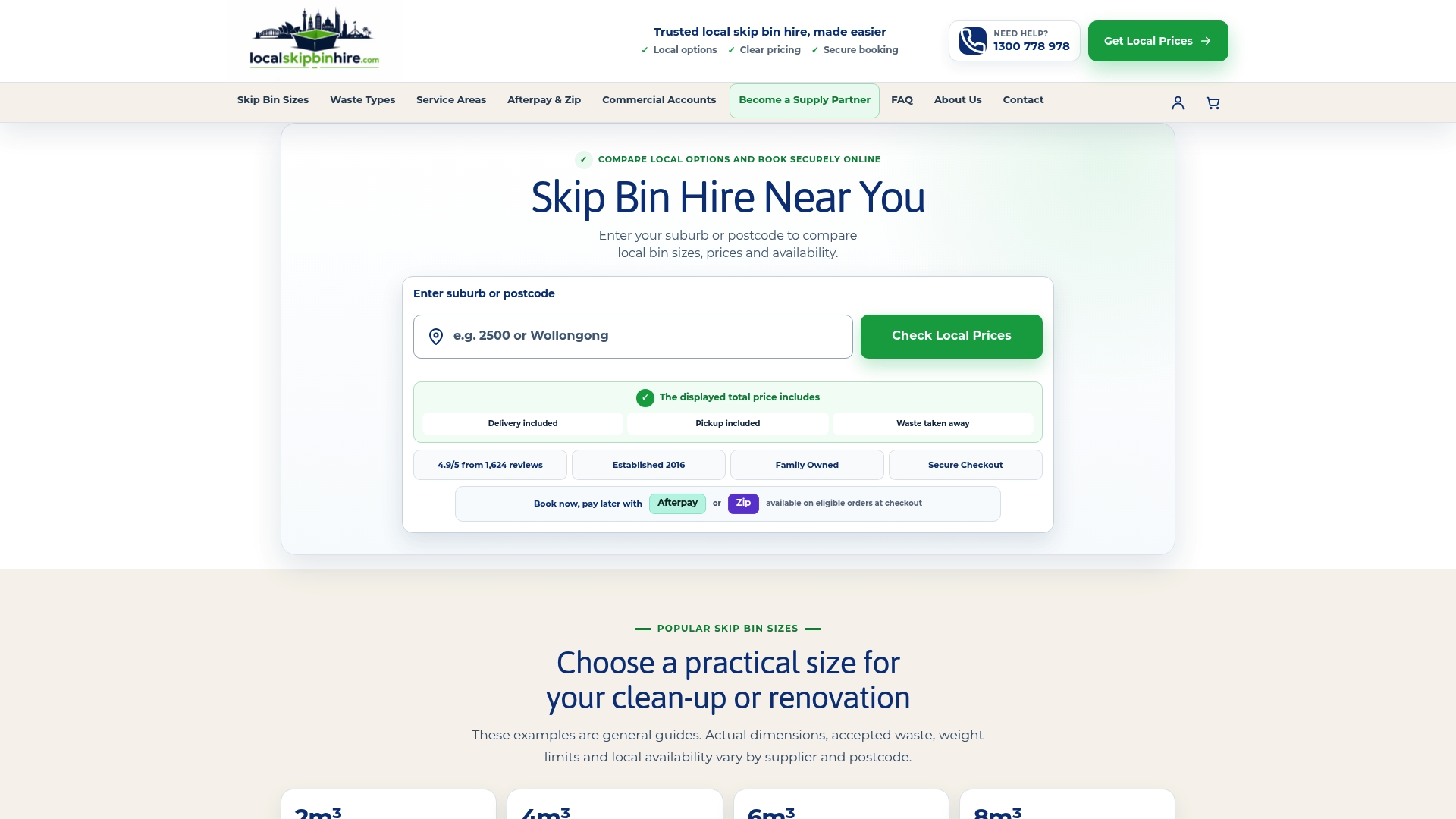
Whether you need a 4m³ bin for a Melbourne renovation or a 2m³ mini skip in Newcastle, the booking process takes minutes. Enter your postcode, choose your bin size and waste type, and confirm your delivery date.
Quick benefits:
- Next-day delivery where available
- Clear weight limits and surcharge rules stated upfront
- Disposal receipts provided after pickup
- Pay-later options available for homeowners and businesses
Check your postcode and book now to see available bins and GST-inclusive prices in your area.
Useful sources
- City of Melbourne — placing skips, bins and containers on road: Council guidance on permit requirements and timelines for street placement of skip bins in Victoria.
- City of Perth — obstruction permit and access guidance: Covers permit requirements and site-access recommendations for skip bin delivery in Western Australia.
- National Heavy Vehicle Regulator: Guidance on weight limits and load compliance relevant to heavy-waste skip bin hires across Australia.
- Australia waste levy comparison — Gradeall: Compares landfill levy rates by material and state, useful for understanding why waste type affects your final disposal cost.
Recommended
- 4m³ Skip Bin Hire – All-Inclusive Price – Local Skip Bin Hire
- 2m³ Mini Skip Bin Hire – All-Inclusive Price – Local Skip Bin Hire
- 9m³ Skip Bin Hire – All-Inclusive Price – Local Skip Bin Hire
- 4m³ General Waste Skip Bin Hire – All-Inclusive Price – Local Skip Bin Hire
The spread those factors produce
Location moves the number more than anything else on that list, and it does it in a way a headline price hides. Brisbane and the Gold Coast start from exactly the same figures on our August 2026 check — $324 for a 2m³, $519 for a 4m³, $637 for a 6m³, $844 for an 8m³. What they do not share is where quotes actually land: the typical Brisbane 4m³ was $541 against $672 on the Gold Coast, and on the 6m³ it was $656 against $818.
An identical advertised starting price, then, and a materially different bill. That is the case for comparing at postcode level. Brisbane and the Gold Coast both break down by size, and an address search prices the street.
← Older Post Newer Post →