

Avoid a Second Delivery: Postcode Office Cleanout Skip Hire Australia
Brett Taylor en office cleanout skip bin
Book a correctly sized office cleanout skip bin, and add labour-included removal if your floor has heavy furniture, fixed cubicles, or a tight deadline. That single decision determines how many trips you make, what you pay, and whether your relocation stays on schedule. A skip bin hire service matches you with a postcode-based supplier so you get the right size and service level without the guesswork.
TL;DR:
- Choosing a slightly larger skip bin than initially estimated can save costs by avoiding additional bookings and delays, especially with heavy or bulky furniture.
- A 4m³ bin suits small teams, while 6 to 8m³ is ideal for department-level clearouts, with larger sizes necessary for full-floor relocations or office closures.
- Prohibited items like asbestos, batteries, chemicals, and refrigerants require separate handling or recycling, which can increase costs if not sorted beforehand.
- Proper placement and permit checks for kerbside bin siting can prevent delivery delays, with private access points simplifying logistics and reducing paperwork.
- Accurate volume estimation and optimized loading techniques, including disassembling furniture and careful stacking, can maximize space and minimize overage charges.
Table of Contents
- Choosing the Right Skip Bin for Your Office Cleanout
- Common Skip Bin Sizes for Office Cleanouts in Australia
- What Can and Cannot Go in an Office Skip Bin?
- Getting Placement and Permits Right Before Delivery Day
- How to Load a Skip Bin for Maximum Space and Minimum Risk
- What Drives Cost and How Fast Can You Get a Bin?
- Local Skip Bin Hire: What the Platform Handles for You
- An Office Manager’s Quick Checklist Before You Book
- Book Your Office Cleanout Skip Bin in a Few Clicks
- Useful Resources for Australian Office Cleanouts
- Sources
Choosing the Right Skip Bin for Your Office Cleanout
Getting the size right the first time saves you a second booking, a second delivery fee, and a delayed handover date. Start by counting bulky items rather than estimating from headcount. A single 3x1.5 metre workstation, a four-drawer filing cabinet, and a boardroom table each eat volume faster than loose boxes and general rubbish, so tally those separately before you settle on a cubic metre figure.
How to estimate the volume you need:
- Count large furniture pieces (desks, cabinets, partitions) individually, not by staff numbers.
- Add 20 to 30 percent buffer if the office has carpet tiles, ceiling tiles, or partition walls coming out.
- Round up rather than down. A slightly oversized bin costs less than a second booking.
Decide on service type next. Self-load suits smaller teams with time to dismantle and carry items themselves. Labour-included removal suits floors with fixed workstations, server racks, or a hard deadline where paying a crew beats losing a day of staff time. Full-service cleanout, which typically bundles dismantling and secure document handling, reduces operational disruption on larger jobs even though it costs more upfront.
Before you confirm a booking, run through a short access checklist: is there a loading dock or will the truck need street access, does the building require a permit, and what waste types will actually be in the load. Confirm pricing inclusions too. Delivery, pickup, and disposal should all be quoted upfront, with no separate weight surcharge sprung on you at collection.
Pro Tip: If your office has more than one floor being cleared, book one slightly larger bin rather than two smaller ones delivered on different days. It’s usually cheaper and it halves your logistics coordination.
Common Skip Bin Sizes for Office Cleanouts in Australia
Bin sizes scale roughly with the size of the space you’re clearing, and matching the right one avoids paying for capacity you don’t use, or worse, running short mid job.
- 2m³: A single office or small suite, roughly 8 wheelie bins’ worth of general waste, old chairs, and boxed files.
- 4m³: A small team of 5 to 10 people, suited to a handful of desks, a filing cabinet, and mixed general waste.
- 6 to 8m³: A department-level clearout with multiple workstations, storage units, and larger volumes of paper waste.
- 10 to 15m³: A full-floor relocation or office closure, including furniture, partitions, and bulky fixtures.
Heavy items chew through capacity quickly. A single steel filing cabinet or a server rack can use up a surprising share of a bin’s weight allowance before it even looks full, so factor those in separately rather than assuming volume alone tells the story. The commercial skip bin size guide and the skip bin sizes chart both break down capacity by item type if you want to double check before booking.
What Can and Cannot Go in an Office Skip Bin?
Most general office waste goes in without issue. Desks, chairs, cardboard, general paper, carpet offcuts, and broken fixtures are all standard fill. Where offices trip up is e-waste and confidential materials, both of which need separate handling rather than a spot in the skip.
Typically prohibited or restricted items:
- Asbestos-containing materials, common in older ceiling tiles or floor vinyl in pre-1990s buildings.
- Batteries, including the lithium packs inside old laptops and cordless equipment.
- Chemicals, printer toner cartridges in bulk, and fluorescent tubes.
- Refrigerants or anything with a compressor, such as an old bar fridge.
For IT equipment specifically, a paid recycling route makes more sense than tossing it in the skip. BuyBackBear’s IT equipment disposal service handles compliant, secure destruction of drives and devices, which matters when old laptops still hold client data. Confidential paper files need the same care: a locked bin or a certified shredding service beats loose paper in a general skip.
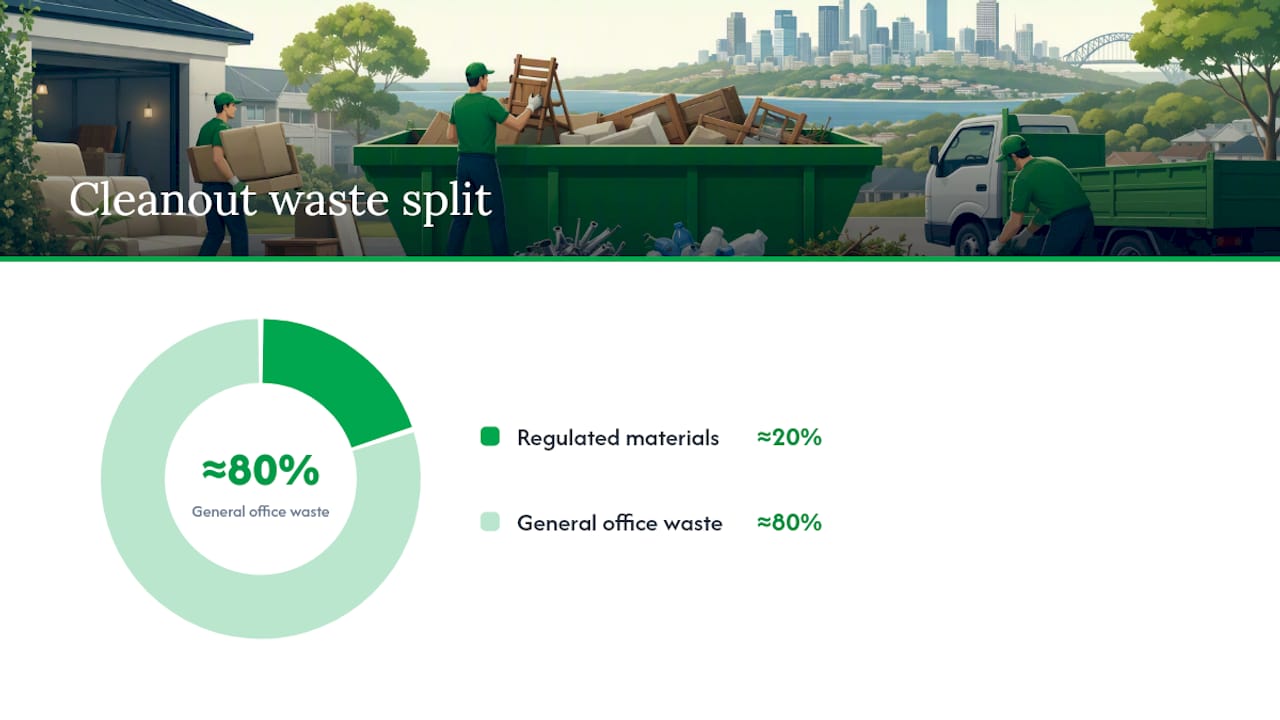
Roughly a fifth of a large office cleanout’s waste volume can turn out to be regulated material once you account for old IT gear, batteries, and fluorescent lighting, which is why sorting before the truck arrives saves money on rejected loads. Victoria’s waste manifest compliance guidance explains when hazardous waste needs a manifest and specialist handling rather than general disposal. Check your building’s own waste rules too. Many commercial towers have separate requirements from council bins.
Getting Placement and Permits Right Before Delivery Day
Where the bin sits determines how smooth delivery and pickup go. A private car park or loading dock avoids the paperwork that kerbside placement often requires.
- If the bin needs to sit on a public footpath or kerb, check whether your council requires a permit. Many Victorian councils do, and Know Your Council is a fast way to find the right local contact.
- Talk to building management early about elevator bookings, freight door access, and any restricted hours for moving furniture.
- Lay down floor protection or ramping if the bin crosses tiled lobbies or delicate flooring on its way in or out.
- Confirm a building certificate of insurance if your strata or facilities manager asks for one. Larger decommissions often require this at quote stage.
How to Load a Skip Bin for Maximum Space and Minimum Risk
- Start heavy, start low. Filing cabinets, desks, and other solid items go in first to create a stable base.
- Break down bulky furniture. Flat-packed desks and disassembled shelving stack far tighter than whole units.
- Fill gaps as you go. Loose items like cabling and small boxes pack into the spaces around bigger pieces.
- Keep hazardous items separate. Batteries, toner, and anything flagged as restricted stay out of the general pile entirely, ready for the correct disposal channel.
- Use PPE for manual handling. Gloves and proper lifting technique matter more on office jobs than people expect, since filing cabinets are heavier than they look.
If your team lacks the time or physical capacity to do this properly, booking a labour-included crew removes the risk of injury and gets more into the same bin. For more detail on stacking order and avoiding overage charges, the guide on maximizing space in a skip bin walks through it step by step.
Pro Tip: A well-packed 4m³ bin often holds more than a poorly loaded 6m³ one. Spend the extra twenty minutes stacking properly before you assume you need a bigger size.
What Drives Cost and How Fast Can You Get a Bin?
Price comes down to volume, waste type, site access, weight, and whether you add labour. A straightforward general waste load in an easy-access car park costs less than a mixed load requiring a footpath permit and a crew.
- Same-day and next-day delivery is common in metro areas; weekend or after-hours slots need earlier booking.
- Consolidating everything into one correctly sized bin beats two half-filled ones.
- Donating usable furniture or recycling e-waste ahead of time can shrink the bin size you actually need.
- Confirm delivery, pickup, and disposal are all included in the quoted price before you book, not added afterward.
Accurate volume estimates, done properly at the start, cut down on rebooking far more reliably than chasing the cheapest advertised per-cubic-metre rate.
Local Skip Bin Hire: What the Platform Handles for You
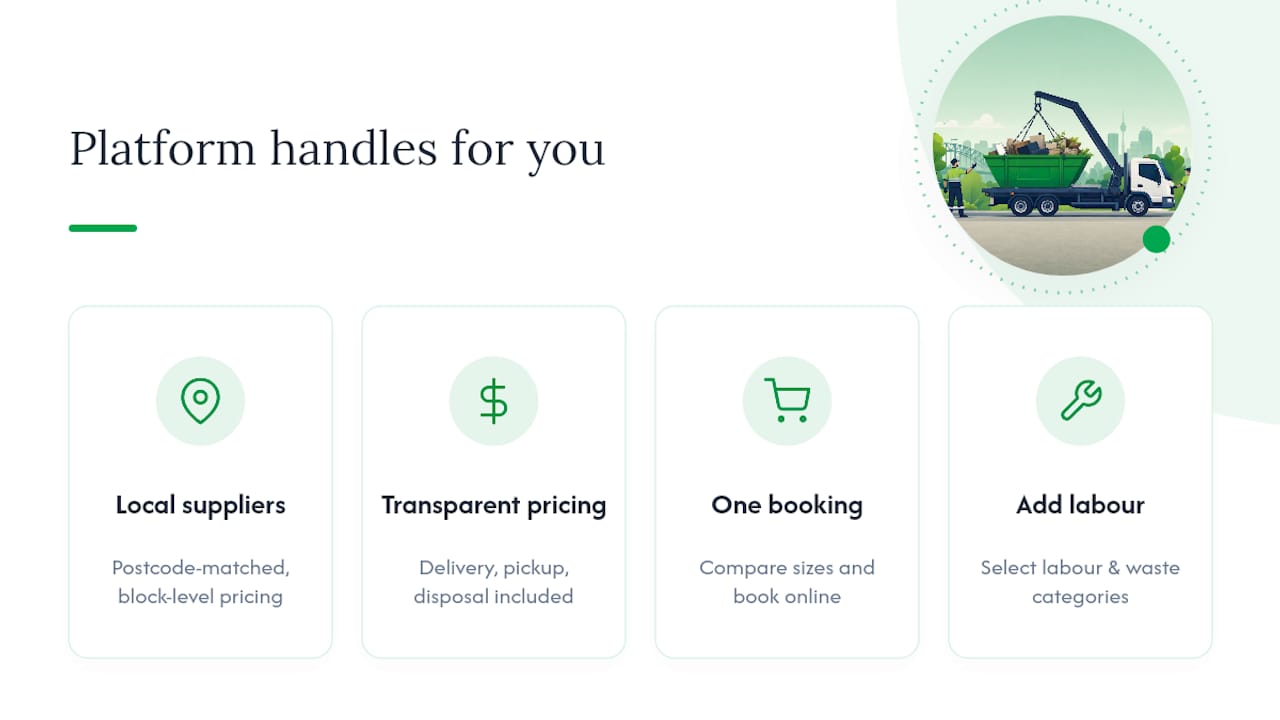
The platform connects Australian customers with postcode-matched local suppliers, which matters for offices because availability and pricing shift block by block, not just city by city. The platform shows transparent pricing with delivery, pickup, and disposal included, so there’s no separate quote to chase down after the fact. Customers can compare sizes, confirm waste categories, and add labour if the job calls for it, all in one booking flow instead of multiple phone calls to different yards.
An Office Manager’s Quick Checklist Before You Book
Confirm your access point, check whether a council permit applies, and separate hazardous items before the truck arrives. Two lessons stand out from watching office cleanouts go sideways: filing-heavy floors almost always need a bigger bin than the first estimate suggests, and skipping the permit check on kerbside placement is the most common reason delivery gets delayed. Use the booking tool to lock in size and access details together, not as an afterthought.
— Brett
Book Your Office Cleanout Skip Bin in a Few Clicks
This service is a practical alternative to calling around multiple depots for quotes. One search by postcode shows you local pricing with delivery, pickup, and disposal included, so there’s no follow-up call needed to find out the final cost.
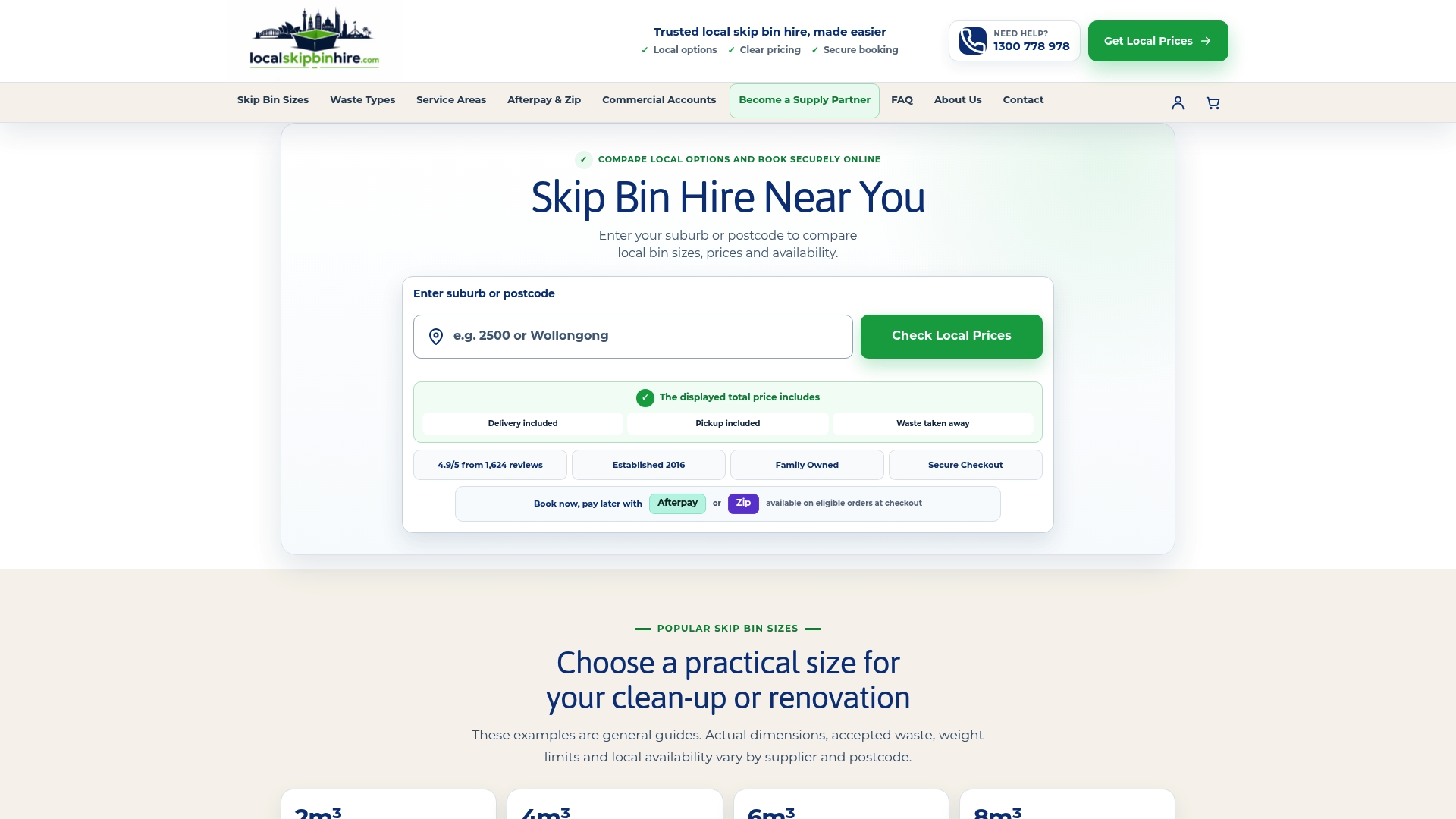
For office cleanouts, common bin sizes include 4m³ for a small team or 6 to 8m³ for a department-level clear-out, with labour-included service available for heavier or time-pressured jobs. If you’re not sure which size fits, browse available skips by postcode and compare real supplier pricing before you commit. Flexible payment options are also available through pay later if you’d rather spread the cost across your project timeline. Enter your postcode, pick your size, and lock in delivery for the date your cleanout actually starts.
Useful Resources for Australian Office Cleanouts
- Know Your Council: check whether your local government requires a footpath or kerbside placement permit.
- Waste manifest compliance guidance: understand when hazardous office waste needs specialist handling.
- BuyBackBear IT equipment disposal: secure, paid recycling for old laptops, drives, and corporate electronics.
- Skip bin waste categories: a breakdown of accepted and restricted materials by bin type.
Sources
- Vic
- Waste Manifest Requirements in Victoria: A Compliance Guide - Pressure Works
- IT equipment disposal. Compliant & Paid | BuyBackBear
Recommended
← Older Post Newer Post →