

4m3 Skip Bin for Yard Clean Up: Right Size for Most Australian Yards
Brett Taylor en yard clean up skip bin
For most yard clean-ups around Australia, a 4m3 skip bin handles the job without wasting money on empty space. Keep your green waste separate from soil, timber, or general rubbish, and photograph the pile before you book. That one habit gets you a faster, more accurate quote from a postcode-matched supplier.
TL;DR:
- Choosing a 4m3 skip bin is suitable for most yard clean-ups and can handle a standard suburban property’s green waste without overpaying.
- Heavy materials like soil, turf, or concrete weigh significantly more by volume, requiring a weight-rated or heavier waste bin to avoid overload charges.
- Proper preparation involves clearing access, loading heavy items first, and breaking down green waste to maximize safety and cost efficiency.
- Contaminated soil, asbestos, liquids, hazardous chemicals, and e-waste are prohibited in general skip bins, with local rules varying by region.
- Postcode-matched booking platforms ensure accurate quotes, smooth delivery, and compliance with local disposal and permit requirements.
Table of Contents
- Choosing the Right Skip Bin Size for a Yard Clean Up
- What Can and Can’t Go in a Skip Bin in Australia
- How to Prepare Your Yard and Load a Skip Bin Safely
- What Does a Yard Clean Up Skip Bin Cost in Australia?
- What to Expect When You Book, Get Delivery, and Arrange Pickup
- Lessons From 15 Years of Skip Bin Bookings
- Why Skip Bins Still Beat DIY Trailer Runs
- Book a Skip Bin for Your Next Yard Clean Up
- Sources
Choosing the Right Skip Bin Size for a Yard Clean Up
Guessing the size is where most homeowners lose money, either paying for space they never fill or ordering a second skip halfway through the job. Match the bin to the actual job in front of you, not the job you think you might have.
- 2m3 skip bin: suits a small prune, a few garden bags of clippings, or clearing one overgrown bed. Think roughly 15 to 20 wheelbarrow loads.
- 4m3 skip bin: the workhorse size for a full yard tidy, hedge trim, and general green waste from a standard suburban block.
- 6m3 skip bin: fits a bigger job, like clearing an overgrown backyard, removing a small tree, or combining green waste with old furniture or fencing.
- 8 to 10m3 skip bin: reserved for major landscaping overhauls, whole-yard renovations, or clean-ups involving large volumes of soil and turf.
A rough visual guide helps more than a measurement. If the pile would fill two trailer loads or a small van, you’re looking at a 4m3. If it would take three or four trips, size up. Heavy materials like wet soil, turf, or concrete rubble weigh far more than green waste by volume, so a bin rated for heavy waste may be capped at a lower fill line even though it looks the same size as a standard skip.
Pro Tip: If you’re torn between two sizes, book the bigger one. An overfilled bin often triggers a return trip or a surcharge, and that costs more than the size upgrade would have.
What Can and Can’t Go in a Skip Bin in Australia
Green waste rules are more forgiving than general waste rules, but they’re not a free-for-all. Branches, prunings, grass clippings, leaves, and small offcuts of untreated timber are accepted almost everywhere. Soil and turf usually go in too, though some suppliers cap the quantity or charge by weight because clean fill is heavy and harder to process at the tip.
Contaminated soil, or soil mixed with building rubble, often needs a separate declaration or a different bin altogether.
Certain items are banned from general skip bins, full stop:
- Asbestos sheeting or asbestos-contaminated soil
- Car and truck tyres
- Liquids, paints, and hazardous chemicals
- Certain batteries and e-waste like TVs, computers, and printers
State and national guidance backs this up. Recycling drop-off advice from the Australian Government directs e-waste to dedicated collection points rather than general bins, and Green Industries SA’s hazardous waste guidance sets out where household chemicals and similar items actually need to go. Victoria’s e-waste policy work shows these rules can shift from state to state, so it pays to check your local council before loading anything questionable. Our own breakdown of what can and can’t go in a skip bin covers the state by state detail.
How to Prepare Your Yard and Load a Skip Bin Safely
Loading well saves money and prevents injuries. A skip bin isn’t a dumping ground you fill in any order. Work through it methodically.
- Check access first. Measure your driveway or kerb space against the bin’s footprint, and clear low branches, cars, or garden furniture from the delivery path.
- Load heavy items first. Soil, bricks, and dense offcuts go on the bottom to keep the bin stable and stop it tipping during pickup.
- Break down bulky green waste. Cut long branches into manageable lengths and flatten boxes so they stack instead of creating air pockets.
- Wear gloves and solid footwear. Thorny prunings and splintered timber cause more cuts than most people expect.
- Lift with your legs, not your back, and get a second person for anything heavy or awkward.
- Stop at the fill line. A bin loaded above its rim usually can’t be transported legally and gets flagged for a second collection.
Pro Tip: If your clean-up involves stumps, roots, or wet clay soil, ask about a heavy-waste rated bin or a labour-included service before you book. Standard skips aren’t always weight-rated for that kind of load, and our guide on handling heavy waste covers the difference.
What Does a Yard Clean Up Skip Bin Cost in Australia?
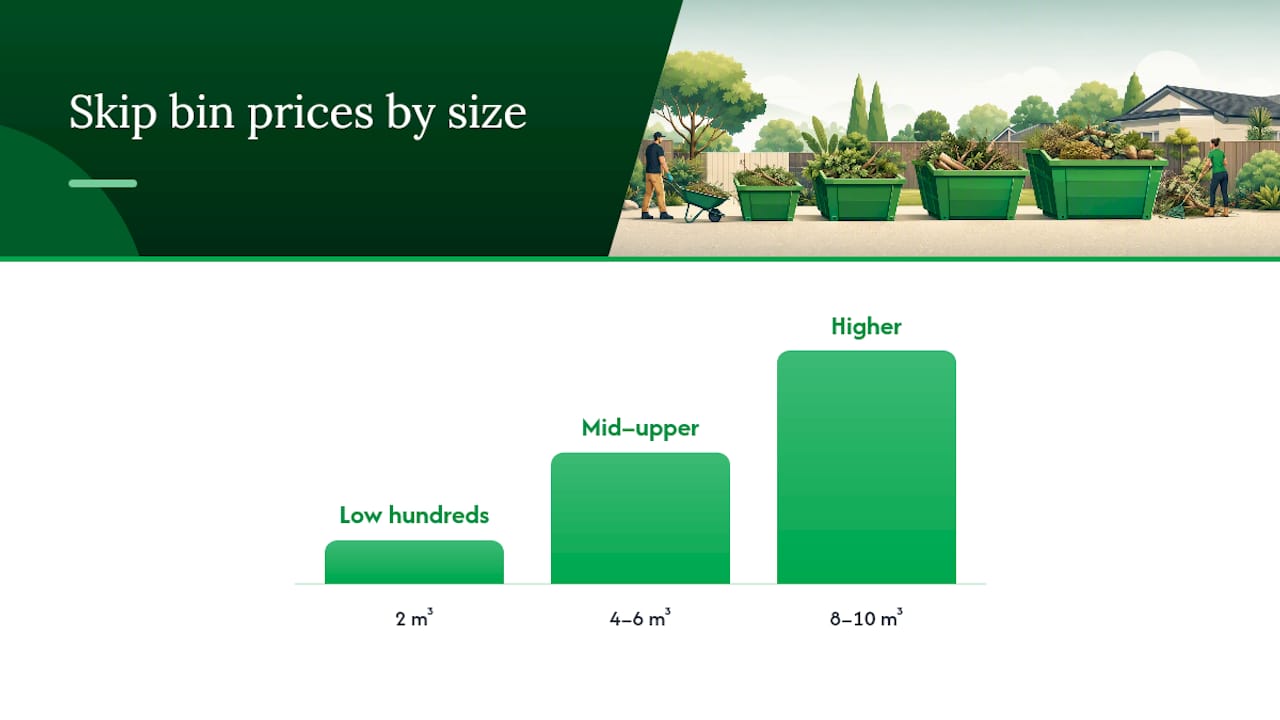
Pricing depends on where you live, how the supplier charges, and what’s actually in the load. As a rough guide, a 2m3 skip typically starts in the low hundreds of dollars, while a 4m3 or 6m3 for a full yard clean-up sits in the mid to upper hundreds, with 8 to 10m3 bins climbing higher again depending on region and tip fees.
A few factors move that price more than people expect:
- Weight versus volume pricing: some suppliers charge by the tonne, which matters a lot for soil and turf.
- Distance to the tip: regional areas often pay more due to transport costs.
- Hire duration: longer hire periods can add daily charges beyond the standard window.
- Permit fees: kerbside placement sometimes requires a council permit, which adds a separate cost.
Separating green waste from mixed rubbish often lowers your total disposal charge, since clean loads process faster and cheaper than contaminated ones. Watch for hidden fees too. Excess-weight charges and contamination surcharges are the most common reason a quote ends up higher than expected, usually because the load mixed general rubbish in with green waste.
What to Expect When You Book, Get Delivery, and Arrange Pickup
Booking through a postcode-matched platform matters more than it sounds. Local suppliers know local tip fees, local council rules, and local access quirks, which keeps your quote accurate instead of a generic estimate.
- Book online with your postcode and job details. This connects you to suppliers actually operating in your area.
- Confirm your delivery window. Most suppliers offer a set day or a morning/afternoon slot rather than an exact time.
- Check if you need a council permit. Kerbside placement on a public road often requires one; driveway placement usually doesn’t.
- Leave clear driver instructions. Note gate codes, dogs, narrow access, or anything blocking the delivery spot.
- Plan your pickup date around the hire period. Standard hire windows run several days to a week, and calling early avoids last minute rescheduling.
Lessons From 15 Years of Skip Bin Bookings
Brett, who leads Local Skip Bin Hire, sees the same two mistakes on repeat: homeowners mixing green waste with general rubbish, which triggers contamination fees, and underestimating pile volume by a size or two.
Postcode-matching exists precisely to fix the guesswork problem. Instead of a flat national price, you get suppliers who already know your local tip costs and access rules.
Before requesting a quote, it helps to have:
- Two or three photos of the pile from different angles
- A rough list of what’s in it (green waste, soil, timber, other)
- Your postcode and preferred delivery window
Why Skip Bins Still Beat DIY Trailer Runs
Multiple trailer runs to the tip eat a Saturday and burn fuel money that adds up faster than most people budget for. A single skip bin parked in the driveway for a few days lets you work at your own pace, load as you go, and skip the queue at the local waste facility entirely. For a mid-size yard job, the math almost always favors the bin. If you want the fuller comparison, our piece on how skip bins help with garden waste removal walks through it in more detail. Before you book anything, run through the photo-and-waste-list checklist above. It takes less time than loading the first wheelbarrow.
— Brett
Book a Skip Bin for Your Next Yard Clean Up
An alternative to calling around for quotes one supplier at a time is to use a platform that shows inclusive pricing upfront, often bundling delivery, pickup, and disposal costs, so there’s no second phone call to find out what the tip fee adds.
Bin sizes run from small 2m3 options right through to bins built for heavy waste, and if your clean-up also involves kerbside placement, some suppliers can help sort the permit side too. Payment is flexible, with options including pay later and Laybuy instalments if you’d rather spread the cost. If your job leans toward hauling rather than a bin sitting on-site, our comparison of skip bin hire versus rubbish removal can help you pick the right service.
Ready to see what’s available near you? Find a skip bin in your area and get a postcode-matched quote before the weekend.
Sources
- Recycling drop-off (Australian Government)
- Hazardous waste (Green Industries SA)
- E-waste policy paper (Environment Victoria)
Recommended
← Older Post Newer Post →