

Stop Hidden Skip Bin Fees by Postcode: 5 Questions to Ask
Brett Taylor en hidden fees skip bins
Yes, skip bin hire commonly comes with extra charges you won’t see on the headline price. Weight limits, restricted items, transport, council permits, and state waste levies can all add cost after booking. The single most effective fix is asking for a written, itemized, all-inclusive quote before you commit. Providers like Local Skip Bin Hire build that transparency into the booking itself, so there’s nothing left to discover on invoice day.
TL;DR:
- Overweight charges are the most common unexpected fee, especially with heavy materials like soil, bricks, or concrete exceeding bin weight limits.
- Restricted items such as mattresses, tyres, and chemicals often carry flat fees or require separate disposal pathways, increasing the final bill.
- Transfer distances, state levies, and site access issues can significantly boost costs beyond initial estimates if not clarified upfront.
- Always obtain a detailed, all-inclusive written quote with clear breakdowns, and photograph your load to avoid disputes over restricted items.
- Confirm who handles permits and negotiate terms in advance to prevent extra fees or delays on the collection day.
Table of Contents
- Common Hidden Fees Skip Bins Add to Your Bill
- What Actually Drives Skip Bin Pricing
- How to Avoid Hidden Fees Before You Book
- Questions to Ask Before You Pay a Deposit
- Why This Guidance Comes From Local Skip Bin Hire
- What I’ve Learned From Watching Skip Bin Bookings Go Wrong
- Compare All-Inclusive Skip Bin Prices by Postcode
- Where to Check Local Rules and Levy Rates
- Sources
Common Hidden Fees Skip Bins Add to Your Bill
Most surprise charges fall into a handful of predictable categories, and once you know what to look for, they’re easy to spot on a quote before you sign off.
Overweight charges are the biggest culprit. Providers set a weight limit per bin size, and if your load exceeds it, you pay a per-tonne surcharge, sometimes calculated after the truck weighs the load at the tip. Concrete, soil, and bricks blow past weight limits fast even in a small bin.
Restricted-item surcharges apply to mattresses, tyres, e-waste, fluorescent tubes, and any chemical or asbestos waste. These items follow separate disposal pathways and often carry a flat fee per item rather than a weight charge.
Transport and transfer fees show up when your local tip is full or your postcode sits far from a processing facility, forcing a longer haul. State landfill and waste levies are set by state and territory waste authorities and vary widely, so ask directly whether your quote already includes them.
- Permit or council fees for placing a bin on a footpath, nature strip, or public road, which usually require an application through your local council
- Extra-day fees if the bin sits on-site longer than the agreed hire period
- Contamination or cleaning fees when banned items turn up mixed into general waste
- Hidden booking or admin fees, plus confirmation that GST is already folded into the quoted price
Multiple Australian skip-hire sources flag overweight loads, levies, and restricted items as the most common surprise charges customers run into after booking.
What Actually Drives Skip Bin Pricing
A skip bin quote isn’t just about the size of the bin sitting in your driveway. Providers price on volume and weight together, because a 4m³ bin full of light foam packaging costs far less to process than the same bin packed with wet soil.
Waste type changes the math directly. Mixed loads, where general waste sits alongside tyres or e-waste, push disposal costs up because sorting and separate processing both cost money. Regional location matters too: transfer station rates and state-specific levies mean the same bin size can cost noticeably more in one postcode than another. Site access adds its own line item. A bin that has to be craned over a fence, squeezed down a narrow lane, or placed after a flight of stairs takes longer to deliver and collect, and that labor shows up in the price.
Rough scenarios for a typical Australian household job:
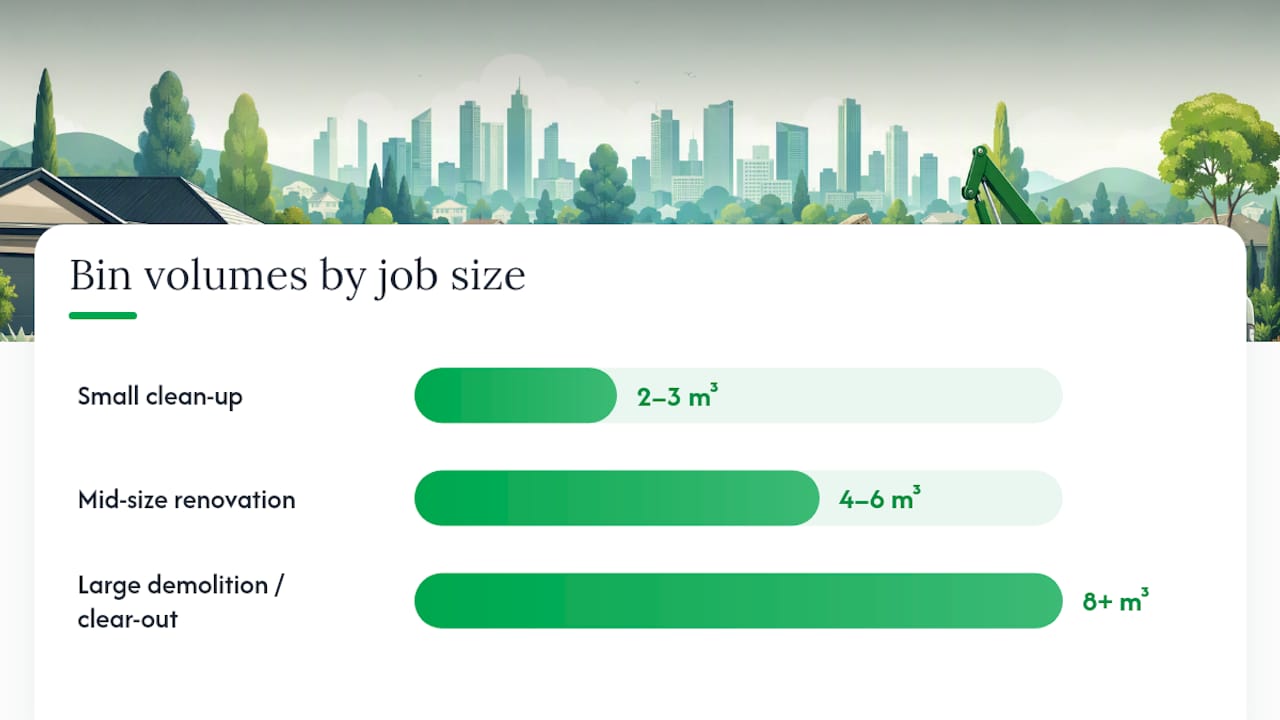
- A small clean-up (garden waste, a few bags of rubbish) generally sits at the lower end of the pricing scale for a 2m³ to 3m³ bin
- A mid-size renovation clean-out with mixed general waste typically needs a 4m³ to 6m³ bin and lands in the mid-range
- A large demolition or full home clear-out with heavier material usually needs an 8m³ or larger bin and costs more due to weight and processing
These are general patterns, not fixed prices. Actual costs vary by postcode, waste type, and local levy rates.
How to Avoid Hidden Fees Before You Book
Booking smart takes ten extra minutes and saves you from a bill that doesn’t match what you expected. Run through these steps before you hand over payment details.
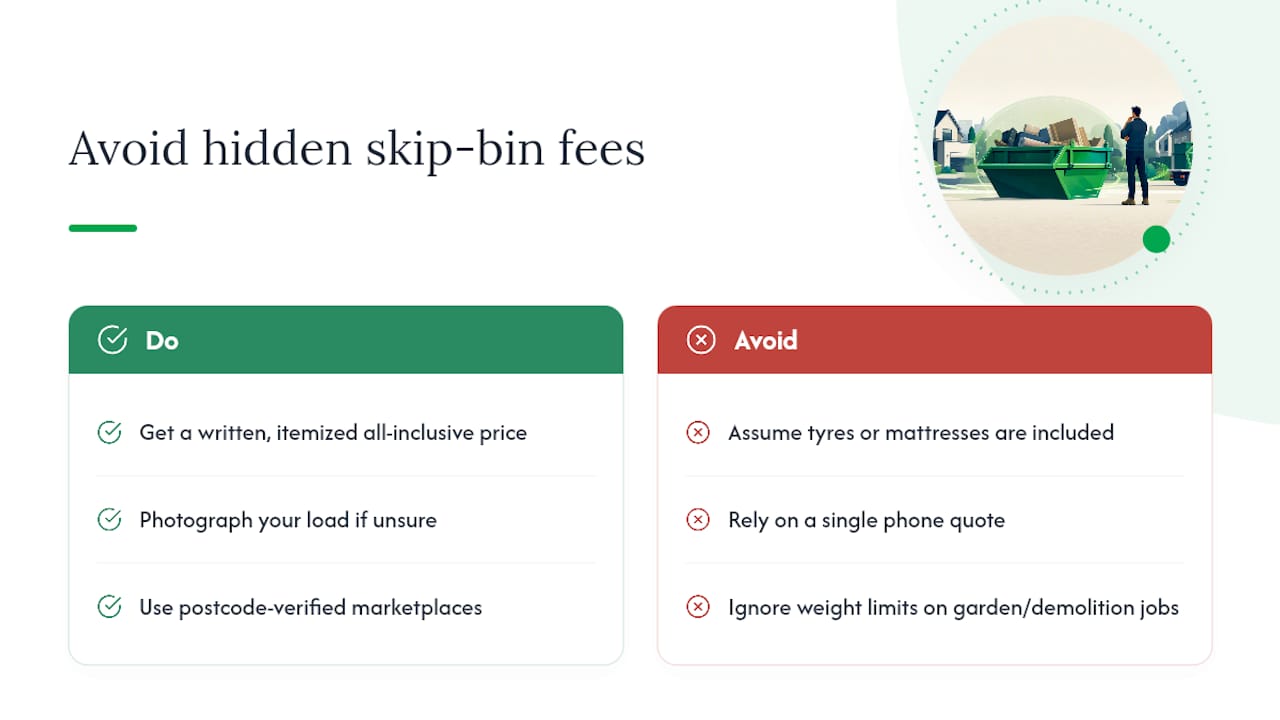
- Get a written, itemized quote. It should show delivery, pickup, disposal, levies, GST, the included weight allowance, and the surcharge rate for going over.
- Estimate your waste type honestly. Separate recyclables where you can, and flag any mattresses, tyres, or chemicals upfront rather than letting them show up as a surprise at the tip.
- Pick the right bin size from the start. A slightly larger bin almost always costs less than paying for a second hire, so round up when you’re between two sizes.
- Confirm who handles the permit. If the bin sits on public land or a footpath, get it in writing whether the supplier or you arrange and pay for council approval.
- Negotiate the fine print. Ask for levy-inclusive pricing or a capped excess-weight rate, and get cancellation and extension terms in writing before the bin arrives.
Pro Tip: Take a photo of your load before pickup if you’re unsure whether something counts as restricted. It gives you proof of what went in, which matters if a provider ever disputes the contents after collection.
Questions to Ask Before You Pay a Deposit
A short phone call or email exchange tells you almost everything about how a supplier handles pricing. Run through this list and pay attention to how directly each question gets answered.
- “Is this total price all-inclusive?” A confident yes with a written breakdown is the acceptable answer. Vague phrasing like “it depends on the load” is the red flag.
- “What’s my included weight, and what’s the per-tonne rate above that?” You want an exact figure, not “we’ll assess it at the tip.”
- “What items are restricted, and what happens if one turns up?” A clear list beats “we’ll let you know if there’s an issue.”
- “Who arranges and pays the council permit if needed?” Get a name on this before delivery day, not after.
- “What if I need the bin an extra day?” A flat daily rate in writing is fine. “We’ll figure it out” is not.
Why This Guidance Comes From Local Skip Bin Hire
Local Skip Bin Hire has spent more than 15 years matching Australian customers with local suppliers, and the platform’s pricing model bakes delivery, pickup, and waste removal into one quote instead of splitting them into separate line items later. That structure exists because unbundled quotes are exactly where surprise fees hide.
For readers digging deeper, our guides on contamination charges and skip bin hire for renovations cover builder-specific scenarios in more detail. If you want a postcode-specific example or have a question about your own job, Brett and the team are happy to walk through it with you.
What I’ve Learned From Watching Skip Bin Bookings Go Wrong
The same three items trip people up over and over: tyres, mattresses, and wet soil. None of them are exotic. They’re just the items customers assume are “included” until the invoice says otherwise. Weight surprises hit hardest on demolition and garden jobs, where a few extra wheelbarrows of dirt can tip a load into overweight territory fast.
If there’s one rule worth remembering, it’s this: always get a written, itemized, all-inclusive price, and photograph your load if you’re ever unsure what counts as restricted. Marketplaces that verify supplier inclusions at the postcode level, rather than relying on a single phone quote, cut down on exactly this kind of last-minute surcharge.
— Brett
Compare All-Inclusive Skip Bin Prices by Postcode
Local Skip Bin Hire is built around one idea: the price you see should be the price you pay. Every supplier listed on the platform confirms delivery, pickup, and disposal are included before their quote shows up against your postcode, which means you’re comparing real totals instead of guessing which one has a catch buried in the fine print.
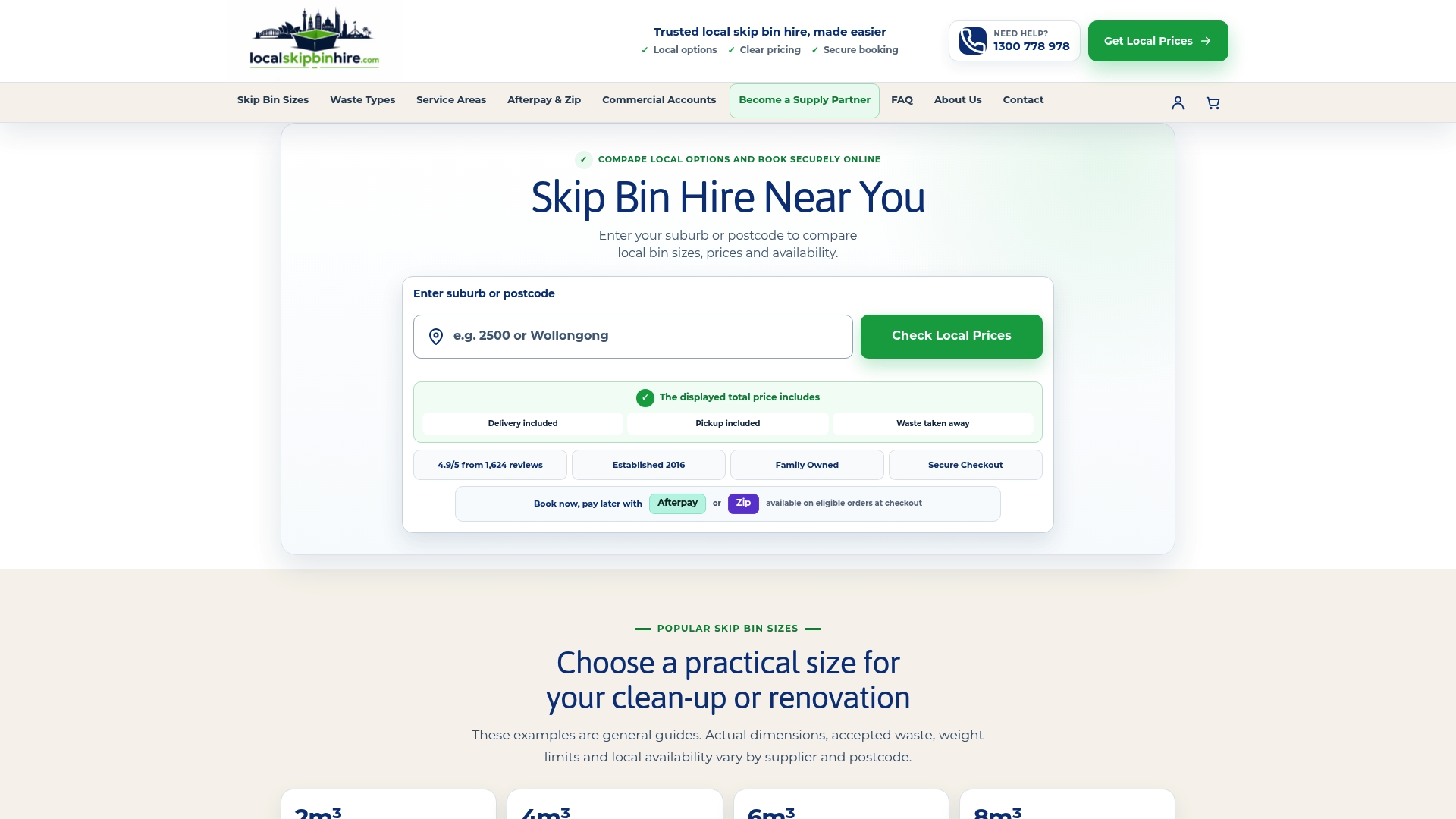
Whether you’re clearing a renovation site or doing a weekend garden clean-up, you can check your postcode for instant pricing and see exactly what’s included before you commit. Prefer to see a specific size and price first? Browse a sample listing like the 4m³ skip bin option to get a feel for how inclusions are laid out, then request your own written quote for your address.
Where to Check Local Rules and Levy Rates
Before you book, it’s worth confirming the rules that apply specifically to your council area and state. Most footpath and public-land placements require a permit, and your local council’s works and permits page will list the application process and fee.
For levy and processing rules that vary by state, the Waste Management and Resource Recovery Association of Australia publishes industry guidance on how contamination and disposal routes affect cost. Provider pages such as Cleanway’s skip bin guidance are also useful for seeing how inclusions are typically listed in the industry.
Sources
- Brisbane City Council — Footpath works and permits
- Waste Management and Resource Recovery Association of Australia (WMRR)
- Cleanway — Hire a skip bin in 2025
- Ridly Rubbish Removal — Hidden skip bin costs
Recommended
← Older Post Newer Post →