

Mini Skip Sizes: Choose the Right 2–4 yd³ Bin
Brett Taylor en mini skip sizes
A mini skip is any skip bin in the 2 cubic yard size, and it’s the right call for most small home projects that produce about 20–30 standard bin bags of waste. If you’re clearing a garden bed, pulling out a bathroom vanity, or emptying a shed, a mini skip will handle it without the cost or footprint of a larger bin.
Here’s a quick project-to-size match to get you started:
- 2 yd³: Garden tidy-ups, small declutters, a single room’s worth of junk
- 3 yd³: Bathroom or laundry refit, garage partial clearout, light kitchen demo
- 4 yd³: Full shed clearout, small kitchen renovation, mixed household and garden waste
If your project involves bulky furniture, heavy soil, or concrete, read the weight and volume warnings below before booking. A small skip bin can disappear fast when you’re loading doors and flat-pack shelving.
Table of Contents
- Mini skip sizes at a glance: dimensions, bag capacity, and weight
- How skip sizes are measured and why cubic yards matter
- What really fits in a mini skip — real examples and weight warnings
- Common projects that suit a mini skip — and which size to book
- How to choose the right mini skip — a short checklist
- Typical mini skip costs, what’s included, and permit basics
- Packing tips and the biggest mistake people make with mini skips
- Key Takeaways
- The thing most people get wrong when booking a mini skip
- Book the right mini skip size with Localskipbinhire
- Useful sources and further reading
Mini skip sizes at a glance: dimensions, bag capacity, and weight
The table below maps the three common mini skip sizes to the practical numbers you need when booking.
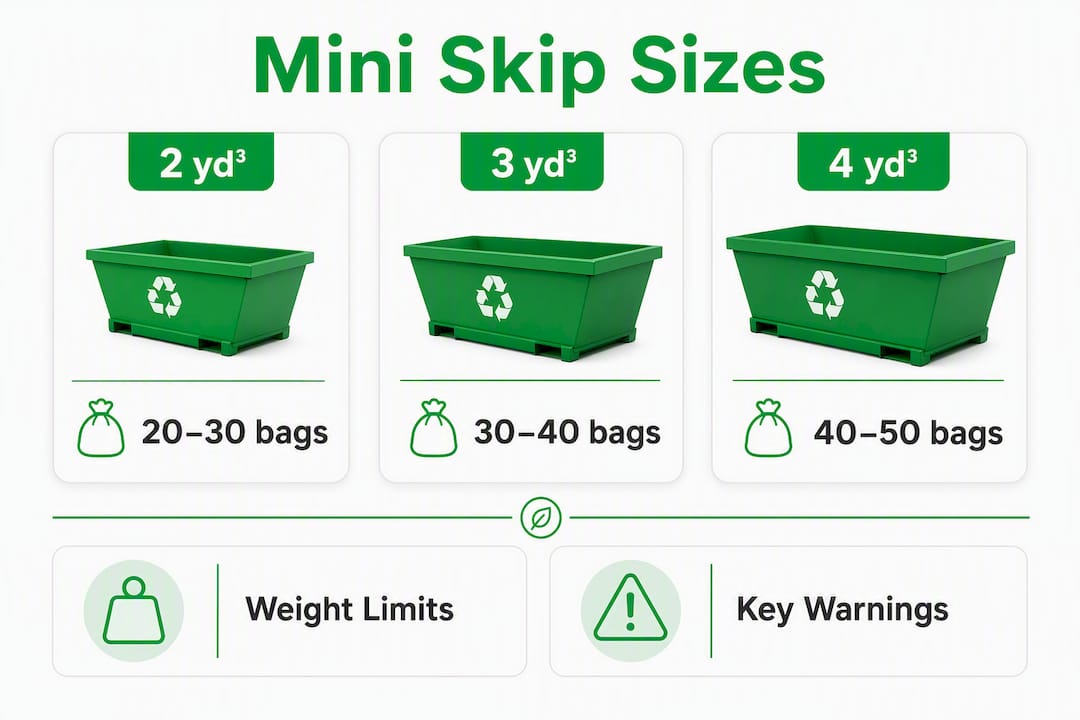
| Size Label | Approx. Dimensions (L × W × H) | Bag Capacity |
|---|---|---|
| 2 yd³ mini | — | About 20–30 bin bags |
Dimensions are approximate and vary by manufacturer. Always confirm with your supplier before booking.
A few things worth knowing before you measure your driveway:
- Footprint vs. internal volume: The external footprint of a skip is always larger than the internal volume suggests. Lifting lugs, rim overhang, and structural walls can add several inches to each side.
- Fill line: Skips must be loaded level with the top rim. Waste piled above the rim is illegal to transport and will trigger an overfill fee or a refused pickup.
- Weight limits reduce usable volume: If you’re loading heavy material like tiles or soil, you may hit the weight cap well before the bin looks full. A 2 yd³ skip loaded with concrete can reach its weight limit at roughly half capacity.
Pro Tip: Photograph your driveway and measure the available length and width before calling a supplier. Confirm the skip’s external dimensions, not just the internal volume, so you know it fits without blocking a gate or footpath.
How skip sizes are measured and why cubic yards matter
Suppliers quote skip capacity in cubic yards (yd³) or cubic meters (m³), and the two systems are often used interchangeably, which creates confusion. One cubic yard equals 27 cubic feet, or approximately 0.76 m³. So a 2 yd³ skip holds roughly 1.5 m³, and a 3 yd³ skip holds about 2.3 m³.
Three distinct measurements matter when you’re booking:
- Internal volume (cubic yards or m³): how much waste the bin can legally hold up to the fill line
- External footprint (length × width): the physical space the skip occupies on your driveway or street
- Height (fill depth): how deep you can load before hitting the legal fill line
Why does this matter? Because a bin that looks small on paper can still block a car space, and a bin that sounds large may hit its weight limit before it looks full. Cubic yards tell you capacity; footprint tells you placement; weight limits tell you what type of waste you can actually load.
Naming conventions also vary by region and supplier. Some companies label bins by cubic meters, others by cubic yards, and a few use both. Size naming varies across suppliers, so always ask for both the volume in cubic yards and the external dimensions in feet or meters when you get a quote.
What really fits in a mini skip — real examples and weight warnings
Knowing the bag count is useful, but most people think in items, not bags. Here’s what a 2–4 yd³ skip typically accepts:
- 2 yd³: 20–30 standard bin bags, or the equivalent in 8–10 bags of garden clippings, a small pile of broken timber, 4–6 flat-pack furniture pieces, or the contents of a single cluttered room
- 3 yd³: A bathroom suite (vanity, toilet, small cabinet), 15–20 bags of mixed household waste, or a shed’s worth of tools and broken shelving
- 4 yd³: A small kitchen demo (cabinets, benchtop, tiles), a garage clearout, or a combination of garden and household waste from a spring clean
Bulky, lightweight items are the biggest trap. A hollow-core door, a sofa cushion, or a flat-pack wardrobe takes up far more volume than its weight suggests. Two large doors and a mattress can fill a 2 yd³ skip before you’ve added a single bag of rubble. For large furniture pieces, a dedicated old furniture removal service is often a better fit than a mini skip.
Weight warnings are equally important. Soil, concrete, bricks, and tiles are dense. A 2 yd³ skip loaded entirely with soil can exceed its weight limit at roughly half the visual fill level. When your project involves heavy materials, ask your supplier specifically about the weight cap and whether a heavy-waste bin is available.
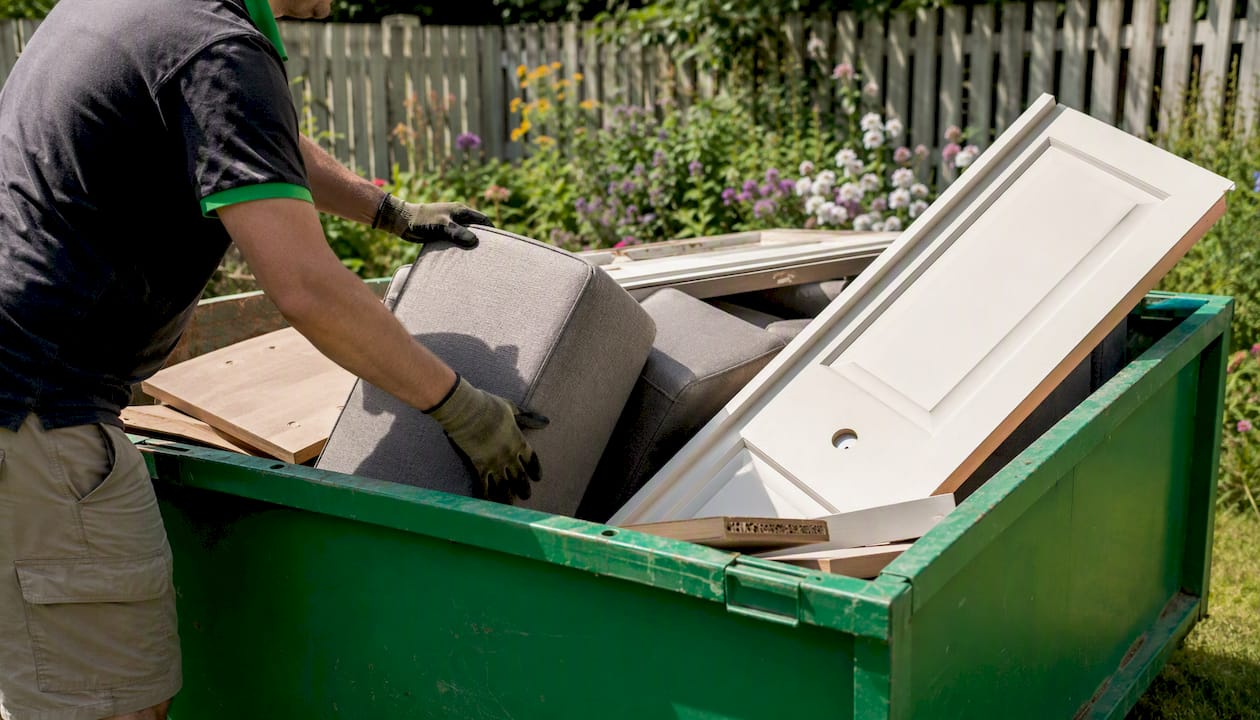
Pro Tip: Before booking, count the number of standard bin bags you expect to fill, then add 15–20% for items you haven’t thought of yet. That buffer prevents the most common booking mistake: ordering a size too small.
Common projects that suit a mini skip — and which size to book
Mini skips are the right tool for a specific range of jobs. Here’s how the most common small projects map to size:
- Garden clear-up: Pruning, weeding, and lawn waste fill bags fast but stay light. A 2 yd³ bin handles a weekend’s worth of garden work; step up to 3 yd³ if you’re removing a small tree or shrub.
- Bathroom refit: Vanity, toilet, tiles, and old cabinetry from a standard bathroom typically fill a 3 yd³ skip. Add a bathtub and you’ll want a 4 yd³.
- Shed or garage clearout: Depends heavily on what’s inside. A shed full of tools, timber offcuts, and broken equipment usually needs a 3–4 yd³ bin.
- Small kitchen demo: Removing cabinets, a benchtop, and flooring from a small kitchen fits a 4 yd³ skip. If you’re also pulling up tiles, check the weight limit first.
- Spring declutter: Clothing, boxes, old appliances, and general household junk from two or three rooms typically fit a 2–3 yd³ bin.
- Small renovation offcuts: Timber, plasterboard, and packaging from a small DIY project suit a 2 yd³ skip well.
Two situations push you beyond mini skip territory. First, if your project generates a lot of bulky furniture, a 4 yd³ bin may not be enough. Consider a 4m³ skip bin or larger. Second, mixed waste jobs that combine heavy rubble with light household items can hit weight limits before the bin looks full. Segregating heavy waste into a separate heavy-waste bin often saves money.
Recyclable materials are worth separating before you book. Removing clean timber, metals, or cardboard from your load can reduce the size you need and cut disposal costs. Eco-friendly disposal routes for households cover several practical options for diverting recyclables before they go into a skip.
How to choose the right mini skip — a short checklist
Most booking mistakes come from skipping the prep work. Run through these steps before you call a supplier:
- Measure your driveway. Note the available length, width, and any overhead clearance (trees, power lines, garage door). Compare against the skip’s external dimensions, not just its volume.
- Make a short item inventory. List the five or six largest items you’re disposing of. Bulky items determine your minimum size more reliably than bag counts alone.
- Estimate your bag count. Count the bags you expect to fill, then add 15–20% buffer. Cross-check against the bag-capacity table above.
- Check the weight of your waste. If more than a quarter of your load is soil, concrete, or tiles, ask specifically about weight limits and heavy-waste options.
- Confirm the fill line rule. Waste must sit level with the rim. If you’re unsure whether your load will fit, book one size up.
Questions to ask your supplier before confirming:
- What are the external dimensions of the skip (not just the internal volume)?
- What is the weight limit, and what happens if I exceed it?
- Is delivery, pickup, and disposal included in the quoted price?
- Do you handle permit applications for street placement, or is that my responsibility?
- What waste types do you not accept (e.g., asbestos, paint, mattresses, e-waste)?
Red flags in quotes: A price significantly lower than others with no listed exclusions is a warning sign. Reputable suppliers list what’s included and what’s not. A quote that doesn’t mention a weight limit or waste-type restrictions often means those costs appear later as surcharges.
Pro Tip: Ask for the skip’s external footprint in writing before booking. Manufacturers vary, and lifting lugs can add 4–6 inches to each side beyond the internal width. Confirming this prevents a delivery-day surprise.
Typical mini skip costs, what’s included, and permit basics
Mini skip hire prices vary by location, supplier, and waste type. As a general guide, a 2 yd³ mini skip typically costs less than a 4 yd³ bin, with the price difference reflecting both volume and disposal fees. Most reputable suppliers include delivery, pickup, and standard waste disposal in the quoted price.
What’s usually included:
- Delivery to your address and pickup at the agreed time
- Standard waste disposal and landfill or recycling fees
- A set hire period (typically 3–7 days for mini skips)
Common extras that add to the base price:
- Overfill surcharge if waste is loaded above the rim
- Heavy-waste surcharge for soil, concrete, or tiles beyond the weight limit
- Extended hire fees if you keep the skip longer than the agreed period
- Permit fees for street placement (where required)
Driveway vs. street placement: Placing a skip on your own driveway generally requires no permit in most US jurisdictions. Placing it on a public street or sidewalk usually requires a permit from your local municipality or public works department. Rules vary significantly by city and county, so confirm with your supplier or check directly with your local authority before booking a street placement.
Delivery logistics are straightforward for most driveways, but the truck needs clear access. A standard skip delivery vehicle requires roughly 20–25 feet of clear road space to maneuver. If your driveway is narrow or has a low overhead obstruction, flag this when booking.
Packing tips and the biggest mistake people make with mini skips
The single most common mistake is loading bulky items first without breaking them down. A whole wardrobe door, a full mattress, or an unflattened cardboard box creates air pockets that waste a third of your available volume. Better packing can effectively add the equivalent of several extra bags to a mini skip without changing its size.
Load in this order:
- Heavy, flat items first: Timber boards, doors, and sheet materials lie flat at the base and create a stable foundation.
- Medium items next: Bagged waste, small appliances, and broken-down furniture pieces fill in around the flat base.
- Loose fill last: Soil, rubble, and small debris fill the gaps between larger items.
Before-and-after packing reality: A 2 yd³ skip loaded with unbroken furniture and whole boxes might hold 15 bags of effective waste. The same skip loaded with broken-down items and flat base layers can hold 25–30 bags. That’s the difference between needing one skip and needing two.
The bulky-furniture trap is worth calling out specifically. Sofas, mattresses, and large wardrobes consume volume at a rate that surprises most people. If your clearout includes more than one or two large furniture pieces, either book a larger bin or arrange a separate furniture removal pickup. Trying to squeeze a three-seater sofa into a 2 yd³ skip is the fastest way to trigger an overfill fee.
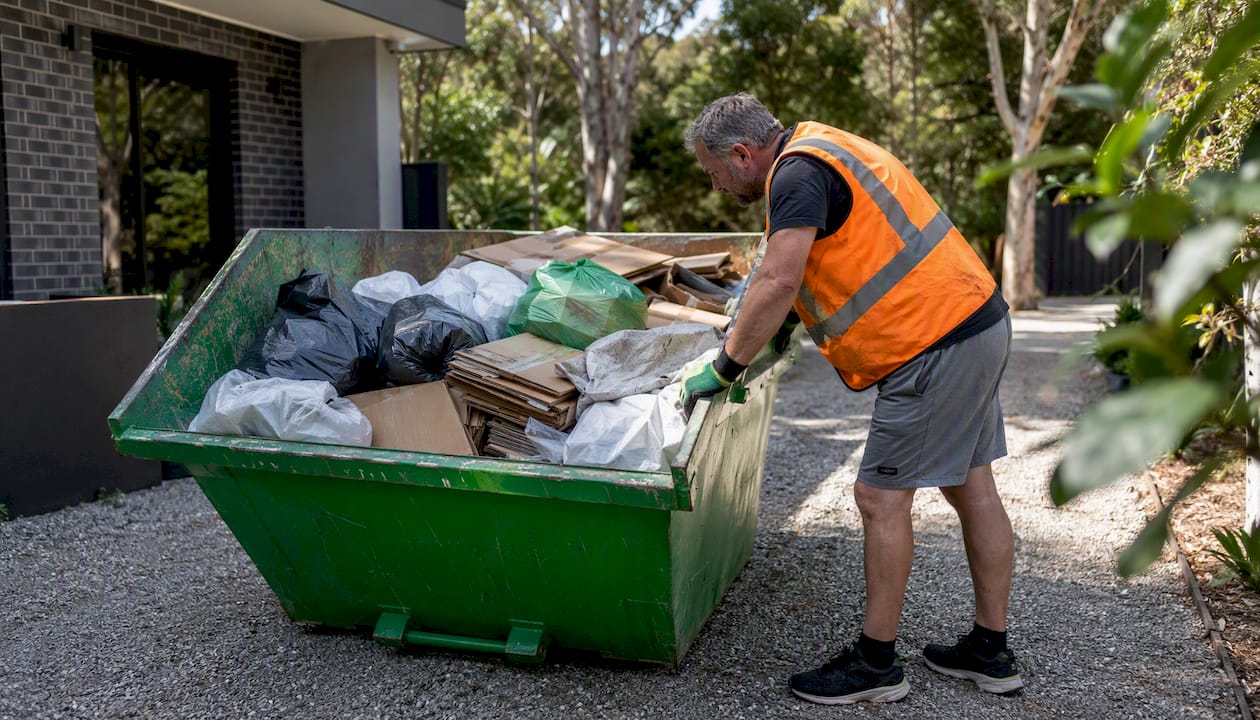
Pro Tip: Check the fill line visually as you load. If waste is within 6 inches of the rim and you still have items to go, stop and reassess. Requesting a second collection or a swap-out bin is cheaper than an overfill surcharge or a refused pickup.
For more detail on loading your skip bin to get the most from every cubic yard, Localskipbinhire has a practical guide covering level loading and packing strategies.
Key Takeaways
Choosing the right mini skip comes down to three things: matching volume to your project, checking the footprint against your driveway, and understanding weight limits before you load.
| Point | Details |
|---|---|
| Mini skip size range | Mini skips run around 2 cubic yards, holding about 20–30 standard bin bags. |
| Match size to project | A 2 yd³ suits tidy-ups and declutters; 3 yd³ fits bathroom refits; 4 yd³ handles small kitchen demos. |
| Weight limits matter | Heavy materials like soil or concrete can hit the weight cap at half the visual fill level. |
| Pack smart | Load flat heavy items first, break down bulky pieces, and use loose fill to close gaps. |
| Localskipbinhire booking | Localskipbinhire matches you to postcode-local suppliers with all-inclusive pricing for 2m³, 3m³, and 4m³ mini bins. |
The thing most people get wrong when booking a mini skip
Most homeowners focus on volume and ignore weight. It’s the wrong priority order. Volume tells you how much space you have; weight limits tell you what you can actually put in that space. A 2 yd³ skip loaded with garden soil hits its weight cap long before it looks full, and that’s when surcharges appear.
The second thing people underestimate is the difference between what a skip can hold and what it will hold given how they load it. Poor packing routinely cuts effective capacity by 30–40%. That’s not a supplier problem; it’s a loading problem, and it’s entirely preventable.
What the marketplace model at Localskipbinhire does well is surface both of these issues at the booking stage. Postcode-matched suppliers can tell you exactly what weight limits apply in your area and whether a heavy-waste bin is the smarter call for your project. Transparent, all-inclusive pricing means the weight surcharge conversation happens before delivery, not after pickup.
The advice I’d give any homeowner: spend five minutes making a written inventory of your five largest items before you book. That list will tell you more about the right size than any bag-count estimate.
Book the right mini skip size with Localskipbinhire
Knowing your size is one thing. Finding a local supplier who delivers it at a clear, all-in price is another. Localskipbinhire connects you with postcode-matched suppliers across metro and regional areas, so you’re comparing real local options rather than guessing at national averages.
Every booking through Localskipbinhire includes delivery, pickup, and disposal in the quoted price. No surprise fees at pickup, no separate disposal invoices. You can book a 2m³ mini skip for a garden tidy or declutter, or step up to a 3m³ bin for a bathroom refit or shed clearout. Need a little more room for a kitchen demo? The 4m³ option is available with the same all-inclusive pricing.
- Fast online booking with confirmed availability by postcode
- All-inclusive pricing: delivery, pickup, and disposal covered
- Labour-assisted loading available for jobs where you need a hand
Check availability and compare local skip prices to find the right bin for your project today.
Useful sources and further reading
- Mini Skip Capacity Guide: How Much Waste Can You Really Fit? — Practical breakdown of mini skip capacity with real loading examples
- What Skip Size Do I Need? — Dunmow Group — Clear size guide with project-to-bin matching
- Mini vs Midi vs Large Skips: Which Size Do You Need? — Able Skip Hire — Comparison of skip categories and when to step up in size
- What Is a Mini Skip? Sizes, Prices & Uses — Skip the Tip — Overview of mini skip uses and typical pricing
- Ultimate Guide to Choosing the Right Skip Size — Budget Waste — Detailed selection guide with weight and volume guidance
- Eco Friendly Waste Disposal for Households: 7 Ranked Routes — Practical options for diverting recyclables before booking a skip
- Skip Bin Sizes — Localskipbinhire — Full size guide and booking options across available bin sizes
- Best Practice for Loading Your Skip Bin — Localskipbinhire — Step-by-step loading guide to maximize capacity
Recommended
- What Size Skip Bin Do I Need? A Straightforward Guide – Local Skip Bin Hire
- Skip Sizes | Find the Right Skip Bin for Your Job – Local Skip Bin Hire
- www.localskipbinhire.com
- Skip Bin Sizes Guide | 2m³ to 15m³ Bins – Local Skip Bin Hire
Australian prices for the same three sizes
Australian suppliers quote in cubic metres, and on the conversion above the 2–4 yd³ range lands on the 2m³ and 3m³ bins sold here — with the 4m³ the next step up, the one this guide already points to for bulky furniture. Typical prices, checked August 2026:
- 2m³ — around $246 in Adelaide, $298 in Melbourne, $341 in Sydney
- 3m³ — around $356 in Adelaide, $436 in Melbourne, $594 in Sydney
- 4m³ — around $384 in Adelaide, $543 in Melbourne, $691 in Sydney
Note how little separates the 3m³ from the 4m³ in Adelaide against the same step in Sydney — sizing up is not the same decision in every city. Your postcode decides which end of each band you land on: check it on the price checker, or compare cities on the price index and the Adelaide cost page. Prices move and get re-checked.
← Older Post Newer Post →