

Skip Bin Overfill: Rules, Risks, and Fixes for Aussies
Brett Taylor en skip bin overfill
No, you can’t overfill a skip bin. Every load has to sit at or below the marked fill line, and lidded bins need to close flush. Go past it, and the driver can refuse to collect, leaving you with a full bin, a wasted trip, and possibly extra fees. This isn’t a suggestion from Local Skip Bin Hire or your local council. It’s a hard rule tied to road transport safety, and every reputable supplier enforces it the same way.
If your bin is already heaped above the rim, here’s what to do right now:
- Stop loading immediately and don’t try to compress or hide the excess under a tarp.
- Call your supplier before the scheduled pickup to flag the problem.
- Pull out the loosest, bulkiest items first to bring the load back under the line.
Pro Tip: Photograph your load the night before pickup. If a driver flags it as overfilled, you’ll have proof of how it looked before weather or shifting made it worse.
Key Takeaways
Skip bins must stay at or below the marked fill line, and getting the size right upfront costs less than fixing an overfill after collection is refused.
| Point | Details |
|---|---|
| Never exceed the fill line | Loads above the rim risk falling debris and can be refused at pickup. |
| Weight and height are separate limits | Dense materials like soil and bricks can hit weight limits before the bin looks full. |
| Pack in a sequence | Break down bulky items, lay flat pieces first, then fill gaps to maximize safe space. |
| Act fast if overfilled | Contact your supplier before pickup rather than letting the truck attempt an unsafe lift. |
| Size correctly with Local Skip Bin Hire | Postcode-matched suppliers and all-inclusive pricing help you book the right bin or add a second one before overfill becomes a problem. |
Table of Contents
- Why Skip Bin Overfill Rules Exist in Australia
- How to Pack a Skip Bin to Avoid Overfill
- What to Do If Your Skip Is Already Overfilled
- Choosing the Right Bin Size to Avoid Overfill
- Skip Bin Rules and Safety Notes Across Australia
- What 15 Years of Skip Bookings Taught Us About Overfill
- Get the Right Bin Size the First Time
- Sources
Why Skip Bin Overfill Rules Exist in Australia
The fill line isn’t arbitrary. A skip that’s heaped above the rim can’t be tarped, and an untarped load can shed debris on the highway at 100 km/h. That’s not a hypothetical: industry safety guidance is explicit that skips must stay within their approved maximum fill level precisely because loose items become projectiles during transport.
There are actually two separate limits at play, and mixing them up is where most overfill problems start. One is height: the visible line marked on the bin’s side. The other is weight, and it’s sneakier. A skip loaded with soil, bricks, or concrete can hit its safe carrying weight while still looking half empty, because dense materials eat through the weight allowance far faster than volume alone suggests.
Get either one wrong and the consequences stack up fast:
- The driver refuses collection on the spot rather than risk an unsafe lift.
- You’re left arranging a second pickup, which usually means a reloading or return fee.
- Loose debris that falls from an overloaded truck can trigger council fines for littering on public roads.
Statistic Callout: Across skip hire guidance, the same pattern shows up again and again: bins heaped above the rim get flagged for refusal before the truck even starts lifting, because drivers check fill level as a standard pre load step.
How to Pack a Skip Bin to Avoid Overfill
You can usually fit more waste than you think without ever touching the fill line, as long as you load with a plan instead of tossing things in as they come. The trick is treating the bin like a puzzle, not a bucket.
- Break down anything bulky first. Flatten cardboard boxes, disassemble furniture frames, and cut long timber into shorter lengths.
- Lay flat, rigid items across the base of the bin before anything else goes in.
- Stack heavier materials low and evenly across the floor rather than piling them in one corner.
- Fill gaps between larger pieces with smaller debris, offcuts, and loose rubbish.
- Leave a small buffer below the rim rather than packing right to the edge.
That last step matters more than most people realize. Providers commonly recommend leaving a small clearance below the rim of the skip so the load can be tarped securely and won’t shift during transport. so the load can be tarped securely and won’t shift during transport.
Material type changes the approach. Light, bulky waste like branches, furniture, and packaging can sit closer to the top, since it’s volume that fills the bin rather than weight. Heavy, dense material is the opposite problem entirely: soil, concrete, and bricks need to stay well below the rim, because they’ll max out the weight limit long before they max out the visible space. If you’re planning a renovation with a heavy waste stream, it’s worth reading through tips for using skip bins for heavy waste removal before you start filling anything.
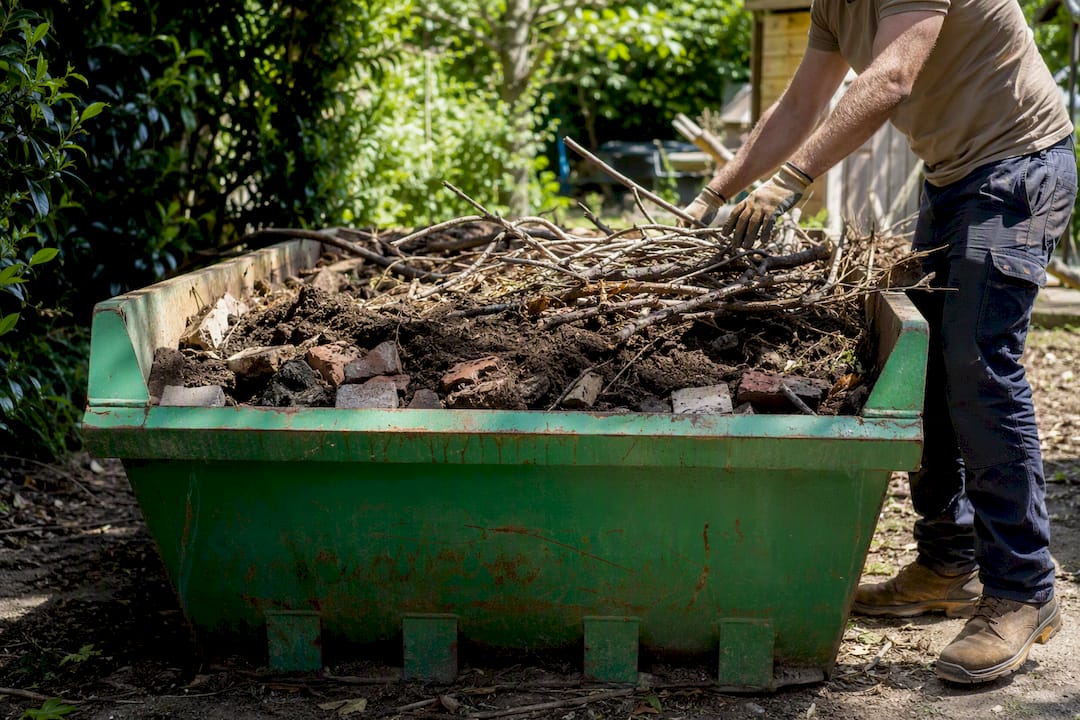
Pro Tip: Load your bin in stages if the project runs over several days. Waste generated in the final hours of a clean-up is what usually pushes a load over the line, so leave room deliberately for that last push rather than filling to the brim on day one.
What to Do If Your Skip Is Already Overfilled
Don’t let the truck attempt the lift. If a load is heaped above the rim or leaning unevenly, stop the collection and sort it out before the driver arrives, not after they’ve already tried.
Work through it in this order:
- Contact your supplier or Local Skip Bin Hire as soon as you notice the problem, ideally the day before pickup.
- Remove the loosest, lightest items first. This drops the visible height quickly without much heavy lifting.
- Redistribute anything piled unevenly so the load sits flatter across the bin.
- If you still can’t get under the line, ask about booking a second bin or a labour-included collection to shift the surplus safely.
Warning Callout: Trying to force a pickup by pressing debris down or covering it with a loose tarp doesn’t solve the problem. It just hides it until the load shifts on the truck, and reloading or return fees apply either way once a driver flags the bin as non-compliant.
Choosing the Right Bin Size to Avoid Overfill
Getting the size right at booking is almost always cheaper than fixing an overfill after the fact. A refused pickup costs you a rescheduled truck, possibly a reloading fee, and a delay you didn’t plan for. Sizing it correctly the first time avoids all of that.
For a small clean-up like a garage sort-out or a single room renovation, a compact bin is usually plenty. Garden waste from a weekend of pruning often needs more volume than weight capacity, since branches and clippings are bulky but light. Renovation waste is the trickiest category, because plasterboard, tiles, and old fixtures mix light and heavy material in the same load, so it’s worth checking what size skip bin you actually need before you commit.
If you already suspect your project will generate more than one bin’s worth, here’s how the main options stack up:
| Approach | Best for | Trade-off |
|---|---|---|
| Upsize to a larger bin | Projects with a known, larger waste volume from the start | Slightly higher upfront cost, but avoids reload fees entirely |
| Book a second bin | Mixed projects where waste arrives in stages | Two delivery and pickup windows to coordinate |
| Add labour-included pickup | Heavy or awkward items you can’t lift yourself | Higher cost per booking, but removes loading risk |
Planning your waste volume by material type before the job starts, rather than guessing at the end, is the single biggest factor in whether you need a second booking at all. If you’re managing a bigger renovation, our renovation waste management guide walks through staging waste across a multi-week job so you’re never caught out on collection day.
Skip Bin Rules and Safety Notes Across Australia
Australians face the same core safety check no matter which state they’re in: waste has to stay contained and under the fill line so the bin can be tarped and transported without spilling. That baseline doesn’t change from Perth to Brisbane, but the details around it can.
Keep these in mind wherever you’re booking:
- Many councils require a permit if your skip sits on a public road, footpath, or verge rather than on your own property.
- Some councils also set placement rules, like minimum distance from driveways or requirements for reflective markers at night.
- Waste spilling from a bin onto a public road can trigger a council fine, separate from anything your skip supplier charges.
Statistic Callout: Skip hire guidance consistently flags that placement on public property often triggers extra permit conditions, so it pays to check before delivery day, not after.
This is general guidance only. Confirm the specific rules for your postcode with your local council before placing a skip on public property.
What 15 Years of Skip Bookings Taught Us About Overfill
Most overfill problems trace back to one thing: underestimating volume before the job starts. Postcode matching and clear all-inclusive pricing help here, because when you know exactly what’s included upfront, there’s less temptation to cram a bigger job into a smaller bin to save a few dollars.
One pattern we see constantly is a renovation that starts with a small bin, runs fine for a week, then hits a wall on demolition day when plasterboard and old fixtures show up all at once. The fix is almost always the same: book the second bin or the upsize before that final push, not after the truck’s already been turned away.
Get the Right Bin Size the First Time
Local Skip Bin Hire matches you with a postcode-based local supplier and gives you all-inclusive pricing before you book, so there’s no guessing about what’s covered and no surprise fees showing up after the fact.
That transparency is what actually prevents overfill in the first place. When delivery, pickup, and waste removal costs are all spelled out upfront, you can size the job properly instead of trying to squeeze a big clean-up into a bin that’s too small. Our platform lets you filter by size and by waste type, including heavy-waste options for soil, bricks, and concrete, and if you need extra hands to load safely, labour-included pickup is available too.
If you’re mid-project and worried your current bin won’t cut it, don’t wait for collection day to find out. Head to find a skip in your area and compare available sizes, or check out a 4m³ option if you suspect you’re already close to the line. Booking a second bin now is almost always cheaper than a refused pickup later.
Sources
- How High Can You Fill a Skip? Everything You Need to Know - Lunnon Waste
- Skip Bin Overfilling: What Happens If You Exceed the Fill Line? - Best Bin Hire
Recommended
- Skip Bins for Builders: Running Waste Like a Line Item, Not an Afterth – Local Skip Bin Hire
- Skip Bin Hire Sydney: How to Get the Right Bin at the Right Price – Local Skip Bin Hire
- What Can (and Can’t) Go in a Skip Bin in Australia – Local Skip Bin Hire
- Skip Bin Hire Adelaide and Perth: A Guide for the Quieter Coasts – Local Skip Bin Hire
Sizing out of the problem, and when you cannot
Where a load is bulky and light, buying height is cheap. On the live Sydney suburb pages in August 2026 a 4m³ was from $443 and a 6m³ from $553 — Lakemba 2195 and Canterbury 2193 both showed that pair — so the rung above costs far less than a second hire and a second wait.
Where weight is the binding limit it buys nothing. Soil, brick and concrete reach their tonnage while the bin still looks half full, so extra height only gives you more room to go over the line. Keep dense material low and book a second collection instead. Price the postcode and the waste type together — these were August 2026 readings.
← Older Post Newer Post →