

Skip Bin Permits in Victoria: What You Need to Know
Brett Taylor en skip bin permits victoria
Yes, you usually need a skip bin permit in Victoria when the bin sits on council-owned land, including a road, nature strip, footpath, or parking bay. Bins placed entirely on private property generally do not require one. The permit system exists to protect public safety and council infrastructure, and it is enforced across every Victorian municipality.
The three fastest ways to get moving:
- Hire a registered skip bin supplier who can apply for the permit on your behalf (most councils require the supplier, not the resident, to apply).
- Check the Service Victoria permit portal for your council’s application link and registration requirements.
- Call your local council directly to confirm placement rules, fees, and any location-specific restrictions before booking.
Pro Tip: If you are a homeowner or contractor, you almost certainly cannot apply for the permit yourself. Councils typically only accept applications from registered skip bin companies with a valid ABN and public liability insurance. Hire a registered supplier first, then let them handle the paperwork.
Key Takeaways
Placing a skip bin on council land in Victoria without a valid permit exposes you to fines, removal costs, and liability for infrastructure damage, all of which are avoidable by hiring a registered supplier and applying through the correct council portal.
| Point | Details |
|---|---|
| Permit required on council land | Any bin touching a road, footpath, nature strip, or parking bay needs a council permit before placement. |
| Residents cannot self-apply | Councils require applications from registered suppliers with a valid ABN and $20M public liability insurance. |
| Safety conditions are mandatory | Retro-reflective tape visible from 200m, minimum footpath clearance, and supplier ID on the bin are standard requirements. |
| Processing time varies | One-off permits can take 5–14 business days; accredited annual providers often notify and place within 24–48 hours. |
| Localskipbinhire simplifies the process | Postcode-matched registered suppliers handle permits, insurance, and compliance so you can book with confidence. |
Table of Contents
- When do skip bin permits in Victoria apply to your situation?
- Who can apply, and what registration do suppliers need?
- What do permit fees typically cost, and how long do permits last?
- What safety conditions come with a permit?
- How to apply for a skip bin permit in Victoria, step by step
- What happens if you place a bin without a valid permit?
- Are there exemptions or special cases you should know about?
- Why hiring a registered supplier reduces your risk
- A practical note on what causes delays and how to avoid them
- Localskipbinhire connects you with registered suppliers who handle permits
- Official resources to consult before you apply
- Sources
When do skip bin permits in Victoria apply to your situation?
The trigger is simple: the moment any part of the bin touches council-owned land, a permit is required. Here is what that looks like in practice.
Permit required:
- Placement on a road carriageway or parking bay
- Placement on a footpath or nature strip
- Placement in a construction zone that falls on council land
- Any location where the bin obstructs pedestrian or cyclist access
- Placements near intersections, bus stops, or school crossings (these often carry additional restrictions or outright bans)
No permit required:
- The bin sits entirely within your private driveway or yard, with no part overhanging the footpath or nature strip
The distinction matters more than most people expect. A bin that sits mostly on your driveway but extends two feet onto the footpath still requires a permit. Councils treat the footpath as public land, and the liability follows.
Arterial roads and tram corridors are a separate category entirely. Many councils ban skip bins on arterial roads outright, and placement near tram safety zones or school crossings typically requires additional safety measures or is prohibited. Always check your specific street classification before booking.
Pro Tip: Use your council’s online mapping tool to confirm whether your street is classified as a local road or an arterial road. That single check can save you a rejected application.
Who can apply, and what registration do suppliers need?
Residents and property owners generally cannot apply for a skip bin permit themselves. Knox City Council makes this explicit: councils will reject applications unless submitted by an authorized supplier representative with a valid ABN and current insurance. Your job as a resident or contractor is to hire a compliant supplier and let them lodge the permit.
What councils typically require from suppliers:
- A valid Australian Business Number (ABN)
- Public liability insurance with a minimum cover of $20 million, with the council listed as an interested party
- Company registration with the relevant council (separate from state business registration)
- Contact details and company name clearly displayed on every bin
The $20 million insurance minimum is not arbitrary. Boroondara City Council requires an insurance certificate of at least $20 million, and the City of Melbourne applies the same threshold. The figure reflects the potential cost of damage to underground services, footpaths, or third-party vehicles if a bin is struck or causes an incident.
Accredited annual providers vs. one-off permits: Many councils offer two tracks. Accredited annual providers register once, pay an annual fee, and then notify the council per placement rather than waiting for full approval each time. One-off permits require a separate application for each placement, carry longer lead times, and often cost more per placement. Knox documents both options clearly, and Boroondara offers the accredited path as a way to speed approvals for high-volume operators.
If you are a skip bin operator looking to work across multiple Melbourne councils, the accredited annual route is worth the upfront registration effort. The per-placement notification process is significantly faster than submitting a fresh application every time.
What do permit fees typically cost, and how long do permits last?
Fees vary by council, placement type, and timing. Most permits cover a default period of seven days, with extensions available on request. The fee structure usually combines an application fee with a daily or per-parking-bay charge.
Fee amounts change periodically. Always confirm the current schedule directly with your council or via the Service Victoria portal before applying.
The City of Melbourne charges both an application fee and a per-parking-bay daily fee, with an additional surcharge for out-of-hours placements. If your delivery falls outside standard business hours, budget for that extra cost. Councils define “out-of-hours” differently, so confirm the permitted window when you apply.
Key points on duration and changes:
- Most councils default to a seven-day permit; extensions require a new application or a formal request before expiry.
- If you need to cancel or shorten the permit, notify the council promptly. Some councils refund unused days; others do not.
- Accredited providers at councils like Knox and Boroondara often have streamlined extension processes compared with one-off applicants.
What safety conditions come with a permit?

Every permit comes with conditions, and breaching them carries the same penalties as having no permit at all. The Transport for Victoria Code of Practice for the Placement of Waste Bins on Roadsides sets the baseline standard that all Victorian councils build on.
Standard safety requirements across most councils:
- Retro-reflective tape or lighting: Bayside City Council requires yellow retro-reflective tape or lights visible from 200 meters between sunset and sunrise.
- Footpath clearance: Bayside mandates a minimum 1.2 meters of clear footpath. Some councils require up to 3 meters depending on the street type.
- Supplier identification: The company name and contact number must be clearly marked on the bin at all times.
- Placement restrictions: Bins cannot be placed in clearways, bus zones, or within 10–20 meters of intersections, school crossings, or tram safety zones.
- Maximum bin size: Councils often cap the size of bins permitted for roadside placement; check your council’s specific limit before ordering a large bin.
- Reinstatement obligation: If the bin damages the footpath, nature strip, or underground services, the permit holder is responsible for repair costs.
The Transport Victoria Code is the document that underpins all of this. Councils add local conditions on top of it, but the Code’s visibility and clearance requirements apply everywhere in Victoria. Suppliers who are unfamiliar with it are a red flag.
Statistic to note: Bayside’s 200-meter nighttime visibility requirement is a concrete, measurable standard. If a bin lacks compliant reflective tape and a pedestrian or cyclist is injured, the supplier and permit holder share liability exposure.
How to apply for a skip bin permit in Victoria, step by step
-
Identify your council. Use the Know Your Council tool or search your suburb to confirm which local government area covers your address. Each council has its own fee schedule, permitted hours, and application portal.
-
Confirm placement and bin dimensions. Decide whether the bin will sit on private property or council land. If it touches council land, measure the space and confirm the bin size fits within your council’s roadside limits. Check how many parking bays it will occupy.
-
Gather your documents. Your supplier will need: a valid ABN, a current public liability insurance certificate (minimum $20 million, with the council listed as an interested party), a site plan or photo showing the proposed placement, and a Traffic Management Plan if required by the council. Payment details are needed at submission.
-
Submit via the council portal or Service Victoria. The Service Victoria portal links to individual council application pages. For most councils, the registered supplier submits the application, not the resident. Follow up if the council requires a site inspection before approval.
-
Confirm the permit reference before delivery. Ask the supplier to provide the permit number and a copy of the approval before the bin arrives. Keep a copy on site.
Pro Tip: One-off permit applications at councils like Knox can take 5–14 business days to process, especially if a site inspection is required. Accredited annual providers can often notify the council and place the bin within 24–48 hours. If your timeline is tight, ask your supplier which track they are on before you book.
For readers outside metropolitan Melbourne, the regional Victoria skip bin guide covers permit variations in Geelong, Ballarat, Bendigo, and surrounding areas.
What happens if you place a bin without a valid permit?
The consequences are financial and practical. Councils across Victoria enforce permit requirements actively, and the costs of noncompliance add up quickly.
Common enforcement actions:
- On-the-spot fines or infringement notices issued to the supplier or permit holder
- Immediate bin removal by council rangers, with impoundment fees charged to the responsible party
- Cost recovery invoices for any damage to footpaths, nature strips, or underground services caused by the bin or its removal
- Refusal of future permit applications for suppliers with a history of noncompliance
Knox City Council documents that councils can charge for removal and repair costs on top of any fine. If a bin damages a footpath slab or a water main, the repair bill can far exceed the original permit fee.
If you spot a bin that appears dangerously placed, with no reflective markings, blocking a footpath, or sitting on an arterial road without signage, contact your local council’s ranger or customer service line. Note the supplier name and contact number on the bin, the street address, and the time you observed it. That information helps councils act quickly.
Are there exemptions or special cases you should know about?
A few situations fall outside the standard permit process, and getting them wrong is a common source of rejected applications or unexpected fines.
Exemptions:
- Bins placed entirely on private property with no overhang onto council land do not require a permit in most Victorian councils.
- Construction parking zones may be exempt from standard skip bin permit requirements if they meet specific signage rules under the relevant traffic management framework. Confirm with your council before assuming this applies.
Special cases that need extra attention:
- Arterial roads: Most councils prohibit skip bins on arterial roads entirely. Boroondara is explicit about this restriction.
- Tram corridors and school crossings: Placement near tram safety zones or within proximity of school crossings typically requires additional safety measures or is outright banned.
- Long-term construction projects: Extended or rolling permits are available through accredited annual provider arrangements at councils like Knox and Boroondara. These are worth arranging early for projects running longer than a week.
- Events: Large-scale events with multiple bins may require a separate event permit or traffic management plan in addition to individual bin permits.
Pro Tip: Even if you believe your placement qualifies for an exemption, call the council and get written confirmation. A verbal assurance from a ranger is not protection against an infringement notice issued by a different officer.
Why hiring a registered supplier reduces your risk
The permit system in Victoria is designed around supplier accountability, not resident self-service. Transport for Victoria frames the entire Code of Practice around public safety and infrastructure protection, which is why councils prioritize registered supplier registration over resident applications.
When you hire a registered supplier, you get several practical protections:
- The supplier’s $20 million public liability insurance covers damage to council assets, reducing your personal financial exposure.
- Accredited providers already know local placement rules, restricted zones, and permitted hours, which means fewer rejected applications and faster approvals.
- The supplier carries the permit in their name, so enforcement actions go to them first if conditions are breached.
Checklist for hiring a compliant supplier:
- Confirm the supplier is registered with your specific council (not just registered as a business).
- Ask to see a current public liability insurance certificate showing the $20 million minimum and the council listed as an interested party.
- Check that the bin will arrive with the company name and contact number clearly displayed.
- Ask the supplier to lodge the permit and provide you with the permit reference number before delivery day.
City of Melbourne guidance reinforces this: accredited operators already hold the necessary insurance and know local rules, which is why councils actively encourage residents to work through registered suppliers rather than attempting self-applications. Once a supplier holds accredited status, per-placement notification replaces the full application process, cutting approval time significantly.
For a broader look at permit processes across Australian councils, the Localskipbinhire blog covers the key variations state by state.
A practical note on what causes delays and how to avoid them
The most common reasons permit applications stall are not complicated. Missing insurance details are the single biggest cause: the certificate needs to name the correct council as an interested party, and a generic certificate without that endorsement will be rejected. Incorrect site diagrams are the second most frequent problem. A rough sketch that does not show the street, the bin dimensions, and the distance from the nearest intersection gives the council nothing to assess.
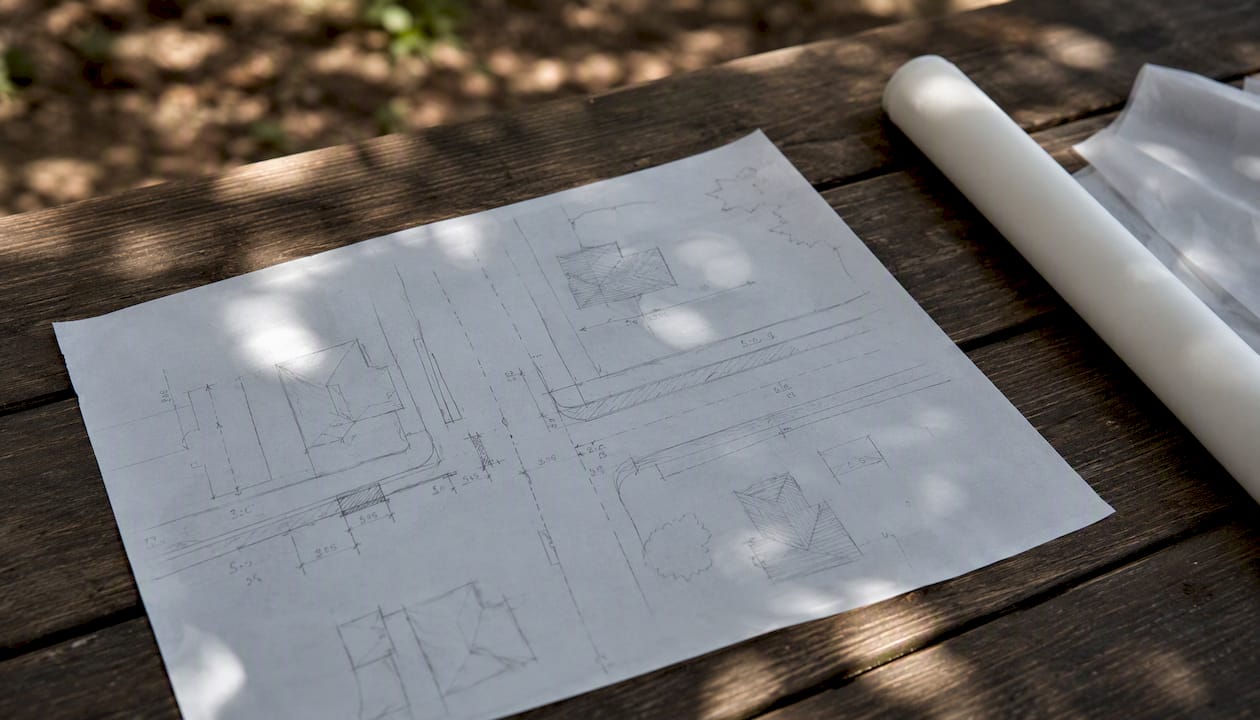
A few fixes that consistently speed things up: pre-check your council’s online mapping tool to confirm the street classification and any location-specific bans before you submit. Provide a clear photo of the proposed placement spot alongside any site plan. Confirm the bin size fits within your council’s roadside limits before ordering. Coordinate the drop-off time with the permitted placement hours listed on the permit, and make sure the driver has a copy of the permit reference on delivery day.
Keep the permit receipt and a photo of the bin in its final position. If a council ranger questions the placement, having both on hand resolves the situation quickly.
Localskipbinhire connects you with registered suppliers who handle permits
Navigating council permit requirements across Victoria’s 79 local government areas takes time, and the paperwork is easy to get wrong. Localskipbinhire connects you with registered local suppliers who already hold council accreditation, carry the required $20 million public liability insurance, and know the placement rules for your specific postcode.
When you book through Localskipbinhire, your supplier can lodge the permit application, provide the permit reference before delivery, and handle the compliance details so you do not have to. Pricing is transparent and all-inclusive, covering delivery, pickup, and waste removal with no hidden fees. Postcode-matched suppliers mean you get a local operator who knows your council’s rules, not a national call center guessing at local requirements.
Ready to book a compliant skip bin for your Melbourne project? Browse available Melbourne skip bins or compare local suppliers and prices to find the right size and a registered operator for your area.
Official resources to consult before you apply
Check these authoritative sources for current fees, application forms, and local rules before submitting any application.
- Transport for Victoria: Placement of Skips on Roadsides — the baseline Code of Practice covering visibility, markings, and clearance requirements across all Victorian councils.
- Service Victoria: Skip Bin Permits — central portal linking to individual council application pages and supplier registration steps.
- City of Melbourne: Place Skips, Bins or Containers on the Road — Melbourne-specific fees, permitted hours, insurance requirements, and Traffic Management Plan guidance.
- City of Boroondara: Skip Bin Permit — ABN and $20M insurance requirements, accredited annual provider details, and arterial road restrictions.
- Bayside City Council: Apply for a Skip Bin Permit — retro-reflective tape standards, footpath clearance minimums, and reinstatement obligations.
- Knox City Council: Skip Bin Permits — accredited annual permit vs. one-off permit comparison, lead times, and enforcement actions.
Each council’s portal carries the current fee schedule and the online application form. Fees are updated periodically, so always download the latest schedule directly from your council’s website rather than relying on third-party summaries.
This article is general information, not a substitute for advice from a qualified lawyer. Consult a qualified legal professional about your own circumstances before acting on anything here.
Sources
- Placement of skips on roadsides | Transport for Victoria
- Place skips, bins or containers on the road | City of Melbourne
- Skip Bin Permit | City of Boroondara
- Apply for a skip bin permit | Bayside City Council
- Skip bin permits | Knox City Council
- Open a business in Victoria | Service Victoria
Recommended
- Skip Bin Hire Melbourne: Sizes, Prices and What Locals Should Know – Local Skip Bin Hire
- Skip Bin Hire in New South Wales: What You Need to Know – Local Skip Bin Hire
- A Guide to Permits and Regulations for Skip Bin Placement in Australia – Local Skip Bin Hire
- Skip Hire Bayside Melbourne: Sizes, Permits and Prices – Local Skip Bin Hire
What the hire itself costs, before the permit
A council fee is a line item on top of the bin, so the base matters. In August 2026, Melbourne 2m³ bins started at $189 and typically ran $298; a 4m³ started at $418 and typically came to $543; a 6m³ was typically $743. On the Geelong-area pages a 4m³ was $465. Where a driveway or front yard can take the bin, the hire generally sits outside the permit system altogether — often the difference between a delivery this week and one waiting on an application. Compare by size on the Melbourne cost page, or by area for eastern Melbourne councils such as Knox and Boroondara and for Geelong. Postcode and waste type both move the figure; the checker gives the exact price.
← Older Post Newer Post →