

How to Protect Your Driveway from a Skip Bin
Brett Taylor en skip bin driveway protection
The single best skip bin driveway protection method is simple: lay 18 to 22mm scaffold boards or 12 to 18mm plywood across the spots where the bin’s feet or skids will sit, or use heavy-duty rubber mats instead. Ask your supplier for a skip fitted with rubber feet or skids rather than sharp steel edges, and never let the bin overload past its rated capacity — local experts at Melbourne City Rubbish recommend this to protect your driveways and surfaces safely. Before delivery day, confirm whether your placement needs a council permit, because private driveways usually don’t, but nature strips and roads often do.
Two things to do: spread the load across boards or mats, and double check the truck has clear access before it arrives. Two things to avoid: don’t let the driver drag the bin across pavers or resin, and don’t leave it sitting overloaded for days waiting for a pickup slot. The detailed checklist below walks through exactly how to prepare those boards and what to ask your supplier when you book.
- Lay 18 to 22mm scaffold boards or 12 to 18mm plywood, or use heavy-duty mats
- Request rubber feet or skids on the bin itself
- Distribute weight evenly and stay within the rated capacity
- Confirm permit requirements before the truck shows up
- Never let the driver drag the bin into place
Key Takeaways
Protecting a driveway from a skip bin comes down to spreading the load with boards or mats, avoiding overload, and confirming permit rules before the truck arrives.
| Point | Details |
|---|---|
| Use load-spreading boards | Lay 18 to 22mm scaffold boards or heavy-duty mats across contact points before delivery. |
| Request rubber feet or skids | Ask your supplier to fit the skip with feet that reduce point pressure on your surface. |
| Distribute weight evenly | Spread heavy items across the bin’s base instead of dumping them in one corner. |
| Check permits before booking | Private driveways usually skip permits, but nature strips and roads often need council approval. |
| Match protection to your surface | Resin and tarmac need extra care compared to plain concrete or pavers. |
Table of Contents
- What Damage Can a Skip Bin Actually Cause to Your Driveway?
- How Do You Set Up Boards and Mats Before Delivery?
- What Should You Check Before Booking a Skip Bin?
- Does Your Driveway Surface Change the Protection You Need?
- How Local Skip Bin Hire Helps You Avoid Driveway Damage
- Where to Check Permit Rules and Placement Guidance
- Why Most Driveway Damage Advice Misses the Point
- Sources
What Damage Can a Skip Bin Actually Cause to Your Driveway?
A filled skip bin is heavy, and it gets heavier fast once someone tosses in a load of bricks or wet garden waste. That static weight alone can crack older or thinner concrete slabs, but the real damage tends to happen during delivery and pickup, when the truck’s hydraulic arm lowers or lifts the bin and creates sudden, concentrated point loads.
The most common driveway damage from skip bins includes hairline cracks in concrete, pavers that shift or sink under the bin’s feet, scuff marks and gouges on resin or painted decorative surfaces, and rust or oil stains where metal skids sit for days. Operator guidance from skip hire providers consistently points to load distribution and surface prep as the two biggest factors separating a clean job from a costly one.
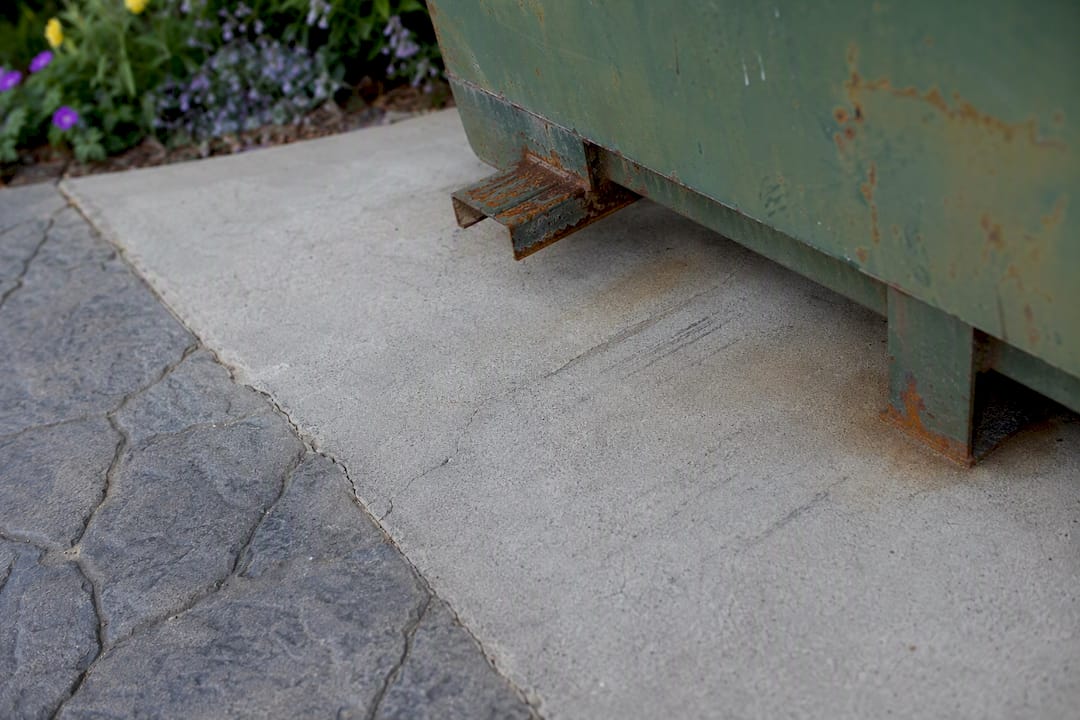
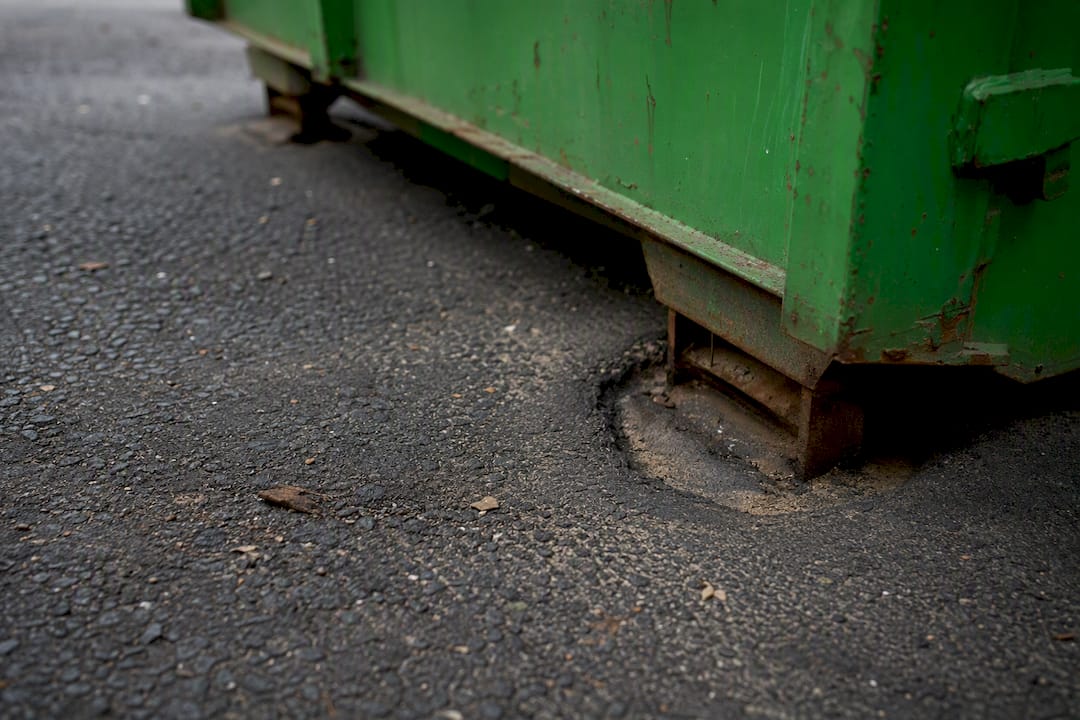
Soft surfaces make things worse. Tarmac and asphalt soften in hot weather, so a bin left sitting on a 35 degree afternoon can leave visible indentations that never fully bounce back. Slopes add another problem entirely, since a bin on an incline concentrates weight unevenly on its downhill feet and increases the chance the driver drags rather than lowers it into place.
How Do You Set Up Boards and Mats Before Delivery?
Getting this right takes fifteen minutes and saves you a much longer argument later about who pays for a cracked driveway.
- Choose your material. Scaffold boards at 18 to 22mm thickness or plywood sheets at 12 to 18mm work well for concrete and pavers. For soft tarmac or resin, heavy-duty driveway protection mats outperform timber because they flex slightly and don’t concentrate pressure into narrow edges.
- Position the boards to span contact points. Lay them so they cross where the bin’s feet or skids will land, not just underneath the center. Overlap adjoining boards by a few centimeters so nothing shifts when the load comes down.
- Anchor them lightly. A brick or paver at each corner stops boards sliding as the truck maneuvers, especially on a driveway with any slope.
- Call ahead and ask your supplier three things: whether they can fit the skip with rubber feet or skids, whether the driver will place the bin directly onto your boards or mats, and whether they charge extra for that service. Most local operators will do it for free if you ask when booking rather than on the day.
- Load evenly. Spread heavy items like bricks, tiles, and soil across the base of the bin rather than dumping them in one corner. A skip loaded unevenly puts more strain on one set of feet, which is exactly the kind of concentrated load that cracks concrete. If you’re not sure your waste will fit without overfilling, choosing a larger bin size is almost always cheaper than repairing a driveway.
- Time it right. Book delivery and pickup for the cooler part of the day if you’re on tarmac or asphalt, since heat softens the surface and makes it more vulnerable to indentation. Keep the bin on your driveway only as long as you actually need it.
- Clear the way. Move cars and anything blocking the path so the driver can lower the bin straight onto your prepared boards without needing to reposition or drag it.
Pro Tip: When you book online, add a line in the notes asking the driver to place the bin on protective boards you’ve already laid out. Suppliers appreciate knowing in advance, and it avoids any confusion or delay when the truck actually arrives.
What Should You Check Before Booking a Skip Bin?
A few measurements and questions upfront prevent a truck showing up to a driveway it can’t actually use.
Measure your driveway’s width at the exact spot where the skip will sit, and check overhead clearance for the delivery vehicle’s hydraulic arm. Most skip trucks need a practical minimum of around 2.8 meters of clear width to maneuver comfortably, so a narrow or gated driveway is worth flagging when you book.
Permit rules matter too. Placing a bin on your own driveway generally doesn’t require a permit, but putting it on a nature strip, footpath, or road usually does, and councils like Knox require compliance with visibility, reflector, and removal-date rules for anything on public land. Some councils, including East Gippsland, require a formal application and site plan before you place a bin off your property. The ABLIS permit register confirms this is standard practice across many councils, not a one-off rule.
Before you call a supplier, run through this list:
- Can you provide protective boards or mats, or should I supply my own?
- Do you offer driver-placement onto boards, and is there an extra fee?
- Will the bin need to sit on the road or nature strip if my driveway won’t fit it?
- What’s your policy if the driveway is damaged during delivery or pickup?
Our guide to permits and regulations for skip placement breaks down what each council typically expects.
Does Your Driveway Surface Change the Protection You Need?
Not every driveway needs the same defense, and using the wrong method can leave you protected on paper but still damaged in practice.
- Concrete: Boards work well here, especially at edges and joints where cracks tend to start. Never let the driver slide the bin across the surface, even a short distance, since sliding concentrates friction exactly where you don’t want it.
- Tarmac or asphalt: Wide boards or heavy rubber mats spread weight better than narrow planks. Avoid delivery during the hottest part of the day, since softened tarmac is far more prone to permanent indentation under a loaded bin.
- Pavers or block paving: Use several planks rather than one or two, so weight distributes across multiple pavers instead of pressing down on just a few. Dragging is the single fastest way to shift or crack individual blocks.
- Resin or painted decorative surfaces: These carry the highest risk of visible cosmetic damage. Non-abrasive matting is worth the extra step, and if your resin driveway is your main access point, consider placing the bin just off the driveway on grass or a temporary ramp instead.
Pro Tip: If you’ve invested in a resin or stamped concrete driveway, it’s often cheaper to accept a slightly longer walk from an alternative placement spot than to risk a repair bill that costs more than the skip hire itself.
How Local Skip Bin Hire Helps You Avoid Driveway Damage
Booking through a postcode-matched marketplace like Localskipbinhire connects you with local suppliers who already know your council’s permit quirks and the access challenges common to your street, not a generic national call center reading from a script.
With more than 15 years in the industry, Localskipbinhire has built practical resources alongside the booking platform itself:
- Blog guidance on loading practice and requesting driver placement to reduce overload risk
- A skip size reference guide so you book the right volume the first time
- Local placement advice covering driveway versus nature strip decisions
When you book, simply add a note requesting protective boards or driver-placement, and confirm with your matched supplier whether that service carries any extra cost.
Where to Check Permit Rules and Placement Guidance
For permit specifics, see Knox Council’s skip bin permit page and East Gippsland’s nature strip application form.
Why Most Driveway Damage Advice Misses the Point
Most guides treat driveway protection as a one-time checklist you tick off before the truck arrives. That’s backwards. The research on this points somewhere more useful: the highest-risk moments are delivery and pickup, not the days the bin just sits there. A driveway can hold a fully loaded skip for a week without a mark, then get cracked in the ninety seconds it takes a driver to lower it onto the wrong spot without boards underneath.
That changes what deserves your attention. Spend less energy worrying about total weight and more on the handoff itself: are your boards actually positioned under the feet, does the driver know they’re there, and has anyone confirmed the truck can approach without dragging the bin sideways to fit? Homeowners fixate on bin size and forget that a smaller bin placed carelessly does more damage than a larger one placed well.
If you take one thing from this article, make it this: talk to your supplier before delivery day, not during it. A five-minute phone call about boards and driver placement prevents most of the damage this article describes.
— Brett
Sources
- Skip bin permits | Knox
- Skip Bin Placed on Nature Strip Application
- Permit to place a skip or large container on council land — ABIS
- How Do I Protect My Driveway From A Skip? - EverGreen Skip Hire
Recommended
- Tips for Using Skip Bins for Heavy Waste Removal – Local Skip Bin Hire
- Best Practice for Loading Your Skip Bin to Maximize Space and Minimize – Local Skip Bin Hire
- www.localskipbinhire.com
- How Skip Bins Help With Garden Waste Removal – Local Skip Bin Hire
The cheapest driveway protection is a smaller load
Everything above is about spreading weight. The other lever is not putting so much of it there, and on the biggest bins the postcode decides what that costs. In August 2026 an 8m³ was from $723 at East Keilor 3033 and from $917 at Dingley Village 3172, with the 6m³ below it at $588 and $653.
A loaded 8m³ is the heaviest thing most driveways will ever carry, and in both postcodes it still costs less than two 6m³ loads would. So if the slab is the worry, the honest trade is proper protection under one big bin rather than splitting the job to lighten it. The Melbourne cost page lists every size; figures read August 2026 and vary by postcode and waste type.
← Older Post Newer Post →