

Stop Refused Pickups: Skip Bin Tarps and NHVR Rules in Australia
Brett Taylor en skip bin tarps
Skip bin tarps aren’t a strict legal requirement for every hire, but covering a load is standard practice for keeping debris contained during transport. Some suppliers include a basic tarp or net with your booking, others charge it as an add-on, and none of that matters if your load is heaped above the rim. A tarp keeps rain and rubbish where they belong. It doesn’t fix an overloaded bin, and a driver can still refuse collection even if the whole thing is wrapped tight.
TL;DR:
- Many suppliers include a basic tarp or net with skip bin hire, but some charge extra, and a cover alone does not prevent overfilling or unsafe loads.
- Proper load restraint techniques, correct packing, and staying under the fill line are essential, as tarps only contain already secured waste and do not ensure safety.
- Overfilled bins, loose or unstable material, and poorly fitted covers are common reasons for collection refusals, which can result in fines or delays.
- The type and size of cover needed depend on the waste, with mesh nets suitable for lightweight debris and heavy-duty tarps for dust and rain protection, while size and attachment matter greatly.
- Always verify cover inclusions, securing options, and load conditions before booking to prevent surprises and ensure compliance during collection.
Table of Contents
- Why Skip Bin Covers Matter (And What They Can’t Do)
- Is a Tarp Included With Your Skip Bin Hire?
- How to Secure a Skip Bin Load Safely and Legally
- When Suppliers Refuse Collection, and What It Costs You
- Choosing the Right Cover for Your Waste Type
- What I’ve Learned Booking Skip Bins for Years
- Book a Skip Bin With Clear Cover Terms Built In
- Sources
Why Skip Bin Covers Matter (And What They Can’t Do)
A skip bin cover has one main job: keep your waste in the bin and everything else out. Rain turns loose paper and food scraps into a soggy mess. Wind sends light debris flying off a moving truck and onto the road behind it. A properly fitted tarp handles both problems, which is why bin cover tarps show up so often in supplier terms and council conditions.
Where people get it wrong is assuming a tarp equals compliance. The National Heavy Vehicle Regulator (NHVR) treats covers as a containment tool, not a substitute for actual load restraint. Straps, correct packing, and staying under the fill line do the real work of keeping a load safe on the road. A tarp just stops what’s already secure from blowing away.
The Waste and Recycling Industry Code of Practice backs this up by putting the emphasis on restraint techniques and driver training, not on covers alone. That distinction matters when you’re packing your bin, because:
- Loose or unstable material inside the bin remains a hazard even under a heavy duty tarp.
- Covers with weak fittings can flap loose at highway speed and become their own hazard.
- An overfilled bin can trigger fines or a special permit requirement, tarp or no tarp, if it exceeds standard size limits.
Think of the tarp as the seal on a container that’s already packed correctly. Skip the packing step and the seal won’t save you.
Is a Tarp Included With Your Skip Bin Hire?
Supplier policies vary more than most people expect. Some include a basic tarp or mesh net in the standard price. Others treat it as an optional extra, charged per hire or per day. A smaller number will fit and remove the cover themselves for an added labor fee, which matters if you’re not confident securing one yourself.
Before you book, ask the supplier directly:
- Is a tarp or net included, or is it a separate line item?
- Will someone fit the cover, or is that on you?
- Are tie-downs or straps supplied, and is there a fee if the driver has to re-secure the load on arrival?
- What’s the policy if the bin is refused for being overfilled or unsafe to cover?
This is exactly the kind of detail that gets buried in fine print with national waste services. Localskipbinhire lists these inclusions upfront on each listing, so you see whether a cover and any securing labor are part of the price before you commit, not after the truck shows up.
How to Secure a Skip Bin Load Safely and Legally
Getting your load right takes five steps, done in order.
- Load heavy items first. Put bricks, soil, and dense debris on the bottom, then build lighter material on top. This keeps the center of gravity low and stops shifting during transport.
- Stay under the marked fill line. Every skip bin has a visible line for a reason. Waste piled above it is the single biggest cause of refused collections.
- Contain loose material with a net or mesh. Lightweight waste like offcuts, packaging, or garden clippings needs a mesh cover or bin cover tarps rated for the load, not just a sheet thrown over the top.
- Check clearance around lights and plates. A cover pulled too far forward or loose at the corners can obscure brake lights, reflectors, or the number plate. That’s a compliance issue on its own, tarp or not.
- Photograph the finished load. A few photos from different angles before pickup give you a record if there’s ever a dispute about the state of the bin at collection.
Pro Tip: Declare hazardous or liquid waste when you book, not when the truck arrives. Suppliers often need licensed handling for paint, chemicals, or asbestos, and an undeclared item is one of the fastest ways to get a bin refused on the day.
If you’re working with heavy waste like concrete or soil, the packing order matters even more, since uneven weight distribution is what causes bins to shift once loaded onto the truck.
When Suppliers Refuse Collection, and What It Costs You
Refusals aren’t rare, and they’re rarely about the cover itself. The most common reasons:
- Waste heaped above the rim instead of level with the fill line.
- Loose or unstable material that shifts when the bin is lifted.
- Undeclared hazardous items discovered during pickup.
- A tarp fitted so poorly it blocks lights, reflectors, or plates.
The consequences go beyond a wasted trip. WorkSafe Victoria points out that many loading incidents trace back to poorly maintained locking devices or lifting equipment, which is one reason drivers are trained to walk away from anything that looks unsafe rather than risk it. Regulators can also fine oversized or overloaded transport, particularly loads that exceed standard width or height limits without a permit.
If your bin gets refused, don’t argue with the driver. Remove the excess, book a larger bin for the next round, or arrange licensed handling for anything hazardous. Keep a record of what the supplier told you, since that communication matters if the refusal gets disputed later. If your load is heaping because you underestimated volume, that’s a sizing problem, not a covering one. Check our guide to skip bin overfill before your next booking.
Choosing the Right Cover for Your Waste Type
Not every load needs the same kind of cover. Mesh nets suit light, bulky waste like branches or packaging, where airflow isn’t a concern but loose material blowing free is. Solid heavy duty tarps make more sense for anything fine or dusty, like soil, plaster, or demolition debris, where rain and wind both pose a problem.
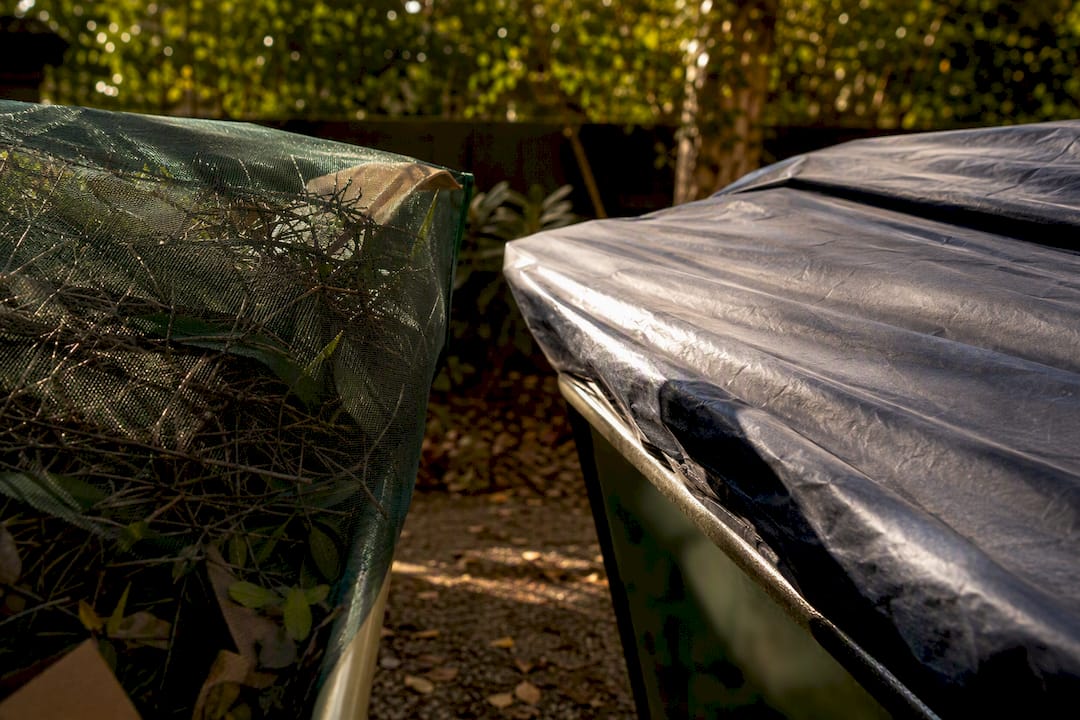
Skip bin tarp size matters more than people assume. A cover that’s too small leaves gaps at the corners; one that’s too large flaps loose and risks catching wind at speed. Confirm your supplier’s cover is rated for your waste category, and check that attachment points hold it flush against the bin walls rather than draping over the edge.
Ask upfront whether the supplier fits the cover as part of the service or expects you to do it. That labor question changes your total cost and your time on-site.
What I’ve Learned Booking Skip Bins for Years
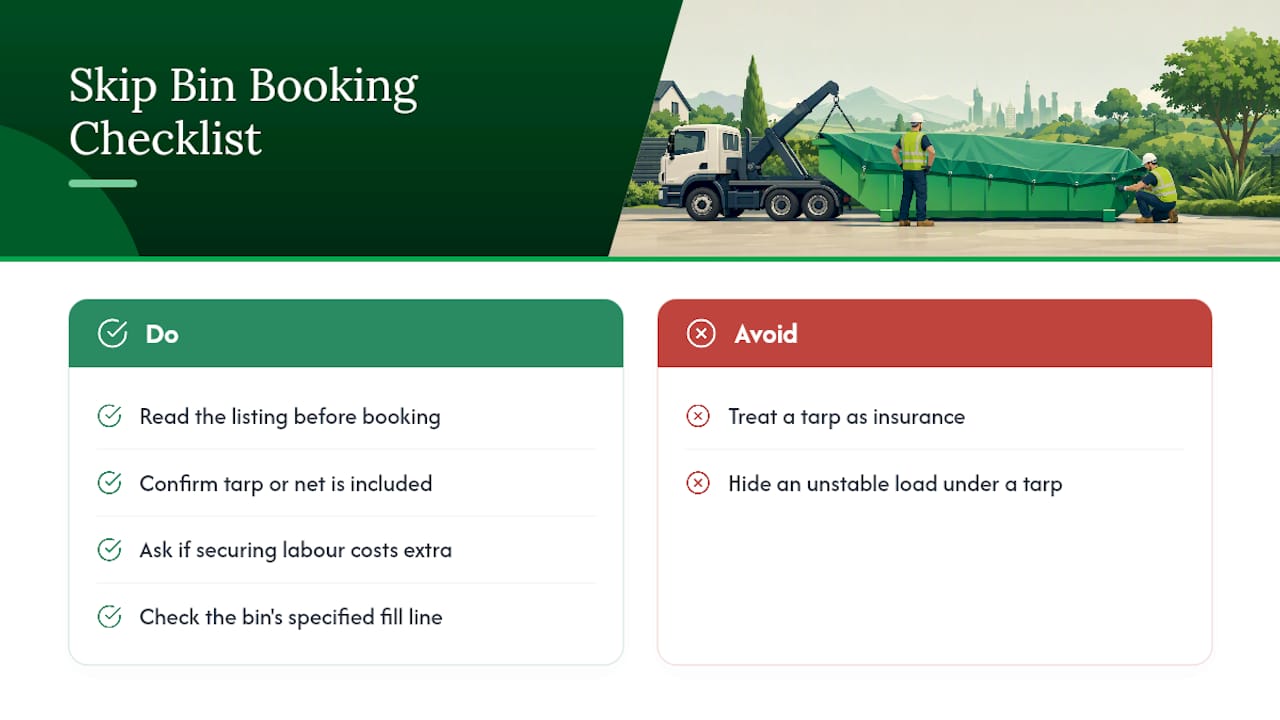
The mistake I see more than any other is treating a tarp as insurance against a bad packing job. It isn’t. A heavy duty cover strapped over a heaped, unstable load doesn’t make that load safer, it just hides the problem until the driver pulls it off and refuses the job anyway.
The fix is boring but effective: read the listing before you book, not after. Confirm whether a tarp or net is included, whether securing labor costs extra, and what the fill line actually looks like for your bin size. Photograph your load before pickup. It takes thirty seconds and it’s the only thing that protects you if a supplier and you disagree about what the bin looked like at drop-off.
— Brett
Book a Skip Bin With Clear Cover Terms Built In
Localskipbinhire cuts out the guesswork that comes with calling around for skip bin quotes and hoping the cover terms don’t turn into a surprise fee. Every listing shows whether a tarp or net is included, whether securing labor is part of the price, and what you’re paying before you book anything.
When you compare postcode-matched suppliers on Localskipbinhire, you can see cover and inclusion details right on the listing, add labor for securing the load if you need it, and pick a bin size that keeps your waste comfortably below the fill line instead of pushing the limit, supporting efficient waste handling with flexible pickup options as explained in the role of pickup options in recycling efficiency. If you’re not sure which size fits your job, browse options like a 2m³ bin for smaller cleanups or a 4m³ bin for bigger jobs, and check the pay later option if you’d rather spread the cost. Compare suppliers in your postcode and book the bin that actually fits your load.
Sources
- Loading guide - Covering loads | NHVR
- Safety when loading and unloading skip bins | WorkSafe Victoria
Recommended
← Older Post Newer Post →