

For most Australian house moves, the fastest, most reliable way to clear unwanted furniture, whitegoods, and general clutter is a postcode-matched skip bin or a labour-included rubbish removal crew booked through a local marketplace like Localskipbinhire. Council hard-waste programs and tip drop-offs work too, but they’re slower and usually cap how much you can get rid of at once.
Here’s how to pick between the two main paid options fast:
- Choose a skip bin if you can load it yourself, have wide, flat access to the driveway or kerb, and you’re clearing volume rather than dealing with a handful of huge, heavy items.
- Choose labour-included removal if you’ve got a narrow driveway, apartment stairs, strict body corporate rules, or simply no time or bodies to do the lifting yourself.
Pro Tip: Check your street for parking permit zones or council approval requirements before booking a skip bin on the kerb — some councils fine unpermitted bins, and that’s an easy cost to avoid with one phone call.
To ground this in what’s actually available: most Australian councils run scheduled hard-waste collection with strict volume limits, transfer stations (tips) accept most household waste for a gate fee, and marketplaces like Local Skip Bin Hire connect you with local suppliers by postcode so you’re not guessing at national pricing that doesn’t apply to your suburb.
Key Takeaways
Matching your removal option to your property’s access and your item volume, then booking through a transparent, postcode-matched marketplace, is the fastest way to clear a house move without hidden costs.
| Point | Details |
|---|---|
| Match option to access and volume | Skip bins suit self-loaders with wide access; labour-included crews suit tight driveways or bulky items. |
| Photograph and measure before quoting | Access photos and item measurements lead to accurate, surprise-free quotes. |
| Get postcode-based quotes | Local pricing beats national averages that don’t reflect your suburb’s supplier costs. |
| Sort donations and sales first | Selling or donating usable items can shrink your bin size or skip labour charges entirely. |
| Confirm disposal is included | A genuine all-inclusive quote from Local Skip Bin Hire bundles delivery, pickup, and disposal. |
Table of Contents
- Moving House Rubbish Removal Options Compared
- What Does Moving House Rubbish Removal Cost in Australia?
- What Items Can You Put in a Skip Bin When Moving?
- How to Prepare Your Property for Rubbish Collection
- Which Removal Option Fits Your Moving Scenario?
- How to Cut Costs by Selling, Donating, or Recycling First
- How Local Skip Bin Hire Simplifies the Process
- How to Book Removal and What to Ask Before You Confirm
- What Actually Matters Most When You’re Moving
- Get a Postcode Quote and Book Your Removal
- Frequently Asked Questions
- Sources
Moving House Rubbish Removal Options Compared
Every mover eventually chooses between five realistic routes. None of them is wrong. Each one fits a different kind of move.
- Skip bin hire (self-load). You book a bin, load it over a few days, and the supplier collects it. Best for house moves where you’re clearing garages, sheds, and general accumulated junk with reasonable truck access.
- Labour-included rubbish removal. A crew turns up, loads the truck, and takes everything away in one visit. Best when you’ve got bulky furniture, limited mobility, or a property with tricky access.
- Council hard-waste collection. Many councils schedule an annual or biannual kerbside pickup for bulky items. It’s free or included in rates, but volume is capped and booking windows fill up fast.
- Donation or resale. Charities and online marketplaces take furniture and appliances in good condition. It costs nothing and can even earn you a little cash, but pickup availability varies.
- Transfer station (tip) drop-off. You load your own vehicle or trailer and pay a gate fee by weight or volume. Cheapest per-load option if you already own a suitable vehicle and have time to spare.
Scenario guidance:
- Limited access (narrow driveway, apartment, no parking): labour-included removal almost always wins here, since some operators recommend against placing a skip bin on properties with steep or narrow access.
- End-of-lease clean: a smaller skip bin or a half-day labour crew, timed to finish before the final inspection.
- Estate clear or downsizing: a larger skip bin combined with a donation run, since these jobs usually involve a mix of keep, sell, and toss.
- Last-minute move: labour-included removal booked same-week, since a skip needs a day or two of loading time you might not have.
Pro Tip: Sell or donate your biggest, best-condition items before you book anything. It’s the single easiest way to downsize from a 6m³ skip to a 4m³ one, or to skip the labour-included crew altogether.
What Does Moving House Rubbish Removal Cost in Australia?
Pricing swings a lot by state, supplier, and access difficulty, but a few patterns hold nationally. Skip bins are typically quoted per cubic metre, with small 2m³ bins suited to a single-room clear-out and larger 6m³ to 9m³ bins suited to a full house move. Labour-included removal is usually priced per truckload or per hour of crew time, often with a minimum call-out fee regardless of how small the job is.
Several factors push the price up or down on any given quote:
- Volume and weight. Heavier loads (concrete, soil, tiles) cost more than light bulky items like mattresses and furniture.
- Labour required. Self-load skip bins skip the labour charge entirely; a crew that does the lifting adds cost but saves your back and your weekend.
- Access difficulty. Steep driveways, stairs, or long carry distances from the door to the truck can add a surcharge.
- Travel distance to the transfer station. Regional bookings sometimes cost more simply because the nearest tip is further away.
- Sorting for recycling. Loads that need separating for e-waste or green waste can take longer to process, which some providers factor into price.
Industry guidance points out that a house move often generates more waste than council kerbside limits allow, which is exactly why paid removal becomes the practical choice once you’re past a spare-room clean-out and into a full relocation.
The clearest sign of a fair quote is what it includes. A transparent, all-inclusive price covers delivery, pickup, and disposal in one number, with no separate tipping fee tacked on afterward. Vague quotes that only mention “bin hire” without confirming disposal costs are where hidden fees tend to hide.
What Items Can You Put in a Skip Bin When Moving?
Most household items are fair game for a skip bin or labour-included removal: general furniture, mattresses, whitegoods, garden and green waste, boxes, and general clutter. A comprehensive moving-house waste guide breaks down sorting and disposal by category, and it’s worth a skim before you start loading.
Commonly accepted:
- Furniture, cabinetry, and general household clutter
- Mattresses and bed bases
- Whitegoods and appliances (fridges, washers, dryers)
- Green waste and garden clippings
- Packaging waste, cardboard, and general rubbish
Commonly excluded or restricted:
- Asbestos sheeting or insulation (requires a licensed specialist, not standard removal)
- Petrol, paint, solvents, and other liquid chemicals
- Car and truck tyres
- Vehicle parts and batteries
- Gas bottles and pressurized containers
Around one in every few household waste categories requires separate handling under Australian rules, which is why household rubbish removal companies typically advertise responsible disposal across multiple waste streams rather than a single blanket price.
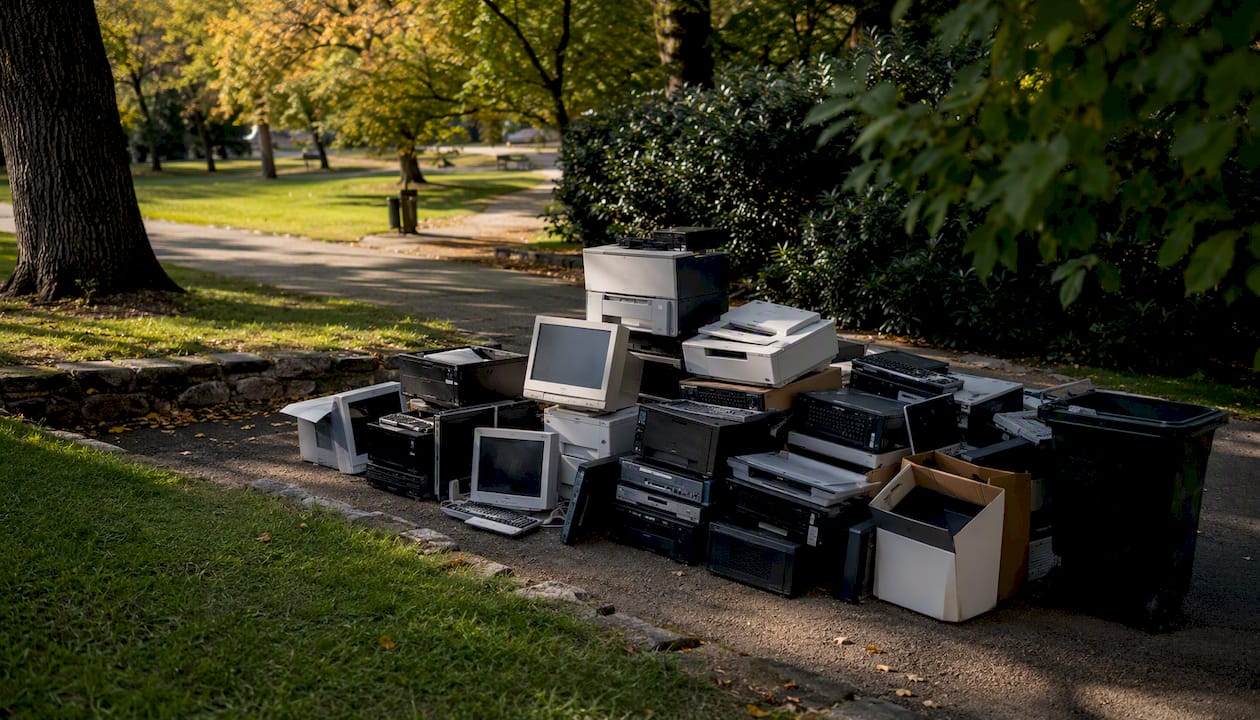
E-waste sits in its own category. Large electronics like televisions, computers, and printers are usually recycled separately rather than sent to landfill, and most providers either sort them out for a dedicated e-waste stream or direct you to drop them at a transfer station that accepts electronics.
If you’re unsure whether something counts as hazardous, contact your local council or a licensed hazardous waste specialist before booking. Regulated items like asbestos carry legal disposal requirements that a standard skip bin or removal crew cannot legally handle.
Pro Tip: Prepare appliances before pickup day. Drain washing machine hoses, remove fridge doors if requested, and check with your provider whether gas needs to be professionally removed from an old fridge or air conditioner before they’ll collect it.
How to Prepare Your Property for Rubbish Collection
A little prep work turns a rough estimate into an accurate, all-inclusive quote. Start by measuring your largest items, since a single oversized wardrobe or lounge suite can change which bin size or truck you need.

Photographing access routes and waste piles is one of the most useful things you can do before requesting a quote. Guides recommend snapping the driveway, gate width, and any stairs, plus a shot of the actual pile of items, so the provider can quote accurately without an on-site visit.
Your pre-collection checklist:
- Measure large or awkward items (wardrobes, sofas, appliances)
- Photograph gate width, driveway slope, and stair access
- Separate donations and recyclables from genuine rubbish
- Tag any hazardous items so the crew knows to skip them
- Clear parking and access paths the day before pickup
On timing, providers commonly suggest booking at least one to two weeks ahead during busy moving periods, particularly around end of month and end of financial year. Same-day service is often available, but expect a premium for the short notice.
If you’re placing a skip bin on the street rather than your own driveway, check with your council about permit requirements. Some councils require a permit for kerbside skip placement, and a handful will fine you or ask the supplier to move the bin if you skip this step.
Which Removal Option Fits Your Moving Scenario?
Rules of thumb help when you’re staring down a moving date and don’t want to overthink it.
- Wide, flat access and you can self-load? Book a skip bin. It’s the cheapest per-cubic-metre option and gives you days, not hours, to fill it.
- Narrow driveway, apartment, or lots of heavy furniture? Book labour-included removal. Paying for a crew is cheaper than a damaged doorway or a strained back.
- Small volume that fits council limits? Wait for the scheduled hard-waste collection if your moving date lines up with it.
- You’ve got a trailer and a free afternoon? Drive it to the transfer station yourself and pay the gate fee directly.
Access constraints change the recommendation more than any other factor. A four-bedroom house with a wide double driveway can comfortably run a 6m³ skip bin for a week. The same house on a steep block with a single-car strip driveway is often better served by a labour-included crew that loads a truck in a single visit, avoiding the risk of a bin blocking the only path in or out.
Common scenarios:
- End-of-lease clean: skip bin if timing allows a few days, labour-included if the final inspection is imminent
- Downsizing into a smaller home: donation and resale first, then a mid-size skip bin for what’s left
- Tight inner-city driveway: labour-included removal, almost always
- Same-day settlement: labour-included removal booked as early in the week as possible
For a deeper side-by-side on this exact decision, comparing skip bin hire against labour-included removal is worth a read before you commit.
How to Cut Costs by Selling, Donating, or Recycling First
The cheapest load is the one you never pay to remove. Before you book anything, run your unwanted items through a quick sell, donate, or recycle filter.
Local marketplace apps and community groups move furniture and appliances fast, often within a day or two if the price is reasonable. Charities will usually collect larger items like lounges and dining sets directly from your home, provided the item is clean, functional, and not damaged. Most charities won’t take mattresses, stained upholstery, or broken appliances, so don’t count on a donation pickup solving your whole clear-out.
What typically sells or donates well:
- Furniture in working, undamaged condition
- Appliances that still function (fridges, microwaves, washers)
- Good-condition kitchenware, tools, and homewares
- Kids’ items like cots and prams in reasonable shape
What charities often won’t accept:
- Mattresses and bedding
- Damaged or heavily worn furniture
- Broken or outdated electronics
- Anything requiring repair before resale
The financial logic is simple: every item you sell or donate is one less item taking up space in a skip bin, and one less reason to upgrade to a bigger bin size or add labour hours. Some local removal services even sort loads for recycling and donation as part of the job, which reduces landfill without any extra effort on your part. If you’re clearing an entire property rather than a single room, a step-by-step approach to clearing out an old home can help you sequence donation, sale, and disposal so nothing gets missed.
How Local Skip Bin Hire Simplifies the Process
Local Skip Bin Hire matches you with independent suppliers by postcode, so the price and availability you see actually reflects your suburb rather than a generic national average. You can compare multiple bin sizes side by side, or switch to a labour-included option if your property has access constraints, all from the same search.
Every quote shown is transparent and all-inclusive, meaning delivery, pickup, and disposal are built into the number you see up front. There’s no separate tipping fee that shows up later, and no guessing whether the driver’s collection visit is bundled in.
What the platform gives you:
- Free, postcode-based quotes from local suppliers, not a national call center
- Multiple bin sizes, from small clean-out bins to full house-move capacity
- Labour-included removal options where access or time makes self-loading impractical
- Coverage across Australian metro and regional areas, not just capital cities
Local Skip Bin Hire has been connecting movers with local suppliers for over 15 years, and that track record shows up in the guides and trade advice published for exactly the kind of decisions covered in this article: sizing a bin correctly, loading it efficiently, and knowing when a crew beats a self-load skip.
Pro Tip: Before you request a quote, have three things ready: your postcode, a rough estimate of volume (photos help), and your preferred delivery date. That’s usually enough for a supplier to give you an accurate, all-inclusive price on the spot.
| Point | Details |
|---|---|
| Match the option to access | Wide driveways suit self-load skips; tight or stepped access suits labour-included crews. |
| Photograph before quoting | Shots of gates, driveways, and waste piles lead to more accurate upfront pricing. |
| Sell and donate first | Reducing volume before booking often means a smaller bin or no labour charge at all. |
| Confirm what’s included | A genuine all-inclusive quote covers delivery, pickup, and disposal with no add-on tipping fee. |
| Compare postcode quotes with Local Skip Bin Hire | The platform matches suppliers by postcode and shows transparent, all-inclusive pricing for both skip bins and labour-included removal. |
How to Book Removal and What to Ask Before You Confirm
Booking well means asking the right questions before you hand over a card number, not after the truck leaves without taking half your pile.
Step-by-step booking process:
- Take photos of your access route and the items you need removed.
- Estimate the rough volume, or let the photos do the talking.
- Choose your preferred date, keeping lead times in mind for busy periods.
- Request a postcode-based quote and compare what’s included.
- Confirm the inclusions in writing before the day of collection.
Questions worth asking every provider:
- Is labour included, or am I loading the bin myself?
- Is disposal genuinely included, or is there a separate tipping fee?
- Are there any access, parking, or permit fees I should know about?
- What are the cancellation and rescheduling terms if my settlement date shifts?
- Is the job covered by insurance or liability protection if something’s damaged during collection?
Watch for a few red flags on any quote: vague per-item pricing with no total, no mention of where the waste actually goes, or a verbal-only quote with nothing in writing. Review platforms consistently show wide variation in customer satisfaction between removal providers, which is exactly why checking reviews and getting a written, itemized quote matters as much as the price itself.
What Actually Matters Most When You’re Moving
Speed and transparency beat everything else when you’re staring down a moving date with boxes stacked to the ceiling. The marketplace model works because it removes the guesswork of calling five different local operators and getting five different pricing structures. One postcode search shows you what’s actually available in your suburb, at a price that already includes the parts people usually get burned on: pickup and disposal.
What surprises a lot of movers is how much a labour-included crew can actually save, not just in time but in avoided damage, once a driveway or staircase enters the picture. The instinct is always to book the cheapest skip bin first. Sometimes that instinct is wrong, and it’s worth checking access constraints honestly before you commit to a bin you can’t actually load without help.
Plan your recycling and donation sorting early, ideally before you request a single quote. It’s the one step that shrinks every cost that follows.
Get a Postcode Quote and Book Your Removal
Localskipbinhire is the practical alternative to calling around five different local operators for five different quotes. One postcode search shows you real, local pricing for both self-load skip bins and labour-included removal, with delivery, pickup, and disposal already built into the number you see.
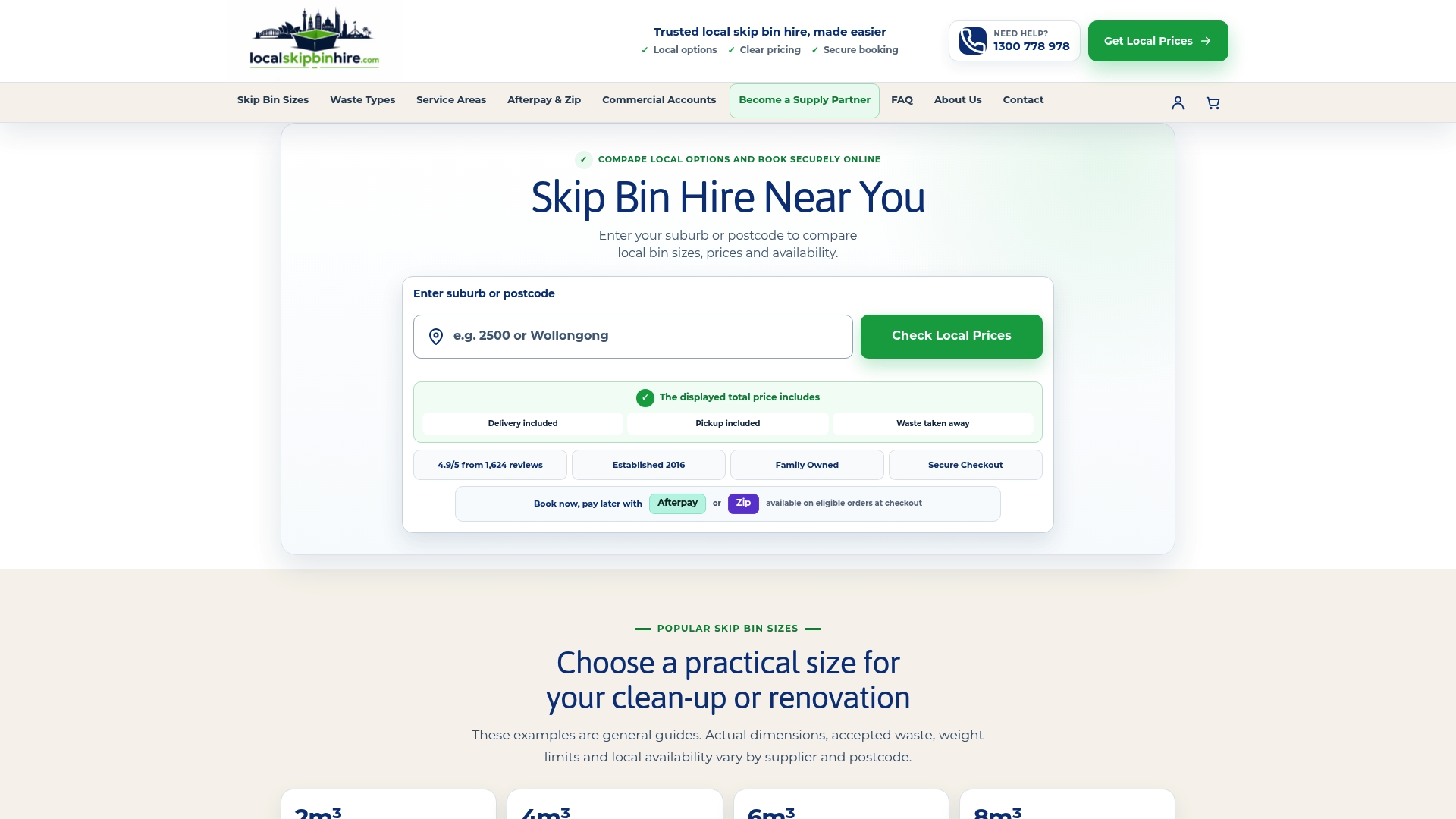
Getting started takes less time than measuring your own garage. Enter your postcode, tell the platform roughly how much you’re clearing, and pick a bin size or labour-included option that matches your access and timeline. If you’re moving a full house, a 4m³ skip bin is a common starting point for household volume, while smaller 2m³ options suit single-room clean-outs or end-of-lease jobs. Once you confirm your date, you’ll get a booking confirmation and an arrival window, so you’re not left guessing when the truck actually shows up. If budget timing is tight around a move, flexible payment options are also available.
Head to Local Skip Bin Hire, enter your postcode, and compare your local, all-inclusive quote before your moving date locks in.
Frequently Asked Questions
How much does moving house rubbish removal cost in Australia? Costs vary by state, bin size, and access difficulty, but skip bins are typically priced per cubic metre with all-inclusive pricing covering delivery, pickup, and disposal, while labour-included removal is usually quoted per truckload or per hour with a minimum call-out fee.
Can I put a mattress in a skip bin when moving house? Yes, mattresses are among the commonly accepted items for both skip bin hire and labour-included removal, though some providers charge a small surcharge since mattresses take up bin space without weighing much.
What items can’t go in a skip bin? Asbestos, petrol and chemical liquids, tyres, vehicle parts, and gas bottles are commonly excluded and need to go through a licensed specialist or a transfer station equipped to handle them safely.
How far in advance should I book rubbish removal for a house move? Most providers recommend booking one to two weeks ahead, especially around busy periods like end of month, though same-day service is often available for an added fee.
Is a skip bin or labour-included removal better for an apartment move? Labour-included removal is usually the better fit for apartments, since stairs, lifts, and limited street access make placing and loading a skip bin impractical.
Do rubbish removal services recycle what they collect? Many providers sort loads for recycling and donation where possible, and reputable marketplaces will confirm their diversion practices as part of a transparent quote.
What happens if my moving date changes after I’ve booked a skip bin? Cancellation and rescheduling terms vary by supplier, so confirm this before booking. It’s one of the key questions worth asking alongside disposal and access fees.
Sources
A few resources are worth bookmarking alongside your moving checklist, since removal rules and costs shift depending on where you live and what you’re clearing.
- Moving house waste removal guide for smarter rubbish and recycling
- Rubbish Removal for Moving House
- Au
Your local council’s website is also worth a direct check for hard-waste collection dates and any permit requirements for kerbside skip bin placement, since these rules vary from one council area to the next.
Recommended
- Cost of Rubbish Removal in Australia: 2026 Guide – Local Skip Bin Hire
- Best Rubbish Removal Sydney: Skip Bin vs Load-and-Haul – Local Skip Bin Hire
- 6 Tips for Successfully Clearing out An Old Home – Local Skip Bin Hire
- Clearing a Deceased Estate: A Practical Guide to Getting It Done – Local Skip Bin Hire