

Brick Disposal Options for Australian Renovators
Brett Taylor brick disposal options en
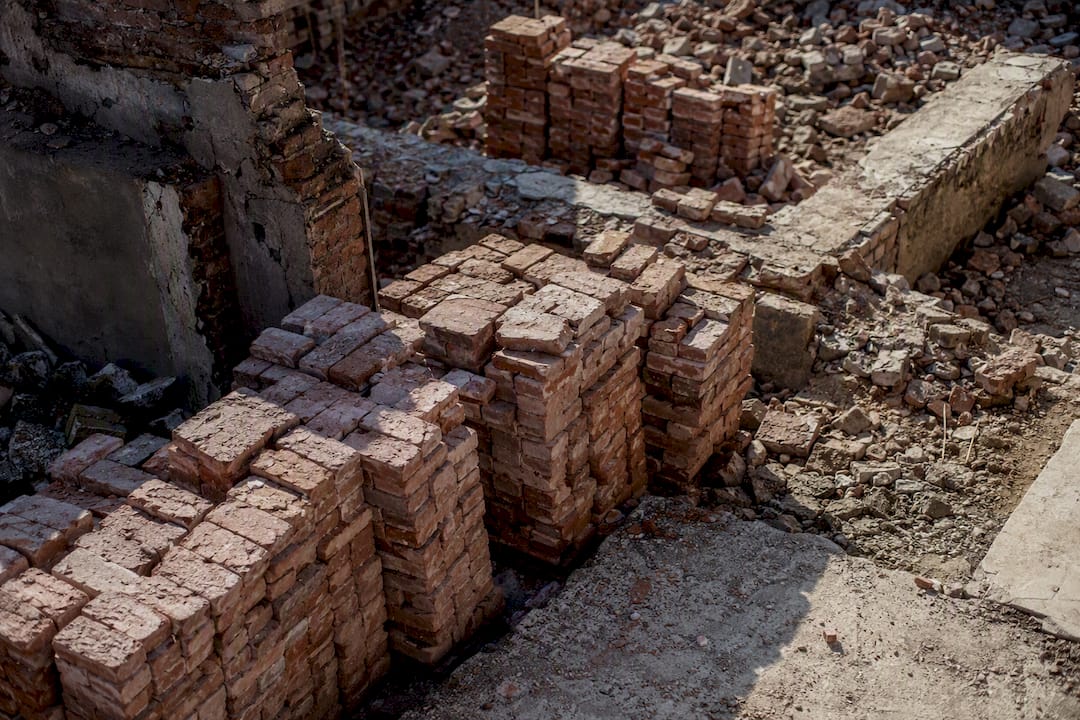
If your bricks are intact and clean, reuse or sell them, that’s your best outcome every time. If you’ve got pallets of good bricks, call a specialist recycler before you call anyone else. If the load is mixed, broken, or full of old mortar, a skip bin or your council transfer station is the practical answer, and crushing becomes the fallback when nothing else will take them.
Before you touch anything, check the mortar and any old adhesives for signs of asbestos. If your build predates the 1990s and something looks suspicious, stop and call a licensed assessor or your local council.
- Few clean bricks, small job: donate or sell locally
- Pallets of quality bricks: contact a specialist brick recycler
- Mixed, broken, or contaminated bricks: book a skip bin or head to a transfer station
- No transport, small load: council hard-waste or drop-off
Once you’ve sorted your bricks by condition, the next move is either listing them, calling a recycler, or booking a skip bin sized for the job.
Key Takeaways
Reuse and specialist recycling recover the most value from bricks, while skip bins and council transfer stations handle mixed or damaged loads efficiently and affordably.
| Point | Details |
|---|---|
| Reuse first | Sell or donate intact, clean bricks before considering any other disposal route. |
| Call a recycler for pallets | Specialist recyclers grade and often pay for quality bricks above their minimum pallet count. |
| Check for asbestos | Stop work and call a licensed assessor if pre-1990s mortar or render looks suspicious. |
| Council transfer stations suit small loads | Use them when transport is limited or salvage value is low. |
| Book a skip for mixed or large loads | Local Skip Bin Hire offers postcode-matched pricing that includes delivery and pickup for brick removal. |
Table of Contents
- Best Brick Disposal Options for Reuse, Donation, and Sale
- When Should You Use Council Hard-Waste or a Transfer Station?
- Specialist Brick Recyclers and Brick-Rescue Programs
- Skip Bin Hire and Rubbish Removal for Bricks
- Crushing and Landfill: The Last Resort for Damaged Brick
- What Does Brick Disposal Actually Cost in Australia?
- How to Prepare Bricks for Reuse, Recycling, or Removal
- Are Your Bricks Safe to Handle, or Do You Need an Assessor?
- What Local Skip Bin Hire’s Trade Experience Tells You
- Editorial Take: Reuse First, Skip Second, Crush Last
- Book a Skip Bin for Your Brick Removal Job
- Sources
Best Brick Disposal Options for Reuse, Donation, and Sale
Reusing bricks beats every other option on this list, because it keeps the embodied energy baked into that clay from decades ago out of landfill entirely. Specialists at The Brick Pit treat salvaged bricks as design material, not rubble, and that mindset shift matters when you’re deciding whether to skip them or save them.
Where do you actually sell or give them away? Reclaimed brick retailers, landscaping businesses, online classifieds, and community reuse networks all take stock, though minimums vary. A landscaper might want a full pallet; a neighbor building a garden bed might take twenty bricks off your hands for free. Sustainability Victoria’s buy-recycled directory is a solid place to find buyers who specifically want salvaged material.
- Sort by size, color, and condition.
- Knock off loose mortar by hand.
- Stack on a pallet or in neat rows.
- Photograph the stack and count the total.
- List online or call a reclaimed brick dealer.
Pro Tip: Photograph bricks against a tape measure or ruler in the frame. Buyers move faster when they can see scale and condition at a glance.
When Should You Use Council Hard-Waste or a Transfer Station?
Most Australian councils won’t take bricks in your household bin. Maroondah City Council’s waste guide directs residents to transfer stations or scheduled hard-waste bookings instead, and that pattern holds across most states. Canberra’s own Recyclopaedia guidance says much the same: don’t bin them, reuse or sell them first, and use a transfer station as the backup.
Before you load the trailer, check a few things including whether your council accepts bricks at transfer stations, as rules differ by area.
- Book a hard-waste collection slot if your council offers one.
- Stack or palletize bricks so staff can assess volume quickly.
- Bring ID and be ready to pay a per-load or per-tonne fee.
This route suits small to medium loads with low salvage value, or jobs where you simply don’t have a trailer or ute to move anything larger.
Specialist Brick Recyclers and Brick-Rescue Programs
Specialist recyclers do far more than take bricks off your hands. Operators like Recycled Brick Centre hand-clean and grade every batch, sorting stock into paving grade, builders grade, face grade, and combo mixes depending on surface condition and mortar residue. Their published guidance uses a standard estimate of bricks per square meter for paving jobs, which is a handy reference when assessing whether your stack is worth calling about.
- Face-grade bricks (clean, uniform, no chips) fetch the best resale value.
- Builders-grade and combo pallets still move, just at lower prices.
- Most recyclers want a minimum pallet count before they’ll collect, since a ute-load of loose bricks costs them more to process than it’s worth.
That minimum threshold is worth knowing upfront. Smaller amounts are often better sold or donated locally, since transport costs eat into any recycler payment once you’re below a full pallet.
Demolition sites are where brick-rescue programs shine. The Brick Pit’s rescue program works on tip-offs, sometimes with a finder’s fee attached, so a builder or homeowner who spots a demolition can flag it before the bricks get crushed with the rest of the debris. Alert a recycler early and intact bricks stand a real chance of being saved rather than pulverized.
Skip Bin Hire and Rubbish Removal for Bricks
A skip bin makes sense once your bricks are mixed with rubble, broken beyond reuse, or simply too large a volume to shift by hand. It’s also the fastest option when you’re on a renovation deadline and don’t have days to spare chasing recycler quotes.
- Estimate volume first. A small bathroom reno might fill a couple of cubic meters; a full wall demolition needs more.
- Check weight limits. Bricks are dense, so a bin that looks half full can already be at its weight cap.
- Confirm any permit needed for verge placement if the bin sits on a public road.
- Ask about labor-included service if you can’t physically load the bricks yourself.
Local Skip Bin Hire matches you with suppliers by postcode and shows all-inclusive pricing upfront, so there’s no surprise fee for delivery or pickup once the job’s done. If you’re dealing with a genuinely large demolition load, a professional haul-off service is worth a call too, particularly when structural demolition is involved.
Pro Tip: Order one size up from your estimate. Brick rubble is heavier and bulkier than most people expect once it’s actually in the bin.
Crushing and Landfill: The Last Resort for Damaged Brick
Crushed brick gets a second life as sub-base material, landscaping fill, and even sports-surface aggregate, so it’s not a dead end. But crushing represents a lower environmental and monetary return than whole-brick reuse, since you lose all the aesthetic and structural value that made the original brick worth salvaging.
- Mixed or heavily damaged brick that can’t be graded usually ends up crushed.
- Boral’s recycling program accepts clean brick and brick mix across much of Australia and turns it into recycled construction products.
- Facilities accepting mixed construction and demolition waste generally charge by weight, and crushed-brick pathways tend to cost less than sorted, graded resale.
What Does Brick Disposal Actually Cost in Australia?
Costs shift depending on the route you pick, and knowing the rough shape of it helps you decide fast.
- Skip bin hire scales with size, and a load full of dense brick often needs a heavy-waste rated bin rather than a standard one.
- Transfer stations typically charge per load or per tonne, varying by council area.
- Quality pallets sold to a recycler can offset costs entirely, sometimes even turning a profit if the grade is high enough.
- Recyclers generally want a minimum pallet count before pickup is worthwhile, since collection logistics cost more than the material’s value below that threshold.
Timelines vary just as much. Skip bins can often be booked and delivered within the week. Recycler pickups depend on their route schedule. Council hard-waste bookings can run weeks out during peak renovation seasons, so book early if that’s your plan.
How to Prepare Bricks for Reuse, Recycling, or Removal
A little prep work upfront saves real money down the line, whether you’re selling, recycling, or skipping the lot.
- Inspect first. Check for intact edges, mortar buildup, paint, chemical staining, or anything that raises an asbestos flag.
- Clean by hand. Knock loose mortar off with a bolster and hammer, working outdoors with a mask on.
- Sort by color and size. Buyers and recyclers both pay more attention to uniform pallets.
- Stack and photograph. Palletize where possible and snap clear photos for listings or recycler inspection.
- Plan the transport. Distribute weight evenly across a trailer or ute tray, and strap pallets securely before moving.
Pro Tip: If you’re moving more than a few hundred bricks, book a labor-included removal rather than doing it solo. Brick loads are brutal on backs and even worse on undersized trailers.
Are Your Bricks Safe to Handle, or Do You Need an Assessor?
Older mortar, textured renders, and unidentified adhesives are the three biggest red flags for hazardous material in brickwork, especially in homes built before the 1990s. If any of that shows up, stop working with the material immediately rather than pushing on.
- Don’t break, grind, or sweep suspect material. Disturbing it is the real risk, not leaving it alone.
- Isolate the affected area and contact a licensed assessor for testing.
- Call your council transfer station for direction if you’re unsure whether your load qualifies as general waste.
Recyclers and transfer stations routinely refuse contaminated loads outright, since accepting them puts their own staff and downstream buyers at risk. A quick professional test costs far less than a rejected load and a wasted trip.
What Local Skip Bin Hire’s Trade Experience Tells You
Picking a route isn’t complicated once you run it through four questions in order: how much, what condition, how soon, and how will you move it. Quantity and condition point you toward reuse or a recycler; timeline and transport usually decide whether a skip bin wins out.
- Small clean loads with no rush: reuse or sell first, every time.
- Large clean loads: call a specialist recycler before booking anything else.
- Mixed, damaged, or time-pressured jobs: book a skip sized correctly for brick’s weight.
- Demolition sites: flag recyclers early for a possible rescue or finder’s-fee pickup.
Local Skip Bin Hire has spent more than 15 years connecting Australian homeowners and tradies with local suppliers on transparent, all-inclusive pricing, which matters most when you’re trying to compare skip costs against a recycler payout.
Right-size the skip before you book it. An undersized bin filled with dense brick rubble gets you a second delivery fee and a longer day than you planned for.
Staging your drop-offs, optimizing pallet loads for recyclers, and asking directly about collection or finder’s fees are the three habits that separate a costly cleanup from a genuinely economical one.
Editorial Take: Reuse First, Skip Second, Crush Last
The conventional advice on brick disposal treats every load the same way: rent a bin, fill it, move on. That’s backwards for a country with as much genuine reuse infrastructure as Australia has. A specialist recycler grading bricks into paving, builders, and face categories is doing real triage work that a skip bin simply can’t replicate, and skipping that step first means throwing away value that a recycler would have paid for.
Where I think most homeowners get it wrong is assuming reuse and recycling take too long to bother with on a tight renovation schedule. In practice, a phone call to a recycler or a quick classifieds listing takes less time than most people assume, and it’s worth doing before the skip gets booked, not instead of it.
The honest priority order is reuse, then a specialist recycler, then council transfer stations for what’s left, with a skip bin as the fast, reliable option once you’ve got mixed or damaged material that none of those routes will take. Crushing is the last stop, not the first call.
Book a Skip Bin for Your Brick Removal Job
When reuse and recycling aren’t options, whether your bricks are broken, contaminated, or simply mixed in with general renovation debris, Localskipbinhire gets you a bin on-site faster than chasing quotes from multiple local suppliers yourself. Every price shown includes delivery, pickup, and disposal, so you’re comparing real costs, not base rates with fees added later.
That transparency matters most with brick loads specifically, since weight limits and heavy-waste pricing catch people out more with bricks than almost any other renovation waste. Local Skip Bin Hire matches you with suppliers by postcode and offers labor-included options if you can’t manage the loading yourself. Compare skip bin prices in your area and get a bin booked for your next brick removal job.
Sources
Recommended
- Renovation Waste Management: The Playbook That Saves Real Money – Local Skip Bin Hire
- Gas Bottle Disposal in Australia: The Safe, Legal Guide
- Plasterboard in a Skip Bin: What Homeowners Must Know
- Skip Bins for Builders: Running Waste Like a Line Item, Not an Afterth – Local Skip Bin Hire
What "one size up" adds to the bill
The rule earlier in this piece — order a size above your estimate — reads differently with figures against it. In August 2026 a 2m³ bin was typically $311 in Perth and $246 in Adelaide; the 3m³ above it was $376 and $356. That is a modest step, and brick rubble hits a bin's weight allowance long before the bin looks full.
Two cautions on those numbers. They are general-waste figures, and dense brick is normally booked as heavy waste — waste type changes the price, so name brick in the enquiry rather than at pickup. They are also an August 2026 snapshot: price your own postcode on the live search before you weigh a skip against a transfer-station run.
Clean rubble or mixed rubble — the split that sets the price
Everything above sorts bricks by condition. A skip supplier sorts them by category, and there are two: a clean brick and concrete load, and a load with other demolition material through it. The bricks are identical. The price is not.
Clean waste (clean concrete & brick) takes clean concrete and rubble, bricks and blocks, pavers and tiles, and clean hard fill from demolition — and nothing else. Mixed rubble is brick, tile, concrete and masonry mixed in with other demolition material. Both lists are published on our concrete and brick page and our waste categories page.
| Waste type | Median 4m³ price | vs general waste, same postcode | Postcodes with a live price | Typical range (middle 80%) |
|---|---|---|---|---|
| Clean waste (clean concrete & brick) | $459 | $0 median | 179 | $359–$623 |
| Mixed rubble | $528.50 | +$82 median | 168 | $459–$623 |
| General waste (reference) | $445 | baseline | 170 | $329–$609 |
Measured 30 August 2026 across our live supplier network: clean concrete, brick, paver and tile loads price as clean waste at a national median of $459 for a 4m³ bin (179 postcodes returned a live price; typical range $359–$623), delivered, collected and GST included for a 7-day hire. Against the same postcode's general-waste price the median difference is $0 — 82 of 165 paired postcodes charge more than general waste, 66 charge less. Rubble mixed with other demolition material prices as mixed rubble: a measured median of $528.50 at 4m³, +$82 median against general waste in the same postcode across 154 paired postcodes. Source: concrete and brick skip bins, from 1,485 priced probes across 184 Australian postcodes captured 30 August 2026 (4m³ bin, 7-day hire, delivery, collection and GST included).
Read the same-postcode column, not the medians against each other. A clean brick load is level with general waste where you live; a mixed one carries a real premium. That is the whole argument for keeping the load clean, and it is worth more than any size decision you make.
The contamination trap: soil does not go in a clean rubble load
This is the single most expensive mistake on a brick job, and it is not about bricks at all. It is about what gets thrown in beside them.
Our concrete and brick page states the rule plainly: "Hard fill mixed with timber, plastic, soil or general rubbish is not clean concrete and is priced differently — book a mixed heavy-waste bin." Our waste pages put numbers on what that costs, each category measured against general waste in the same postcode on the same day (184 Australian postcodes, 30 August 2026): mixed heavy waste carries a median premium of +$104, and mixed waste with soil +$153 — the largest premium of any category in that capture. Our waste categories page, which ran the same comparison across its own separate 33-postcode population, reached the same verdict word for word: "Mixed heavy waste and mixed waste with soil were never once cheaper than general waste anywhere we measured. There is no postcode where putting soil in the bin saves you money."
And it does not take much. From the same page: "One lump of concrete in a general bin. A single piece of masonry can move the whole load into a dearer category." The reverse is what catches brick jobs — a barrow of garden soil, an old garden bed, the dirt off the footings — tipped into a clean rubble bin because it was on site and the bin was open.
What happens next is set out in our guide to skip bin contamination charges: the load contains something that should not be there given the bin type hired, and the receiving facility inspects it on arrival and can reject or surcharge it on the spot. Our own page terms say the same: if prohibited items are found after collection, contamination and disposal fees will be charged and the load may be rejected.
It is not a rare event. Our waste categories page counts it on our own order records: 12 of 338 paid orders (3.6%) in the 65 days to 30 August 2026 carried an "upgraded to…" correction after booking — and 11 of those 12 were upgrades into a heavy or mixed-heavy category. The most common post-booking change on this business is the wrong category, not the wrong size.
The rule to work to: if bricks, concrete, pavers and tiles are all that goes in, book clean waste. If soil, timber, plaster or general rubbish is going in with them, book it as mixed rubble or mixed heavy waste up front. If there is a lot of both, run two bins — our waste categories page finds that two correctly categorised loads are routinely cheaper than one mixed heavy load covering both. Where the soil itself is the load, the clean-fill lane and its price are the subject of our soil skip bin guide; a bathroom or kitchen strip-out with tiles in the mix is covered in bathroom and kitchen strip-out waste.
Price your own job: our concrete and brick skip bins page prices the clean-load category directly, skip bin prices by postcode shows the measured spread for your area, and the postcode search returns a live price for your address, dates and waste type. Those figures are a measured market benchmark for 30 August 2026, not a quote — what you pay depends on your postcode and your dates.
← Older Post Newer Post →