

Roofing Waste Disposal for Australian Builders and Owners
Brett Taylor en roofing waste disposal
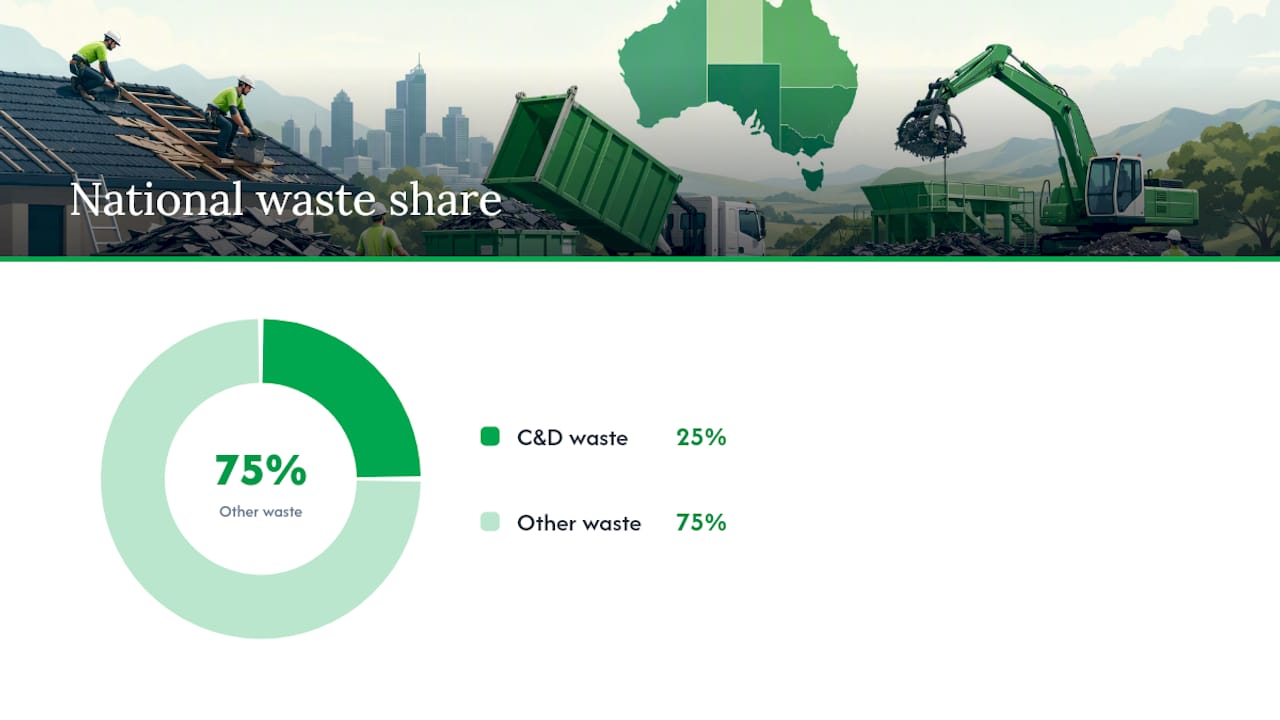
Segregate roofing materials, treat suspected asbestos as a regulated hazard, and book the right skip or recycler now. Construction and demolition waste is Australia’s largest solid waste stream, with 25.7 million tonnes disposed of nationally in 2022–23, and roofing jobs contribute a steady share of that total through tiles, metal, timber, and insulation.
Getting roofing waste disposal right on day one saves money and keeps you out of trouble with your state EPA. Here’s what to do before the first sheet comes off the roof:
- Sort as you strip: separate metal, intact tiles, timber, insulation, and anything that could be asbestos into distinct piles.
- Stop work immediately if you suspect asbestos. Cordon the area and call a licensed asbestos removalist. Never place suspected asbestos in a general skip.
- Book the right bin or recycler in advance, and declare your materials honestly when you do.
- Keep every receipt, waste transfer note, and clearance certificate in a job file, not a glovebox.
Pro Tip: Photograph your sorted piles before the skip arrives. If a disposal facility later disputes what went into a load, timestamped photos settle the argument fast.
Key Takeaways
Roofing waste disposal works when materials are sorted at the source, asbestos is handled through licensed removal, and disposal is booked and documented in advance.
| Point | Details |
|---|---|
| Sort before you strip | Separate metal, tiles, timber, and insulation into distinct piles to protect recovery value. |
| Treat suspected asbestos as regulated | Stop work, cordon the area, and engage a licensed asbestos removalist. There is no safe DIY quantity and no skip bin can take it. |
| Contamination drives cost, not distance | Mixed or undeclared loads get rejected or attract fees more often than transport distance affects price. |
| Keep the paperwork | Retain clearance certificates, tracking documentation, and disposal receipts for every load. |
| Book bins matched to the job | Localskipbinhire matches your postcode to local suppliers with heavy-waste bin options and all-inclusive pricing. |
Table of Contents
- Roofing Waste Types and Realistic Recycling Routes in Australia
- What Are the Legal Requirements for Roofing Waste in Australia?
- How Do You Sort Roofing Waste on Site to Cut Landfill Costs?
- Should You Hire a Skip or Deliver Roofing Waste to a Recycler?
- What Does Roofing Waste Disposal Cost in Australia?
- What’s the Checklist for Handling Asbestos Roofing Waste?
- What Contractors Get Wrong About Roofing Waste Disposal
- Book the Right Skip Bin for Your Next Roofing Job
- Where to Check Australian Roofing Waste Rules
- Sources
Roofing Waste Types and Realistic Recycling Routes in Australia
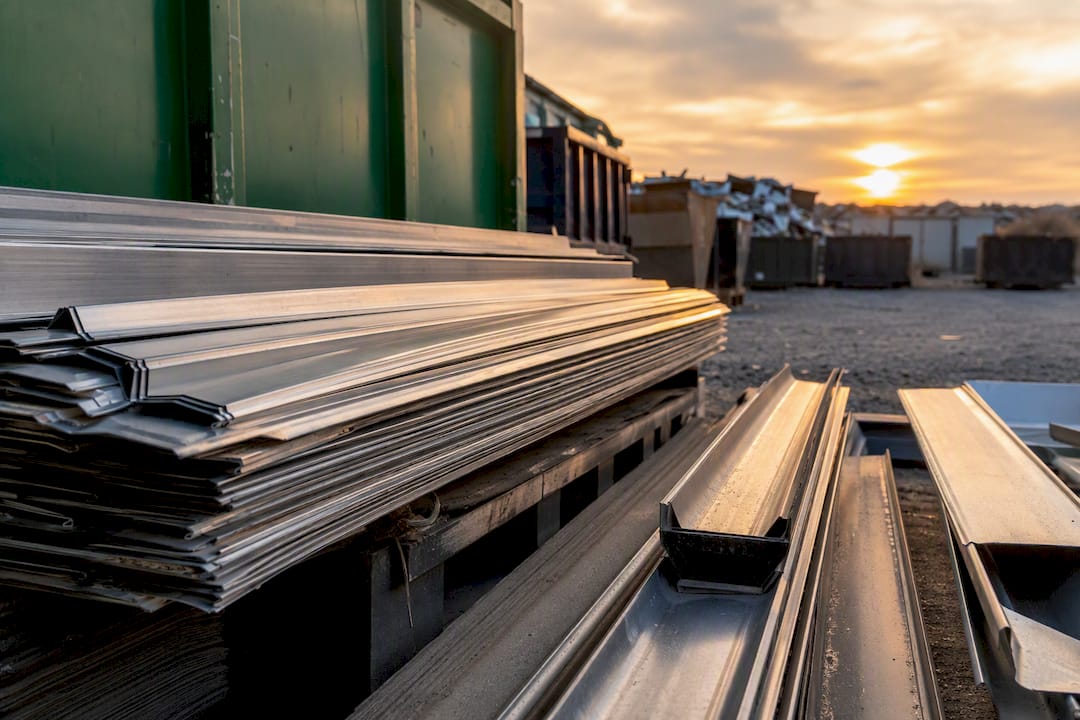
Not every material that comes off a roof is destined for landfill. Clean metal roofing sheets, guttering, and flashings are among the most recyclable roofing materials in Australia. Scrap metal dealers pay for them, and processors melt them down into new steel or aluminum stock. Intact concrete and terracotta tiles have a second life too. Recyclers often crush them into road base, or resellers move them on to renovators chasing a period match.
Timber battens and framing, if untreated and free of paint, can go to timber recovery yards. Insulation batts are trickier. Most curbside recyclers won’t touch fiberglass or foil-backed batts, so they usually end up as general waste unless a specialty recycler in your area accepts them.
The real threat to recovery is contamination. A load of otherwise clean tiles gets downgraded straight to landfill status the moment someone tosses in a handful of asbestos fragments or wet plasterboard. Recyclers can spot mixed loads on sight, and pre-sorted, high-quality material is what actually gets processed into road base or resold, not material that arrives jumbled.
- Metal sheets, guttering, flashings: high recovery value, sell or recycle.
- Intact tiles: road base or resale, depending on condition.
- Clean timber: recovery yards, subject to treatment status.
- Insulation and mixed debris: usually general waste, confirm locally.
What Are the Legal Requirements for Roofing Waste in Australia?
Roofing waste disposal in Australia carries more regulatory weight than most contractors expect, mainly because older roofs are a common source of asbestos. If your job involves a roof built or re-sheeted before the mid 1980s, assume asbestos-containing materials are present until proven otherwise.
Asbestos sheeting of any kind, in any quantity, is a job for a licensed asbestos removalist. Removed material is double-wrapped in plastic thicker than 200 microns and goes only to an EPA-licensed facility. Transporters and waste operators are required to provide tracking documentation for these loads, which means your paperwork trail matters as much as the physical handling.
Waste levies add another layer. Every state sets its own levy rates, and they vary again depending on whether the load is general C&D waste, contaminated material, or asbestos. Queensland’s guidance on asbestos levy treatment is a useful example of how exemptions and documentation obligations differ from standard waste, and other states run comparable but not identical systems.
Transporters also carry chain of responsibility obligations. A facility that discovers undeclared asbestos in a “clean” load can refuse it, fine the transporter, or both. Facilities that recycle C&D material typically inspect loads at the gate and reject suspect asbestos on sight, so pre-notifying the facility about what’s in your load avoids a rejected delivery and a wasted trip.
- Confirm your state’s licensed asbestos removal requirements before starting demolition.
- Check current waste levy rates for your material category, not just a general C&D rate.
- Pre-notify the receiving facility of any contamination risk.
- Retain tracking documentation for every load leaving site.
Roughly a quarter of all national waste disposed of in 2022–23 came from construction and demolition activity, underlining why compliance systems around C&D loads have tightened rather than loosened.
How Do You Sort Roofing Waste on Site to Cut Landfill Costs?
Waste minimization on a roofing job works best when it’s planned before the first tile comes off, not improvised halfway through.
- Build waste handling into the contract. A short Site Waste Minimisation Management Plan, or even a one-page checklist based on the SWMMP template used across NSW projects, sets expectations with your crew and your client before work starts.
- Set up labeled zones or bins for metal, tiles, timber, and general waste, positioned close enough to the work area that crews actually use them.
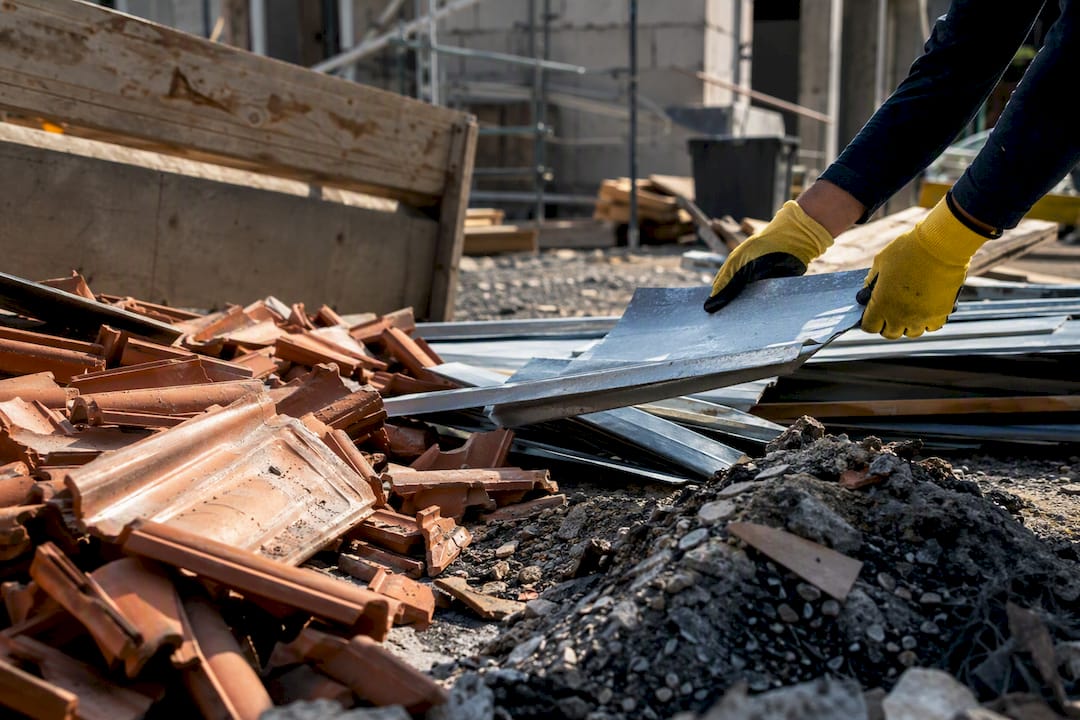
- Handle tiles gently during removal. Broken tiles lose resale and road base value fast, so a slower strip on the tricky sections pays for itself.
- Keep insulation and wet materials separate from dry recyclables. Damp batts against clean metal or timber can contaminate both piles.
- Log volumes, transporter names, and receipts as you go. This record is what proves your diversion rate if a client or council asks.
Contractors who separate materials well on site consistently unlock more value from tiles and steel and pay less in tipping costs, according to industry recycling market analysis. If you want a fuller framework for this, our renovation waste management guide walks through the planning side in more detail.
Pro Tip: Assign one crew member as the “sorting supervisor” for the first hour of any strip-off. Habits set in that first hour tend to hold for the rest of the job.
Should You Hire a Skip or Deliver Roofing Waste to a Recycler?
Skip bin hire suits most residential reroofs and small to mid-size commercial jobs, especially where site access is tight or the crew needs somewhere to throw debris continuously through the day. Direct recycler delivery makes more sense for large, single-material loads, such as a full pallet of clean metal sheeting from a big commercial reroof, where a specialist buyer might pay for the scrap outright.
Sizing depends on the job. A small patch repair or gutter replacement rarely needs more than a compact bin. A moderate reroof on a standard house often needs a mid-size bin, and a full tile change-out on a larger roof usually calls for something bigger again, particularly if tile offcuts and old battens are going in together.
Heavy waste, like broken tiles or concrete, has weight limits that general waste bins aren’t rated for. Confirm the correct heavy-waste bin before booking, or a standard bin can get you hit with an overweight surcharge on collection.
- Match bin size to job scope, not guesswork.
- Confirm heavy-waste rating for tile and concrete-heavy loads.
- Declare any suspected asbestos before the bin is delivered.
- Check access, parking permits, and council rules if the bin sits on a street.
What Does Roofing Waste Disposal Cost in Australia?
Cost of roofing waste disposal comes down mostly to two levers: your state’s waste levy and the facility’s tipping fee for your specific material category. These vary by state and by whether your load is general C&D waste, asbestos, or a clean recyclable stream, so a quick quote call to your chosen facility before booking is worth the five minutes it takes.
The biggest cost savings don’t come from shopping around on transport. A regionalized life-cycle analysis of Australian C&D waste found that transport distance has a fairly modest effect on total disposal cost per tonne, while separation and recycling rate matter far more.
- Sell or gift intact tiles and clean metal before they hit a general bin.
- Use a dedicated metal recycler for large volumes of sheeting or guttering.
- Get a facility quote for your material mix before the job starts, not after.
- Expect asbestos disposal to carry its own levy structure, separate from general waste.
Contamination, not distance, is usually what blows out a disposal bill: mixed or undeclared loads frequently get rejected or attract extra handling fees that dwarf any savings from picking a slightly closer tip.
What’s the Checklist for Handling Asbestos Roofing Waste?
Roofs installed or re-sheeted before the mid 1980s are the ones to treat with the most caution. If sheeting looks fibrous, cracked, or has that unmistakable corrugated “fibro” texture, don’t touch it further until it’s been assessed.
- Stop work and isolate the area the moment asbestos is suspected. Don’t cut, break, or pressure-wash it.
- Engage a licensed asbestos removalist. Whatever the quantity, licensed removal is the requirement. Never handle, cut or bag suspect sheeting yourself, and never put it in a skip bin.
- Double-wrap removed material in plastic sheeting thicker than 200 microns, and label it clearly as asbestos waste.
- Transport only to an EPA-licensed facility, with tracking documentation completed for the load.
- Obtain and retain a clearance certificate once removal is complete, along with any audit references your state requires.
- Do not go looking for a small-quantity exception. Treat every suspect sheet the same way: stop work, licensed removalist, licensed facility. Your state EPA and WorkSafe regulator are the authorities on the paperwork.
Suspected asbestos means stop work and call a licensed asbestos removalist, whatever the quantity. Removal, double-wrapping in plastic over 200 microns, and disposal at an EPA-licensed facility are all handled by the licensed removalist, with tracking documentation provided for the load. It never goes in a skip bin.
What Contractors Get Wrong About Roofing Waste Disposal
Most roofing waste guidance treats sorting as a nice-to-have, something you do if time allows once the real work is finished. That’s backwards. The research is consistent on this point: separation quality, not disposal location or transport distance, is what determines whether a load turns into road base or a landfill fee.
The overrated fix is chasing the cheapest tip. Contractors spend real effort finding a facility ten minutes closer, then lose that saving in a single afternoon because a load got rejected for undeclared contamination. The underrated fix is boring but effective: label your bins, brief your crew for five minutes each morning, and keep a paper trail. That’s it.
Where I’d push back hardest on conventional advice is the asbestos “small job” assumption. Plenty of contractors treat older roofs as fine to touch because the visible sheet looks solid. There is no small job with asbestos: stop work, get a licensed removalist, and never put it in a bin. A five-minute phone call is cheaper than a stop-work order.
Plan for the waste stream before the ladder goes up, not after the skip is already half full.
Book the Right Skip Bin for Your Next Roofing Job
Skip bin hire for roofing waste disposal only works well when the bin actually matches the job and the price doesn’t hide surprises later. Localskipbinhire is the practical alternative to calling around multiple local suppliers one by one. Enter your postcode, and the platform matches you with local operators who list bin types built for construction and heavy waste, including options rated for broken tiles and concrete offcuts.
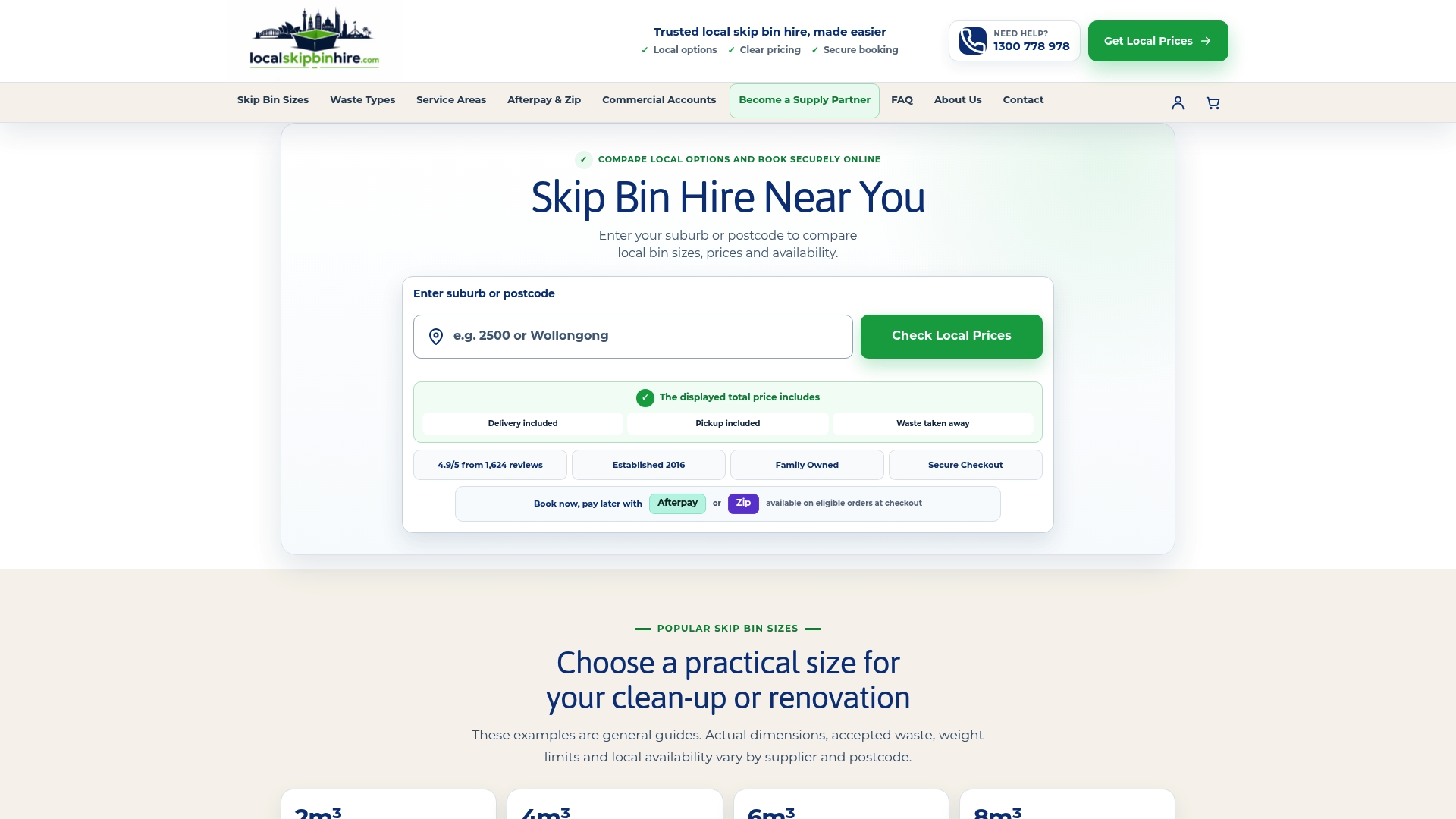
Pricing on Localskipbinhire includes delivery, pickup, and disposal upfront, so you can budget a job accurately instead of discovering a weight surcharge on collection day. When you book, declare your materials honestly, including any suspected asbestos or heavy tile waste, and ask the supplier what documentation or disposal receipts they can provide for your job file. If you’re working a reroof in Melbourne’s outer east, the Box Hill skip bin hire page shows exactly how local pricing and bin options work for that postcode, and a heavy waste bin is worth checking if your load is tile or concrete heavy. Search your postcode and get a bin sized correctly for the job before your crew starts stripping the roof.
Where to Check Australian Roofing Waste Rules
- EPA Victoria’s asbestos waste guidance covers licensed removal and disposal facility requirements.
- The National waste and resource recovery report tracks national C&D diversion data.
- NSW’s Site Waste Minimisation Management Plan template helps structure project waste planning.
- Melbourne City Rubbish’s renovation waste overview offers a practical Victorian perspective on sorting and disposal.
Sources
- EPA Victoria — Manage asbestos waste
- National waste and resource recovery report 2024
- Site Waste Minimisation Management Plan (NSW)
Recommended
- Renovation Waste Management: The Playbook That Saves Real Money – Local Skip Bin Hire
- Construction Waste Management Plan for Australian Contractors
- Skip Bins for Builders: Running Waste Like a Line Item, Not an Afterth – Local Skip Bin Hire
- The Environmental Impact of Improper Waste Disposal and How to Avoid I – Local Skip Bin Hire
The bin half of that bill is knowable before you quote. In an August 2026 check, a 3m³ — where tile and mortar loads usually end up, since they hit weight long before they look full — typically ran $436 in Melbourne, $401 in Brisbane and $594 in Sydney. A 6m³ for the light half of the strip, sheet metal, battens and sarking, typically ran $743 in Melbourne and $656 in Brisbane.
Put the two together and the small heavy bin costs less than the big light one it keeps clean — the honest comparison against one mixed load reclassified at the weighbridge. Those are general-waste rates; confirm the heavy-waste rate for the tile bin first. Postcode-level figures sit on the Melbourne cost page and the national price index, or come from the live checker. State levies and tipping fees move all of them.
← Older Post Newer Post →